
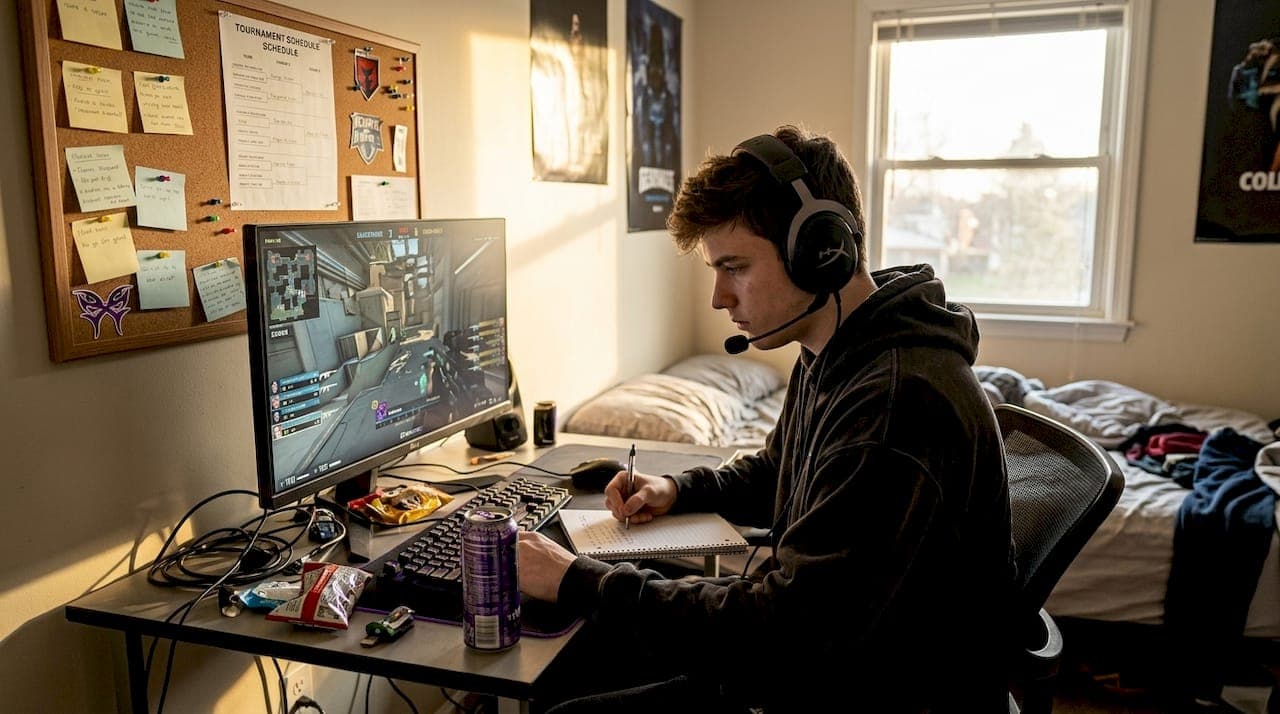
Grinding 10 hours a day without a plan is one of the fastest ways to stay stuck at the same rank. Most players who plateau aren't lacking talent or time. They're lacking structure. Professional esports players don't just play more. They train smarter, using repeatable, phase-based workflows that target mechanics, strategy, communication, and recovery in deliberate sequence. This guide breaks down exactly how that system works, what you need to build it, and how to apply it whether you're competing solo or inside an organized team environment.
Table of Contents
- What is a competitive gaming workflow?
- What you need: Tools, roles, and requirements
- Step-by-step process: The daily pro workflow
- Make it stick: Feedback, adaptation, and avoiding burnout
- Troubleshooting: Common mistakes and how to fix them
- Expected progress: Measuring results and refining your workflow
- Take the next step with structured esports support
- Frequently asked questions
Key Takeaways
| Point | Details |
|---|---|
| Structure beats grinding | Pros achieve better results with deliberate, repeatable workflows than by playing endlessly without focus. |
| Feedback fuels progress | Immediate review and adaptation of each session accelerate growth and help avoid mistakes. |
| Balance is critical | Integrating mechanics, teamwork, physical activity, and recovery yields the greatest improvement. |
| Avoid burnout traps | Mix rest, mental training, and schedule resets to sustain peak performance. |
| Track and refine weekly | Review your metrics, adjust training blocks, and keep your workflow flexible for best results. |
What is a competitive gaming workflow?
A competitive gaming workflow is a planned, repeatable sequence of training and review activities designed to produce measurable improvement over time. It's the opposite of grind culture, where players log hours without intention and wonder why their rank doesn't move. A workflow treats your development like a professional athlete treats theirs: with phases, goals, and checkpoints.
The four core pillars of any solid workflow are mechanics, strategy, communication, and review. Each one feeds the others. You can't execute a strategy you haven't studied, and you can't review what you haven't tracked. Understanding the competitive gaming basics behind this structure helps you see why casual play rarely produces pro-level results.
Professional players train 6-10 hours daily using structured phases for mechanics, teamwork, and review. That's not just a long session. It's a carefully engineered day.
Here's what a workflow replaces:
- Mindless ranked grinding with no session goals
- Skipping VOD review (video-on-demand analysis of past matches) because it feels unproductive
- Ignoring team communication drills in favor of solo carry attempts
- Treating recovery as optional rather than a performance tool
Pro Tip: Write down one specific goal before every session. "Improve crosshair placement" beats "get better" every single time.
Now that you understand how critical a structured workflow is, let's break down what you'll need to get started.
What you need: Tools, roles, and requirements
Building a pro-level workflow starts with having the right environment. That means hardware, software, team structure, and a way to track your progress. You don't need the most expensive setup, but you do need a functional one.
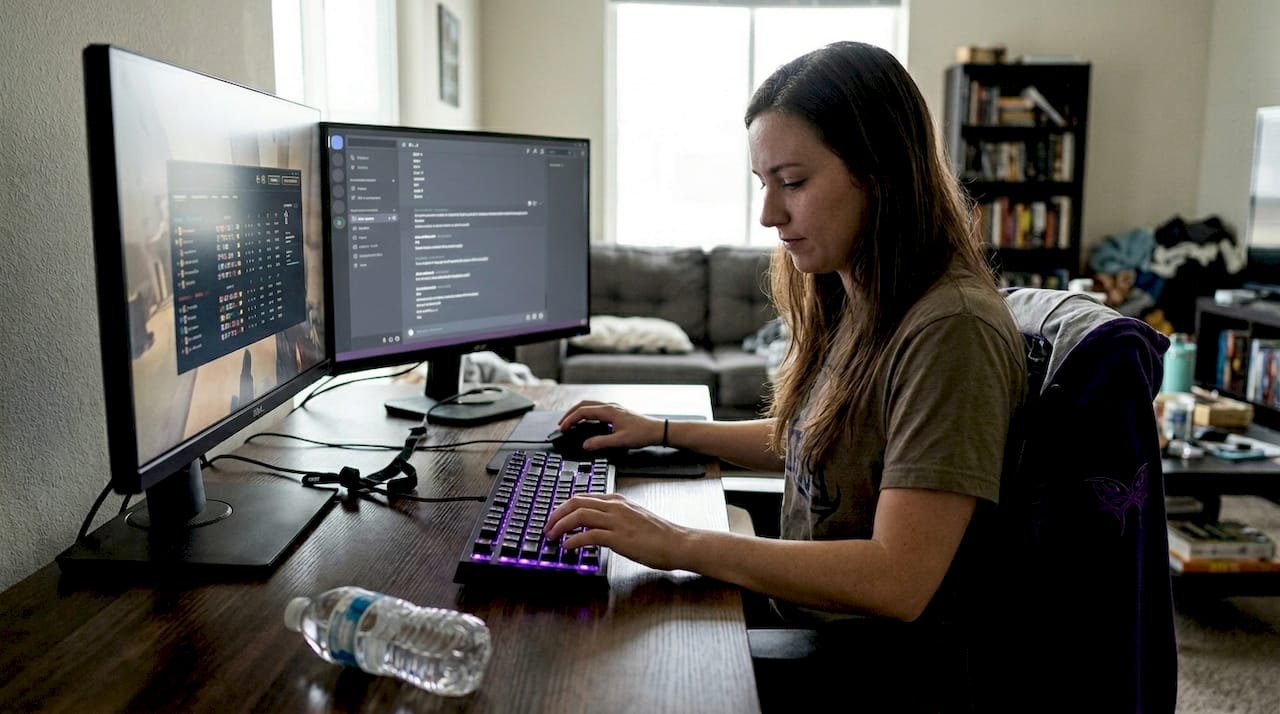
Pros average 7.75 hours of training per day using integrated environments with high-end equipment, data trackers, and established routines. Your setup should support that kind of sustained, focused work. Check out this guide on building a pro gaming environment to make sure your space is ready.
| Category | What you need | Why it matters |
|---|---|---|
| Hardware | High-refresh monitor, low-latency peripherals | Reduces input lag, supports faster reaction |
| Software | Aim trainer, VOD software, comms platform | Enables deliberate skill isolation and review |
| Team roles | IGL (in-game leader), coach, analyst | Distributes responsibility and sharpens focus |
| Data tracking | Performance logs, stat trackers | Makes improvement visible and measurable |
| Environment | Ergonomic chair, proper lighting, exercise space | Supports physical and cognitive stamina |
Key assets to have ready before you start:
- A dedicated practice space with minimal distractions
- A communication platform your team uses consistently (Discord, TeamSpeak)
- A performance log, even a simple spreadsheet, to track session metrics
- Access to physical training research showing how exercise directly improves gaming output
Use the gaming training checklist to audit your current setup before moving forward.
With your environment prepped, it's time to break down the daily competitive gaming workflow into actionable steps.
Step-by-step process: The daily pro workflow
This is where structure becomes performance. Every phase below has a purpose. Skip one and you weaken the whole system.
- Physical and mental warm-up (30-60 minutes): Start with light cardio, HIIT, or breathing exercises. This primes your reaction time and focus before you touch the game.
- Mechanical training (30-45 minutes): Use aim trainers or custom in-game scenarios to isolate specific skills. Don't just play. Drill.
- Team theory meeting (15-30 minutes): Discuss the current meta (the dominant strategies in the game at a given time), objectives for the session, and communication protocols.
- Scrim block 1 (2 hours): Scrimmages are practice matches against other competitive teams. This is your primary performance block.
- Mid-session break (15-20 minutes): Step away. Eat, stretch, reset mentally.
- Scrim block 2 (1-3 hours): Apply adjustments from the first block. Focus on executing the team's strategic goals.
- VOD review and debrief (60 minutes): Watch recordings of your matches. Identify error patterns, miscommunications, and missed opportunities.
- Recovery (nutrition, cooldown, 8-10 hours of sleep): Recovery is not optional. It's when your brain consolidates what you learned.
Core daily elements include mechanical warm-ups, VOD review, team scrims, and recovery, all structured for maximum learning. The structured esports workflow behind this approach is what separates players who grow from players who grind.
Deliberate practice beats mindless grinding every time. Isolate skills, set session goals, and apply immediate feedback after every block.
Pro Tip: Use a shared team doc to log what each scrim block was supposed to achieve. Compare it to what actually happened during VOD review. The gap between intent and execution is where your biggest improvements live.
The benefits of structured training become obvious within weeks when you follow this sequence consistently.
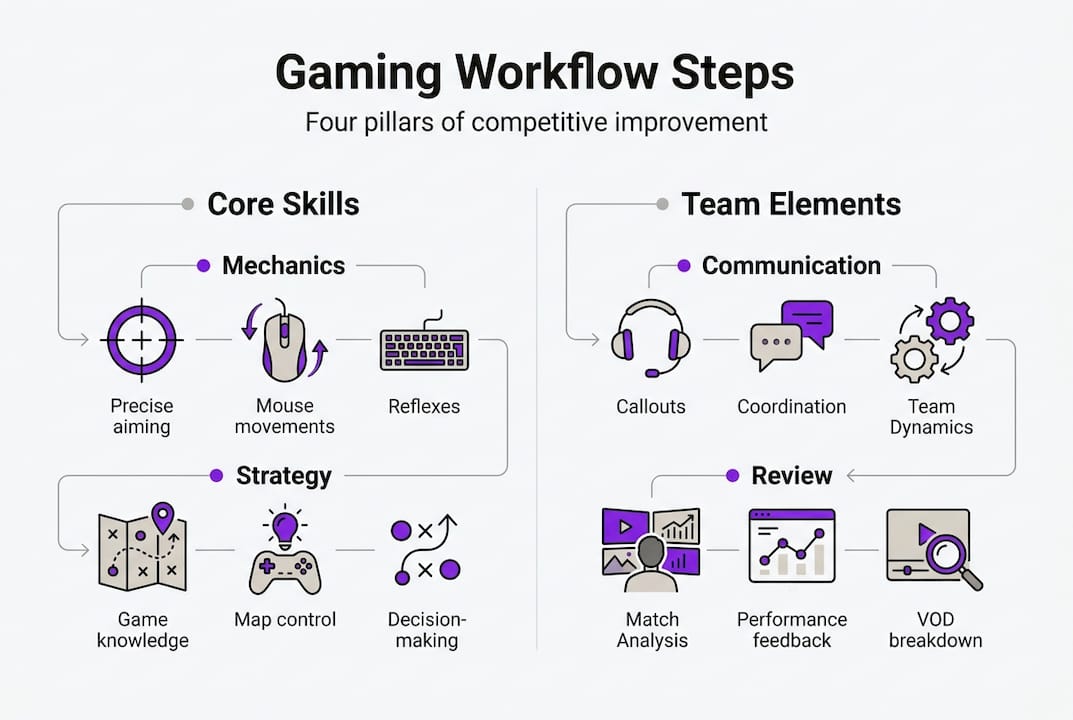
This step-by-step structure forms the backbone of your competitive improvement. Let's dig into the most critical elements, including feedback, physical stamina, and avoiding burnout.
Make it stick: Feedback, adaptation, and avoiding burnout
A workflow without feedback is just a schedule. The feedback loop is what turns repetition into growth. After every session, you need objective data, not feelings, to guide your next move.
Structured review with immediate feedback improved decision-making by 17%. Pomodoro focus cycles (25 minutes of work followed by a 5-minute break), tilt tracking, and adapting to new patches are all vital parts of a sustainable system. Use analyzing esports performance tools to make your review sessions more precise.
"The players who improve fastest aren't the ones who play the most. They're the ones who review the most honestly."
Physical training is not a bonus. HIIT improved gaming metrics in FPS (first-person shooter) players, boosting stamina and sleep quality. Build 30-60 minutes of physical activity into your daily routine and treat it as part of your workflow, not separate from it.
Here's how to keep your workflow sustainable:
- Track tilt triggers: Note what situations cause emotional reactions that hurt your play. Awareness is the first fix.
- Use Pomodoro cycles during theory and review sessions to maintain focus without mental fatigue
- Adapt weekly: Review your workflow every Sunday. If the meta shifted or your team's weaknesses changed, your training focus should too.
- Communicate workload: Use team communication strategies to flag when someone is overloaded before it becomes a problem.
With these systems for feedback and resilience in place, you can spot problems early and keep progressing.
Troubleshooting: Common mistakes and how to fix them
Even players with good intentions fall into patterns that quietly kill their progress. Here are the most common workflow mistakes and how to correct them fast.
- Focusing only on mechanics: Mechanics matter, but ignoring strategy and teamwork creates a ceiling. Schedule all four workflow phases every day, not just aim training.
- Skipping debriefs: Post-scrim VOD review feels slow, but it's where the real learning happens. Make it non-negotiable.
- No recovery plan: Deliberate practice and recovery are the keys to long-term success. Skipping sleep or breaks doesn't make you tougher. It makes you slower.
- Ignoring tilt and burnout signals: Frustration is data. If you're tilting every session, your workload or expectations need adjusting.
- Treating every session the same: Some days are for high-intensity scrims. Others are for light mechanics and mental reset. Vary the intensity intentionally.
Pro Tip: At the end of each week, rate each workflow phase from 1 to 5 based on how consistently you executed it. Anything below a 3 gets a specific fix plan for the following week.
For players thinking long-term, long-term esports growth requires building habits that survive bad weeks, roster changes, and meta shifts.
By planning for and correcting these mistakes, you'll maximize the return on your efforts.
Expected progress: Measuring results and refining your workflow
Progress in esports is real, but it's rarely linear. Knowing what to measure and when to adjust keeps you moving forward even when it feels slow.
- Track weekly metrics: KDA (kills, deaths, assists), reaction speed, accuracy percentages, and teamwork ratings. Log them every week without exception.
- Compare trends, not single sessions: One bad day means nothing. A downward trend over two weeks means something needs to change.
- Review workflow phases monthly: Which phases are you executing well? Which are you skipping or rushing? Adjust time allocations based on real data.
- Set 30-day benchmarks: Pick one measurable goal per month. Improve average accuracy by 5%, reduce death-to-kill ratio by 10%, or increase successful callout execution in scrims.
- Celebrate process wins: Showing up consistently, completing VOD reviews, and executing the warm-up routine are wins worth tracking alongside in-game stats.
Pros devote nearly 39% of game time to structured training, with clear gains in performance, physiology, and mental resilience. That ratio is a useful benchmark for your own schedule.
| Metric | What to track | How often |
|---|---|---|
| KDA and accuracy | In-game stat tracker | After every session |
| Reaction time | Aim trainer scores | Weekly |
| VOD review completion | Session log | Weekly |
| Physical training | Workout log | Daily |
| Workflow phase execution | Self-rating (1-5) | Weekly |
Mastering your competitive gaming environment is the foundation that makes all of these metrics meaningful. Without the right setup, even the best workflow loses efficiency.
Take the next step with structured esports support
Building a competitive gaming workflow on your own is possible, but doing it inside a structured team environment accelerates everything. At Xyra Esports, we've built a competitive organization around exactly the kind of disciplined, phase-based development this guide covers. Whether you're looking for coaching, a team to scrim with, or a community that takes improvement seriously, we provide the structure, accountability, and resources to help you grow faster. Our platform connects players with coaches, analysts, and teammates who operate with the same commitment to deliberate practice and long-term development that separates serious competitors from casual players.
Frequently asked questions
How many hours do pro esports players practice each day?
Most professional players train 6-10 hours daily with structured blocks for mechanics, strategy, team play, and recovery. The key is that each block has a specific purpose, not just accumulated time.
What's the best way to balance solo and team training?
Prioritize goal-driven team sessions but build in solo focus blocks for mechanics or mindsets that align with team strategy. Deliberate team-oriented practice yields better long-term results than solo grinding alone.
Should I do physical exercise as part of my workflow?
Yes. Cardio and HIIT improve reaction time and sleep quality in esports players. Thirty to sixty minutes of physical activity daily is a competitive advantage, not a distraction.
How do I avoid burnout as an esports player?
Use work-rest cycles like Pomodoro, track tilt risks, and schedule regular breaks and mental resets. Pomodoro focus and tilt tracking are proven tools for keeping your training sustainable over months.
What kind of progress should I expect using a competitive gaming workflow?
Consistent routine brings steady skill, discipline, and performance gains over weeks and months. Structured routines yield steady improvements in pro players across performance, physiology, and mental resilience metrics.