
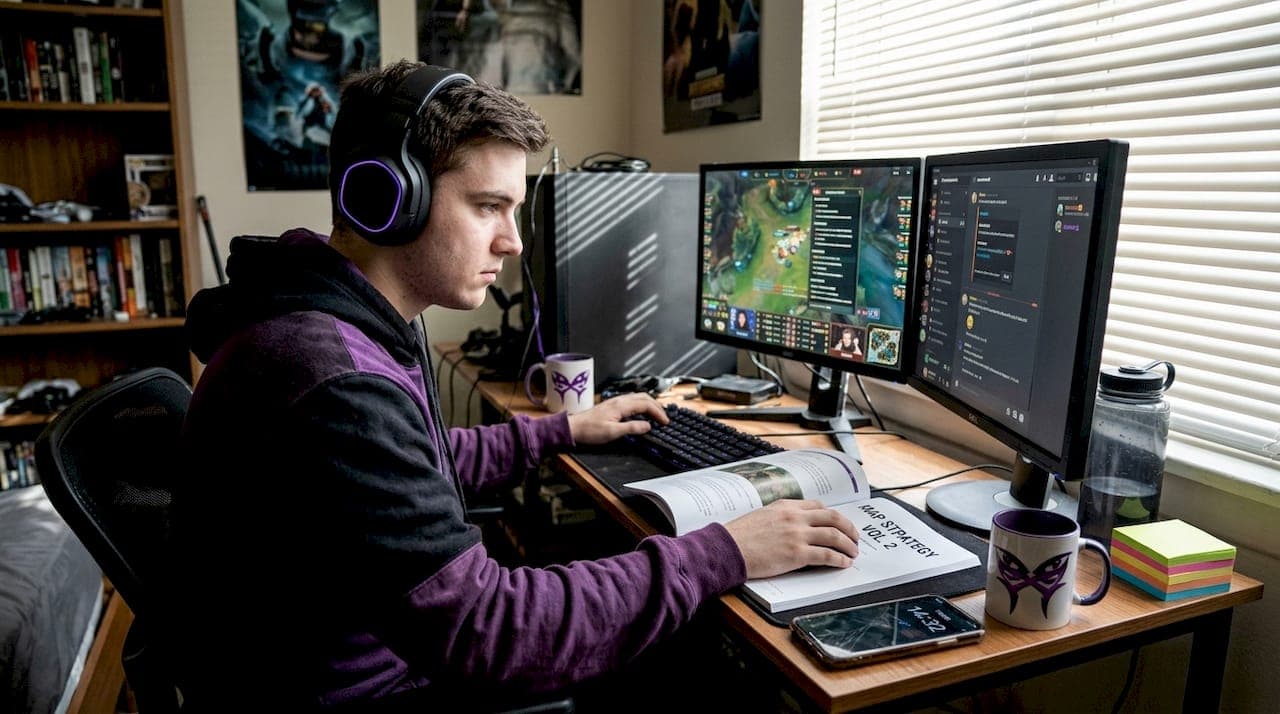
Aspiring esports players often struggle to structure their training effectively, leading to inconsistent progress and missed opportunities for improvement. Without a clear roadmap, it's easy to waste hours on unfocused practice or overlook critical areas like mental resilience and physical wellness. A comprehensive training checklist addresses these gaps by providing a systematic framework that covers all essential components of competitive gaming development. This article delivers a detailed, actionable checklist designed to help you organize your practice sessions, track your progress, and build the skills necessary for sustained competitive success across any esports title.
Table of Contents
- Key Takeaways
- Key criteria for an effective esports training checklist
- Essential items on your daily and weekly esports training checklist
- Comparing training approaches: solo practice, team training, and coaching
- Customizing your esports training checklist for lasting performance gains
- Enhance your esports journey with Xyra Esports
- FAQ
Key Takeaways
| Point | Details |
|---|---|
| Structured daily routines | A systematic training checklist organizes practice across skill, mental resilience, physical wellness, equipment, and teamwork to drive consistent improvement. |
| Mental and physical wellness | The article emphasizes maintaining focus, managing tilt, staying physically healthy, and preventing burnout to sustain peak performance. |
| Equipment optimization | Using the right hardware and data driven analysis removes technical barriers and supports progress tracking. |
| Teamwork and communication | Dedicated practice on communication protocols and role understanding builds coordinated strategy and reduces errors in high pressure matches. |
Key criteria for an effective esports training checklist
Every competitive player needs a training plan that addresses multiple performance dimensions simultaneously. The most effective checklists balance five critical areas: skill development, mental resilience, physical wellness, equipment optimization, and teamwork. Focusing exclusively on mechanical practice while ignoring mental conditioning or physical health creates vulnerabilities that opponents will exploit during high stakes matches.
Structured esports training routines provide multiple benefits including skill improvement and competitive readiness. Skill development encompasses mechanical execution, game knowledge, and strategic decision making. Mental resilience involves maintaining focus during long sessions, managing tilt after losses, and performing under tournament pressure. Physical wellness includes posture correction, cardiovascular health, and injury prevention through targeted exercises.
Equipment optimization ensures your hardware setup eliminates technical barriers to peak performance. This means proper monitor refresh rates, responsive peripherals, ergonomic seating, and stable internet connectivity. Teamwork development requires dedicated practice on communication protocols, role understanding, and coordinated strategy execution.
Many players overlook mental and physical components, treating esports purely as a cognitive challenge. This approach leads to burnout, repetitive strain injuries, and performance plateaus. A comprehensive checklist prevents these gaps by forcing regular attention to all performance dimensions.
Pro Tip: Integrate specific, measurable goals into each checklist category. Instead of "improve aim," set targets like "achieve 75% accuracy on tracking drills" or "reduce average reaction time to 180ms." Quantifiable metrics let you track progress objectively and adjust training intensity based on data rather than subjective feelings.
Key areas your checklist must address:
- Mechanical skill drills tailored to your primary game and role
- Game knowledge study including meta analysis and patch notes
- Mental conditioning exercises for focus and stress management
- Physical routines preventing repetitive strain and maintaining energy
- Equipment maintenance and optimization checks
- Team practice sessions with structured communication goals
- Performance review and goal adjustment periods
Essential items on your daily and weekly esports training checklist
Your training checklist should distinguish between daily fundamentals and weekly strategic activities. Daily practice builds muscle memory and maintains sharp reflexes, while weekly sessions provide space for deeper analysis and course correction. This rhythm prevents stagnation while ensuring you don't neglect long term planning in favor of constant grinding.
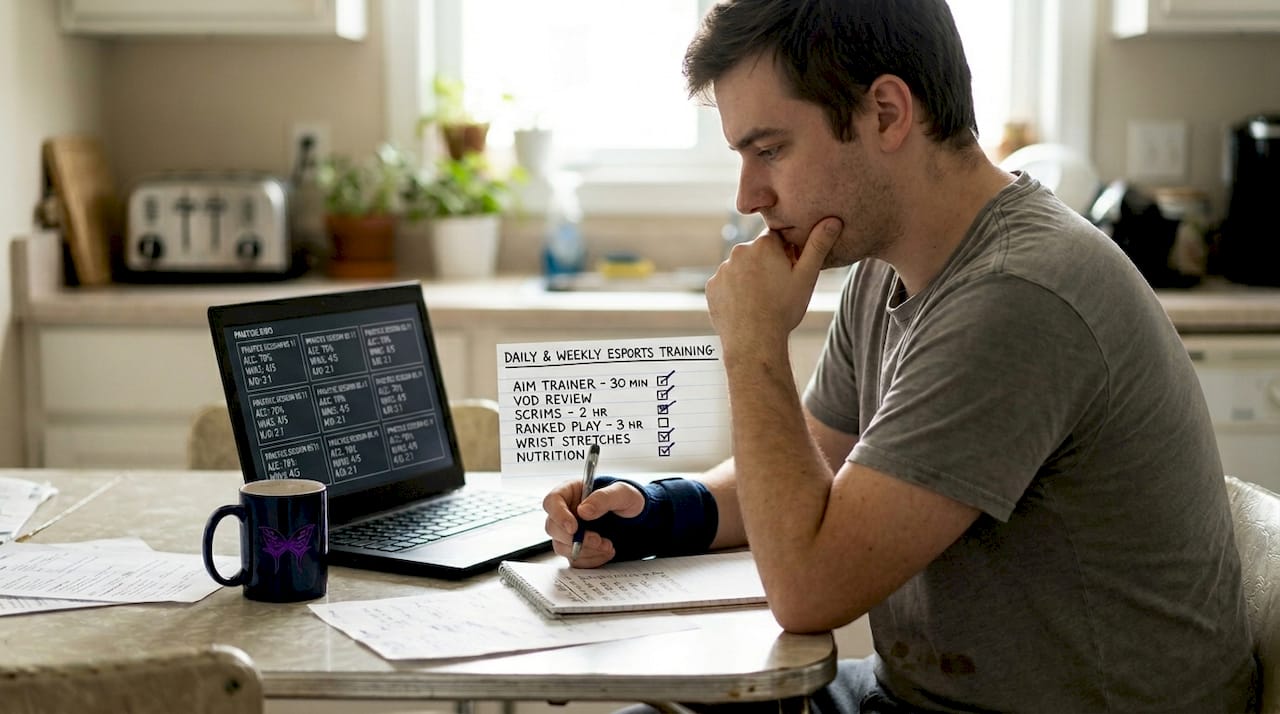
Effective esports training includes daily routines, performance review, physical exercise, and rest periods to maintain peak condition. Your daily checklist should prioritize activities that compound over time through consistent repetition. Start each session with a 10 minute warmup focusing on basic mechanics before moving into focused skill drills.
Daily training essentials:
- 15 to 30 minute warmup routine covering fundamental mechanics
- 60 to 90 minute focused practice on specific weaknesses
- 30 minute ranked or competitive play applying trained skills
- 10 minute cooldown with stretching and posture correction
- Brief mental check noting energy levels and focus quality
Weekly strategic activities:
- Review recorded gameplay footage identifying decision making errors
- Analyze current meta shifts and adjust champion or strategy pool
- Conduct team scrimmages with post game debriefs on communication
- Update performance metrics and adjust short term goals
- Schedule one full rest day with no competitive gaming
- Perform equipment maintenance and optimize settings if needed
Physical wellness integration prevents the injuries that derail promising careers. Include 20 minutes of stretching targeting wrists, neck, and shoulders daily. Add three 30 minute cardio sessions weekly to maintain cardiovascular health and mental clarity. These activities feel like distractions initially, but they directly impact your ability to maintain focus during marathon practice sessions.
Mental training deserves equal priority with mechanical drills. Spend 10 minutes daily on breathing exercises or meditation to build emotional regulation skills. Practice visualization techniques before important matches, mentally rehearsing successful plays and confident decision making. This mental preparation translates to calmer performance under tournament pressure.
Pro Tip: Use interval timers and tracking software to structure practice sessions precisely. Apps like Toggl or simple Pomodoro timers prevent unfocused grinding by enforcing breaks and tracking time allocation across different training categories. Review this data weekly to ensure balanced attention across all checklist areas rather than defaulting to comfortable activities.
Comparing training approaches: solo practice, team training, and coaching
Different training methods serve distinct purposes in your development journey. Solo practice excels at mechanical refinement and allows flexible scheduling around your availability. Team training builds communication skills and strategic coordination that only emerge through live coordination with teammates. Coaching accelerates improvement by providing expert feedback that self analysis often misses.
Different training approaches including solo, team practices, and coaching provide distinct benefits that influence skill development and competitive readiness. Understanding when to emphasize each method optimizes your time investment and addresses specific growth needs at different skill levels.
Solo practice gives you complete control over session focus and pacing. You can drill specific mechanics repeatedly without coordinating schedules or worrying about wasting teammates' time. This approach works best for fundamental skill building, trying experimental strategies, and working through mental blocks privately. However, solo practice can't replicate the chaos and communication demands of real competitive matches.
Team training develops the coordination and trust essential for competitive success. Regular scrimmages with consistent teammates build intuitive understanding of each player's tendencies and decision making patterns. You learn to communicate efficiently under pressure and execute coordinated strategies that solo practice can't simulate. The downside is scheduling complexity and potential friction when teammates have conflicting improvement priorities.
Coaching provides personalized feedback identifying blind spots in your gameplay and decision making. A skilled coach spots inefficient habits, suggests targeted drills, and holds you accountable to structured improvement plans. Coaching accelerates progress significantly but requires financial investment and finding a coach whose expertise matches your game and goals.
Factors to consider when balancing training methods:
- Available time and schedule flexibility
- Current skill level and specific weaknesses
- Budget for coaching or team resources
- Competitive goals and timeline
- Learning style preferences
| Training Method | Primary Benefits | Best For | Typical Results | Resource Requirements |
|---|---|---|---|---|
| Solo Practice | Mechanical refinement, flexible scheduling | Individual skill gaps, experimental play | Improved execution consistency | Low cost, high time commitment |
| Team Training | Communication, strategic coordination | Competitive match preparation | Better synergy and teamwork | Moderate cost, scheduling coordination |
| Coaching | Personalized feedback, accelerated learning | Breaking plateaus, structured improvement | Faster skill development | Higher cost, regular sessions |
Customizing your esports training checklist for lasting performance gains
A generic checklist provides a starting framework, but sustained improvement requires tailoring training priorities to your unique situation. Your strengths, weaknesses, game title, available time, and competitive goals all influence which checklist elements deserve emphasis. Regular customization prevents wasted effort on areas where you're already strong while addressing genuine development needs.
Start by honestly assessing your current performance across all checklist categories. Record gameplay and identify whether losses stem from mechanical errors, poor decision making, communication breakdowns, or mental fatigue. This diagnostic process reveals where focused training delivers maximum impact versus areas requiring only maintenance practice.
Goal setting and adapting training routines based on progress are key to sustained esports performance improvement. Set both short term objectives achievable within two to four weeks and long term goals spanning three to six months. Short term targets maintain motivation through frequent wins, while long term goals provide direction for major skill development projects.
Adjust checklist intensity based on your competition schedule and energy levels. During tournament preparation, increase ranked play and team scrimmages while reducing experimental solo practice. After major competitions, scale back intensity to allow mental recovery and prevent burnout. This periodization approach maintains peak performance when it matters most.
Incorporate recovery practices proactively rather than waiting for burnout symptoms. Schedule complete rest days weekly where you avoid competitive gaming entirely. Use these days for light physical activity, social connection outside gaming, or creative hobbies that engage different cognitive skills. This variety prevents mental staleness and maintains genuine enthusiasm for training.
Customization considerations:
- Game specific mechanics requiring focused drill time
- Role requirements within your team composition
- Tournament schedule and preparation timeline
- Physical limitations or injury prevention needs
- Mental energy patterns and optimal practice times
- Available resources for coaching or premium tools
Pro Tip: Review and update your checklist every four weeks minimum. As you improve, previously challenging drills become routine maintenance while new weaknesses emerge at higher skill levels. Regular checklist evolution ensures training remains challenging and relevant rather than becoming comfortable but ineffective habit. Track which adjustments correlate with performance improvements to refine your personal training methodology over time.
Enhance your esports journey with Xyra Esports
Implementing a comprehensive training checklist transforms scattered practice into structured skill development, but the journey becomes easier with community support and expert guidance. Xyra Esports provides aspiring competitive players with resources, coaching programs, and a disciplined team environment designed to accelerate improvement across multiple esports titles.
Our organization emphasizes structured training, accountability, and long term player development rather than casual participation. Whether you're refining mechanical skills, seeking team coordination opportunities, or looking for coaching to break through performance plateaus, Xyra Esports offers the framework and community to support your competitive goals. Visit our homepage to explore training resources, connect with like minded players, and discover how our structured approach can enhance your esports development.
Consistent, structured training separates players who plateau from those who reach competitive excellence. Join a community that prioritizes disciplined improvement and provides the resources to make your training checklist truly effective.
FAQ
How often should an aspiring esports player update their training checklist?
Update your training checklist every four to six weeks to stay aligned with evolving skills and goals. Major competitions or significant meta changes warrant immediate checklist adjustments. Review performance metrics and gameplay footage during update sessions to identify new weaknesses requiring focused attention. Stale checklists lead to comfortable but ineffective practice routines that don't address current development needs.
What are the best physical exercises to complement esports training?
Stretching, aerobic exercises, and posture training help prevent injuries and sustain focus. Target wrist, shoulder, and neck stretches daily to combat repetitive strain from gaming. Include three weekly cardio sessions like jogging or cycling to maintain cardiovascular health and mental clarity. Strength training focusing on core and back muscles supports proper posture during long practice sessions, reducing fatigue and injury risk.
How can esports players prevent burnout during intense training periods?
Balancing practice with rest and mental wellness activities prevents burnout and maintains performance. Schedule complete rest days weekly where you avoid competitive gaming entirely. Incorporate varied activities like physical exercise, social time, or creative hobbies to engage different mental systems. Monitor signs of mental fatigue including irritability, declining performance despite practice, or loss of enjoyment, then immediately reduce training intensity before burnout becomes severe.
Should beginners follow the same training checklist as advanced players?
Beginners should emphasize fundamental mechanics and game knowledge over advanced strategic concepts. Start with shorter practice sessions focusing on basic execution consistency before adding complex decision making drills. As skills develop, gradually introduce team coordination, meta analysis, and mental conditioning elements. Advanced players need checklists emphasizing refinement, strategic innovation, and maintaining peak performance rather than building foundational skills.
How do you balance individual skill training with team practice requirements?
Allocate 60 to 70 percent of training time to individual skill development and 30 to 40 percent to team coordination. Solo practice builds the mechanical foundation and game knowledge that makes team practice productive. Schedule team sessions strategically around competition preparation when coordination matters most. Communicate openly with teammates about individual training priorities to ensure team practice addresses collective weaknesses rather than repeating comfortable drills.