

Running a gaming tournament sounds exciting until the bracket breaks, a player disconnects mid-match, and three people are arguing in your Discord server at the same time. Tournament day chaos is real, and it catches even well-intentioned organizers off guard. The difference between a forgettable event and one players talk about for months comes down to preparation, structure, and the right tools. This guide walks you through every stage of hosting a competitive gaming event, from setting your goals to building a legacy that keeps your community coming back.
Table of Contents
- Set goals and define your tournament type
- Pick the right tools and manage logistics
- Establish rules, policies, and communication
- Prioritize safety and ensure event integrity
- Monitor, evaluate, and build event legacy
- What most guides miss: The secret to unforgettable tournaments
- Ready to host your next big event?
- Frequently asked questions
Key Takeaways
| Point | Details |
|---|---|
| Define clear goals | Choose your tournament structure and objectives before launching to set expectations for everyone involved. |
| Use the right tools | Select platforms with automation and reliable logistics to streamline workflow and enhance the player experience. |
| Communicate rules early | Publish rules and policies in advance to prevent disputes and build trust with participants. |
| Prioritize safety | Address both LAN and online safety to ensure fair play and protect everyone involved. |
| Learn from every event | Gather feedback, evaluate your performance, and continuously improve future tournaments. |
Set goals and define your tournament type
Before you open registrations or pick a game, you need to know what you are actually trying to accomplish. Are you building community, raising funds, scouting competitive talent, or creating content? Your answer shapes every decision that follows. A fundraiser needs a different format than a ranked qualifier, and a casual community event should feel nothing like a professional league.
Start by defining your core objective, then match your tournament structure to it. Here are the most common formats and when to use each:
- Single elimination: Fast, simple, great for large casual pools. One loss and you are out.
- Double elimination: Fairer for skilled players. Losers get a second chance through a lower bracket.
- Round robin: Every team plays every other team. Best for smaller groups where you want maximum match time.
- League format: Ongoing over weeks or months. Ideal for community building and long-term engagement.
Also consider whether your event is online or in-person, what your prizing looks like, and whether your audience skews casual or competitive. These factors directly affect how you structure sign-ups, scheduling, and communication. Exploring esports event ideas can help you think beyond standard formats and add creative twists that boost participation.
Understanding community event benefits is also worth your time, especially if your primary goal is growing your player base rather than crowning a champion.
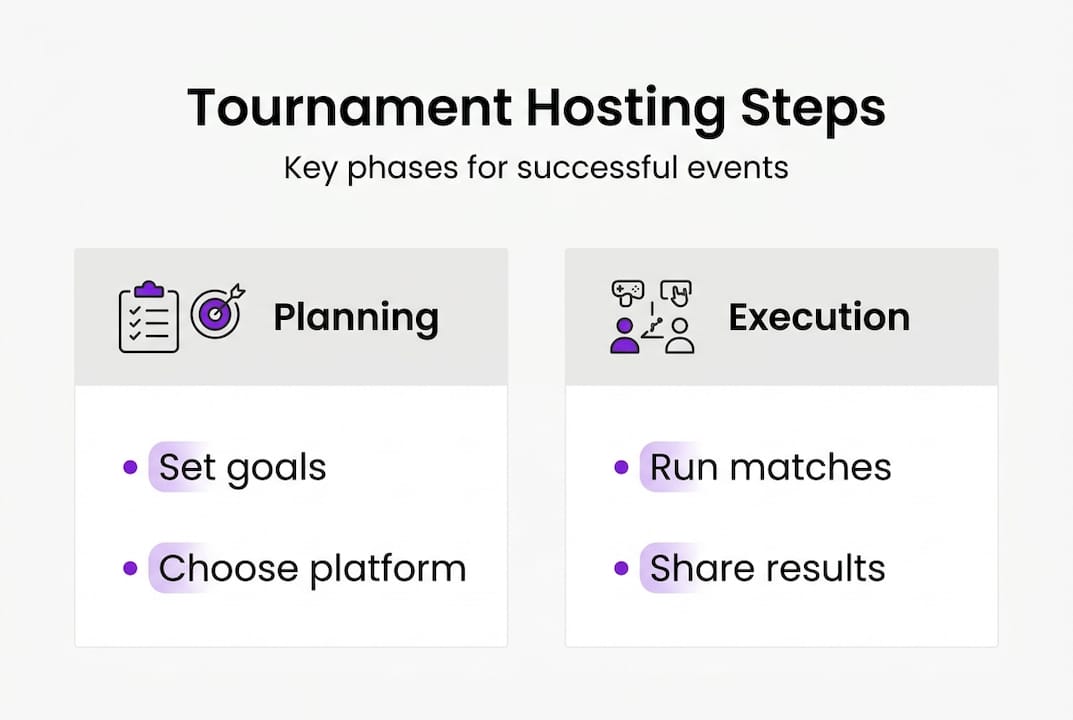
Pro Tip: Match your game genre to your format. Fast-paced shooters work well with single elimination because matches are short. Strategy games or MOBAs benefit from double elimination since a single bad game does not define a team's skill level. Automating brackets, check-ins, and scoring helps match your structure to your goals and cuts down manual work significantly.
With your goals in mind, your next step is selecting the right platform and tools.
Pick the right tools and manage logistics
The platform you choose can make or break your event. A clunky sign-up system or a bracket that crashes mid-round destroys player trust fast. You want tools that handle registration, bracket management, communication, and results reporting without requiring you to manually update everything.
Here is a comparison of the most widely used tournament platforms:
| Platform | Best for | Key features | Scalability |
|---|---|---|---|
| Challonge | Small, casual events | Simple brackets, free tier | Low to medium |
| Battlefy | Mid to large events | Registration, scheduling | High |
| Toornament | Professional events | Custom branding, API | High |
| Start.gg | Community tournaments | Player profiles, seeding | Medium to high |
Recommended platforms like Challonge, Battlefy, and Toornament each serve different scales, so pick based on your expected registration count and how much customization you need.
Beyond the platform itself, your logistics checklist should cover:
- Sign-up system: Collect team names, player IDs, contact info, and any eligibility requirements upfront.
- Communication tools: Use Discord or a dedicated server for announcements, match calls, and support tickets.
- Bracket management: Automate seeding and advancement wherever possible.
- Streaming setup: Decide early if you are broadcasting, and test your stream key and overlays ahead of time.
- Anti-cheat measures: For online events, define what software or verification steps players must complete.
Reviewing your team process for tournaments before finalizing logistics can help you spot gaps in your workflow before they become problems on event day.
Pro Tip: Do a full dry run of every digital tool at least 72 hours before announcing the event. If your bracket software glitches during testing, you still have time to switch platforms without panicking.
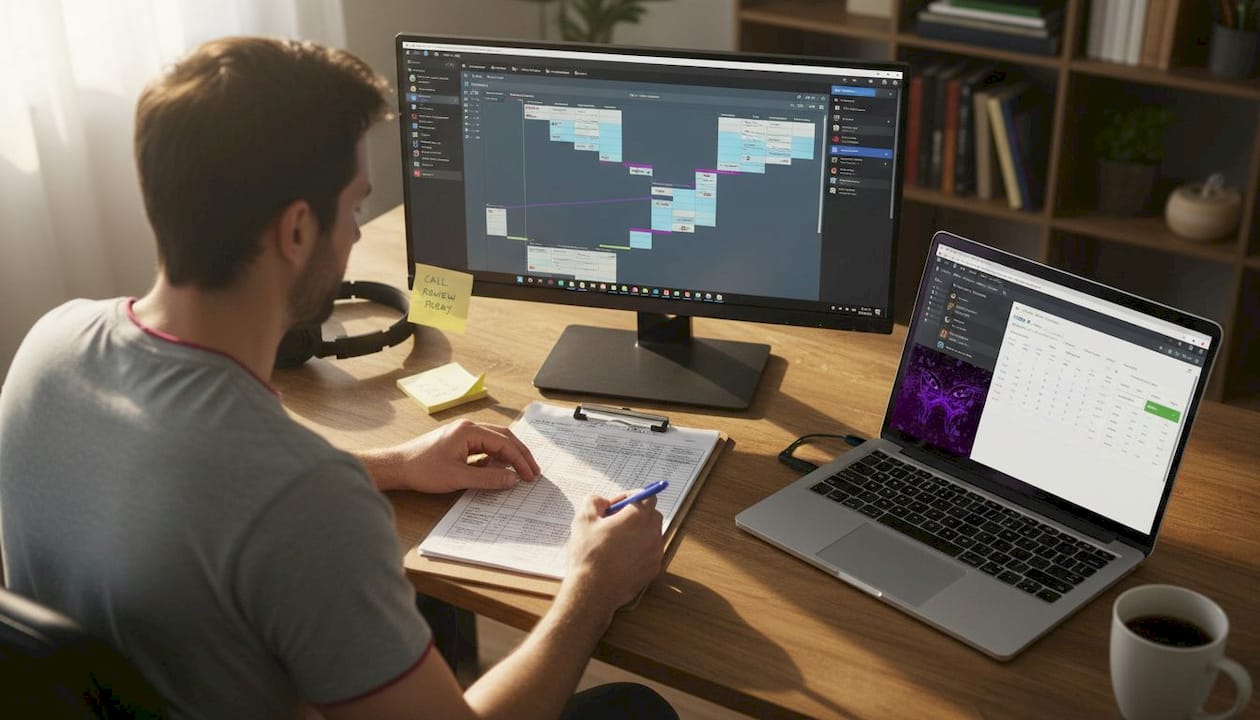
After selecting your platform and sorting logistics, it is time to focus on your rulebook and fair play.
Establish rules, policies, and communication
A tournament without clear rules is just organized chaos. Your rulebook is the foundation of a fair and dispute-free event. Every participant should know exactly what to expect before they click register.
Here are the essential elements every rulebook needs:
- Eligibility requirements: Age, region, rank, or team composition rules.
- Match settings: Game mode, map pool, server region, and any banned characters or items.
- Scoring and advancement: How wins are counted and how players move through the bracket.
- Disconnect policy: What happens if a player loses connection mid-match. Does the match restart? Does the disconnecting player forfeit?
- Dispute resolution: A clear process for submitting complaints, who reviews them, and how long decisions take.
- Code of conduct: Expectations around sportsmanship, communication, and consequences for violations.
For sanctioned events, rules must be public 4 weeks prior, with clear qualifiers, tie-resolution methods, and reporting timelines included.
"Clear rulebook and disconnect policies prevent 80% of disputes." — ESL cases
Do not just post the rulebook and hope people read it. Send it directly through your communication channels, pin it in your Discord, and require participants to confirm they have read it during registration. Referencing professional team standards can give you a useful framework for the conduct and accountability sections of your rulebook.
With policies set and communication channels in place, you are ready to focus on player safety and event integrity.
Prioritize safety and ensure event integrity
Safety is not just a checkbox. It is what separates a professional event from a liability. Whether you are running a LAN event in a venue or an online tournament with hundreds of players, integrity and safety need active management.
For in-person (LAN) events, your safety checklist should include:
- Electrical load check: Verify the venue can handle the power draw from all gaming rigs and peripherals. Use GFCI outlets where required.
- Network redundancy: Have a backup internet connection ready. A single ISP failure should not end your event.
- Ergonomics and health: Provide adequate seating, schedule breaks, and ensure the space is well-ventilated.
- Clear exits: Mark emergency exits and keep pathways clear throughout the event.
- On-site medical awareness: Know where the nearest first aid kit is and have a point of contact for emergencies.
For online events, integrity is your biggest challenge. Use anti-cheat software appropriate to the game, verify player identities against registration data, and monitor for unusual performance spikes that might indicate external assistance.
"LAN safety checks covering electrical load, GFCI outlets, redundant networks, ergonomics, and clear exits are frequently overlooked until something goes wrong."
Assign a dedicated safety officer or technical lead for the event. This person owns all safety and integrity concerns so you can focus on running the tournament. Reviewing a player preparation checklist can also help you communicate expectations to participants ahead of time.
Once the event runs safely and with integrity, monitor execution closely and gather results.
Monitor, evaluate, and build event legacy
The day of your tournament is when all your preparation gets tested. Having a clear operational plan for event day keeps your team aligned and your players informed.
Here are the core steps for smooth tournament day execution:
- Run a tech check: Confirm all platforms, streams, and communication tools are live at least two hours before start.
- Open check-in: Use your platform's check-in feature to confirm attendance and drop no-shows before the bracket locks.
- Launch brackets on time: Punctuality signals professionalism. Late starts erode trust quickly.
- Provide live support: Keep a staff member available in your support channel throughout the event to handle disputes and technical issues.
- Report results in real time: Update brackets immediately after each match so players always know their next opponent.
- Collect feedback: Send a post-event survey within 24 hours while the experience is still fresh.
Here is a simple task breakdown to keep your team organized:
| When | What | Who |
|---|---|---|
| 48 hours before | Tech rehearsal and platform test | Technical lead |
| Day of, 2 hours before | Full tech check and stream test | Technical lead |
| During event | Live bracket updates and support | Tournament admin |
| Post-event | Survey distribution and data review | Event coordinator |
A tech rehearsal 48 hours prior combined with post-event surveys is one of the most effective ways to build event legacy and continuously improve. Connecting your results and lessons to your esports growth strategies helps you turn a single event into a repeatable, scalable program.
With your first tournament complete, consider what makes a truly standout event.
What most guides miss: The secret to unforgettable tournaments
Most tournament guides obsess over polish: clean brackets, perfect overlays, flawless production. And yes, those things matter. But the events that players remember and return to are not the ones with the slickest graphics. They are the ones where participants felt ownership.
The real secret is repeat engagement. A first event that runs at 80% perfection but collects honest feedback and acts on it will outperform a one-time showcase every single time. Players who feel heard become your most loyal advocates. They recruit teammates, promote your events, and show up consistently.
Here is what that looks like in practice: invite volunteers from your player pool to help moderate or admin future events. Share post-event data with your community. Ask players what game they want to see next. Let the community vote on format changes. This is not just good community management. It is how you build something that outlasts any single event.
The structured training benefits that apply to player development apply equally to event development. Consistent iteration beats one-time perfection every time.
Pro Tip: After every event, host a short debrief with your staff and invite two or three players to join. The unfiltered feedback you get in that conversation is worth more than any survey.
Ready to host your next big event?
If you want to take your events to the next level, a supportive community can make all the difference. At Xyra Esports, we have built a structured environment where organizers, players, and creators grow together through competitive play, coaching, and community events. Whether you are planning your first tournament or refining a recurring series, our resources and network are designed to help you execute with confidence. Explore our community, connect with experienced organizers, and access event planning insights that go beyond the basics.
Frequently asked questions
What is the best platform to use for hosting online gaming tournaments?
Challonge works best for small events, while Battlefy and Toornament offer scalable registration and bracket management for larger or more complex tournaments.
How early should rules be published before a tournament?
Rules must be public 4 weeks before the event, especially for sanctioned competitions where qualifiers and tie-resolution methods must also be clearly defined.
What is the most common cause of disputes during gaming tournaments?
Unclear rules or disconnect policies cause the majority of disputes, but defined policies prevent 80% of issues before they escalate.
What safety measures are essential for in-person (LAN) tournaments?
In-person events require electrical safety checks, network redundancy, clear emergency exits, and player health measures like ergonomic seating and scheduled breaks.