
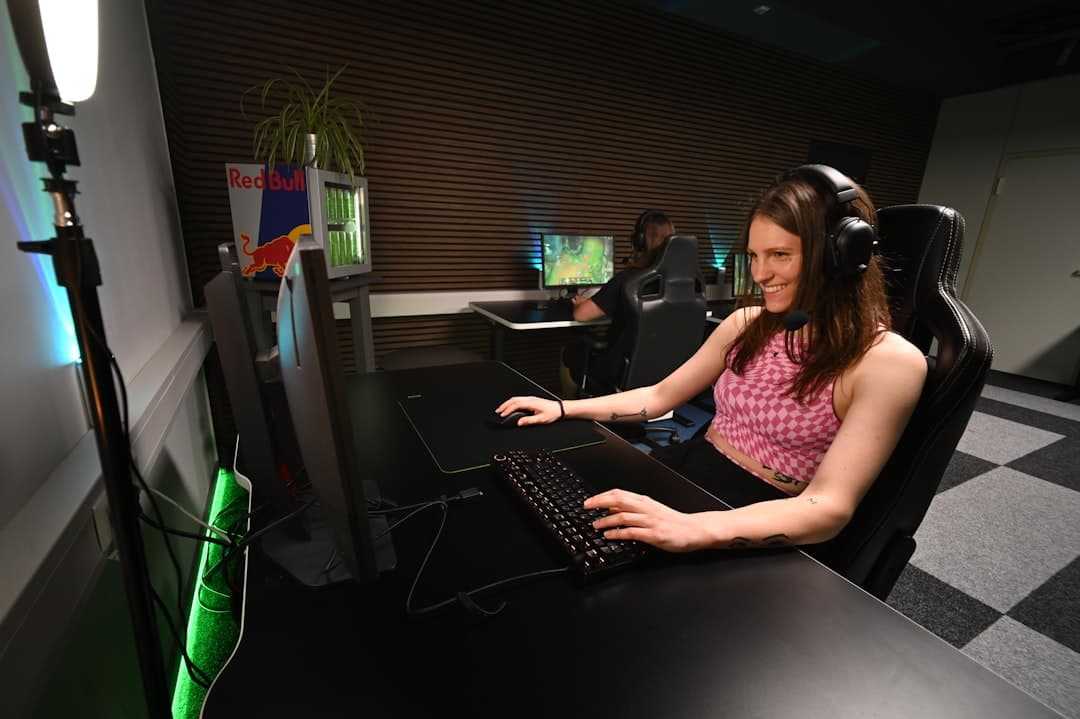
Many aspiring esports players practice for hours without seeing consistent improvement. They struggle with ineffective training schedules, poor team synergy, and burnout. This guide provides a complete step by step esports training roadmap covering prerequisites, skill development, team coordination, mental and physical preparation, and continuous improvement to help you achieve competitive success.
Table of Contents
Key takeaways
| Point | Details |
| Prerequisites matter | Reliable hardware, stable internet, and 10+ weekly training hours create the foundation for effective practice. |
| Balance individual and team skills | Combining 60-90 minute mechanical drills with regular team communication practice drives measurable improvement. |
| Mental and physical health sustain performance | Daily mindfulness exercises and ergonomic setups prevent burnout and reduce injury risk. |
| Continuous feedback accelerates growth | Bi-weekly coach reviews and systematic goal tracking refine skills faster than unstructured practice. |
| Avoid common mistakes | Neglecting team communication and poor time management reduce win rates by up to 30%. |
Prerequisites: what you need before starting esports training
Before jumping into structured training, you need the right foundation. Missing these essentials wastes your time and limits your potential.
Your gaming hardware must run your chosen title smoothly at competitive settings. A stable PC or console with a 144Hz+ monitor gives you the visual clarity to react faster. Your internet connection needs at least 50 Mbps download speed and under 30ms ping to avoid lag during crucial moments. These technical basics ensure your performance reflects your skill, not your equipment.
Create a dedicated training space free from distractions. A quiet room with proper lighting and minimal interruptions lets you focus completely on improvement. Your chair and desk should support healthy posture during long sessions. This environment becomes your training ground where consistency builds muscle memory.
You should already understand your game’s core mechanics and basic strategies. Starting with zero knowledge makes structured training inefficient. Spend your first 50-100 hours learning the fundamentals through casual play before committing to competitive training.
Pro Tip: Track your hardware performance during matches using software like MSI Afterburner to identify any bottlenecks before they cost you games.
Time commitment separates serious players from casual gamers. Plan for at least 10-15 hours per week of focused practice. This breaks down to roughly 90 minutes daily, which research shows is the sweet spot for skill retention without mental fatigue. Less time yields slow progress, while much more increases burnout risk.
| Prerequisite | Minimum Standard | Purpose |
| Hardware | 144Hz monitor, stable 60+ FPS | Smooth visual performance |
| Internet | 50+ Mbps, under 30ms ping | Lag-free gameplay |
| Environment | Quiet, ergonomic setup | Focused practice sessions |
| Base Knowledge | 50-100 hours casual play | Understanding fundamentals |
| Time Availability | 10-15 hours weekly | Consistent skill building |
Step 1: skill development fundamentals
Individual mechanics form the backbone of competitive play. Without solid fundamentals, team strategy falls apart under pressure.
Schedule daily focused practice sessions. Dedicate 60-90 minutes to mechanical drills covering aim, movement, and positioning specific to your role. Structured sessions improve player skills by over 25% within three months when combined with proper team practice. These sessions should feel challenging but not exhausting.
Daily skill development routine:
-
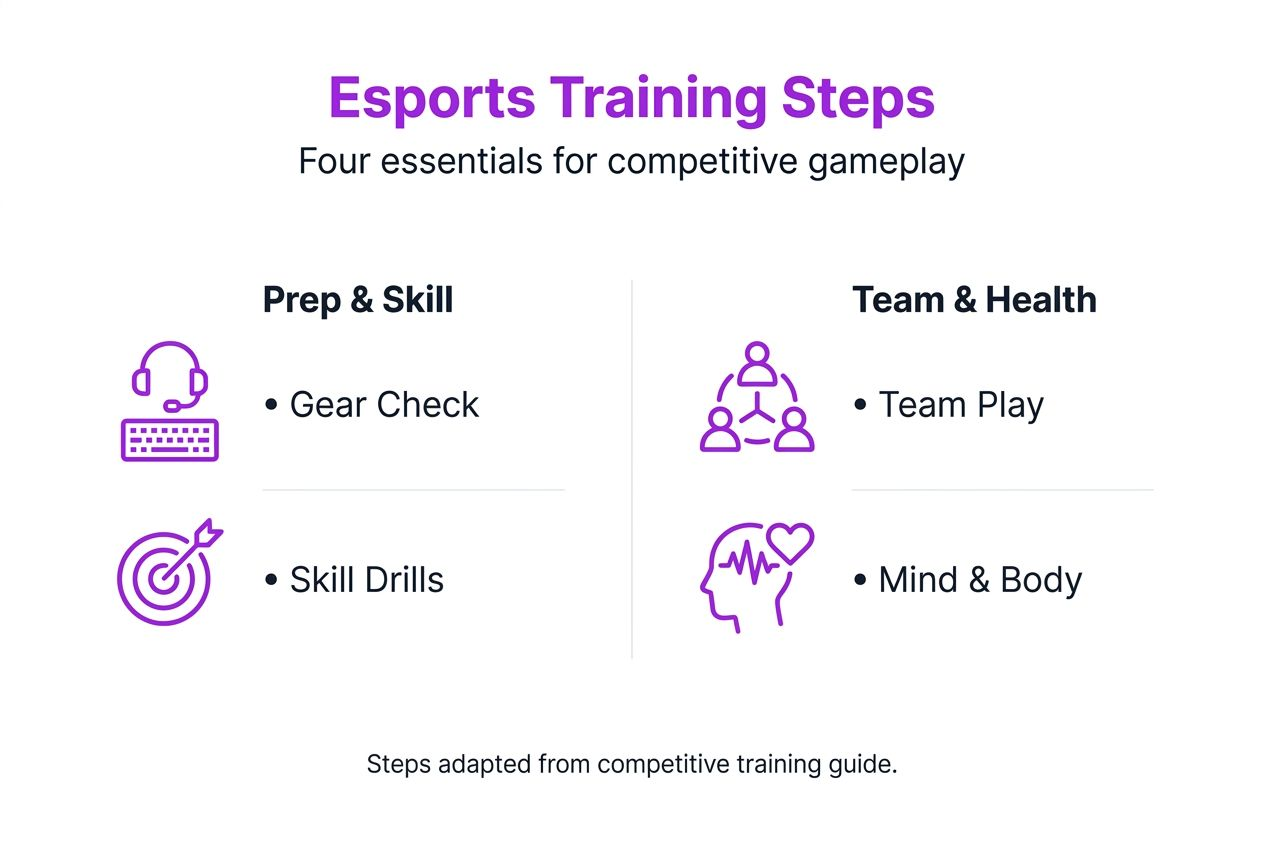
Warm up for 10 minutes with basic movement drills to activate muscle memory
-
Practice core mechanics for 40 minutes focusing on one specific skill per session
-
Run scenario training for 30 minutes applying mechanics in game-like situations
-
Cool down with 10 minutes of free play to reinforce learning naturally
Record every practice session and competitive match. Reviewing your gameplay reveals patterns you miss in the moment. Watch for positioning mistakes, reaction delays, and decision-making errors. Compare your movements to professional players in similar situations to identify improvement areas.
Pro Tip: Focus on perfecting one mechanical skill per week rather than trying to improve everything at once. Mastering crosshair placement before moving to spray control builds a stronger foundation than splitting your attention.
Apply feedback immediately in your next practice session. When a coach or teammate points out a weakness, design a drill targeting that specific issue. This targeted approach fixes problems faster than general practice. Track your progress weekly using simple metrics like accuracy percentage, reaction time, or successful executions of specific techniques.
Consistency beats intensity. Four focused 90-minute sessions per week outperform occasional marathon practices. Your brain needs time between sessions to consolidate new motor patterns and decision-making processes. Balance your solo skill work with team coordination training covered in the next step.
Step 2: team coordination and communication training
Individual skill means nothing if your team cannot coordinate effectively. Communication separates good players from championship teams.
Schedule regular team scrimmages at least three times weekly. These sessions should focus on practicing communication protocols, not just winning. Establish clear callout systems for positions, enemy locations, and strategy adjustments. Every player needs to understand their role in team fights and rotations.
Teams spending less than 20% of practice time on communication showed up to 30% lower match win rates. This data proves that mechanical skill alone cannot carry teams to victory. Dedicate entire practice sessions to communication drills without worrying about individual performance.
Essential team practice elements:
-
Voice communication clarity drills where players practice concise, actionable callouts
-
Strategy execution exercises running specific plays until they become automatic
-
Post-match debriefs analyzing team decisions and coordination breakdowns
-
Rotating shot-calling practice so every member understands leadership pressure
Develop a shared vocabulary for common situations. When everyone uses the same terms for positions and strategies, your team reacts faster under pressure. Create a document listing all callouts and review it before each session until the language becomes natural.
| Training Focus | Solo Practice | Team Practice |
| Primary Benefit | Individual mechanics | Coordination and synergy |
| Time Investment | 60-90 min daily | 3-4 sessions weekly |
| Skill Development | Aim, movement, positioning | Communication, strategy execution |
| Measurable Outcome | Personal stats improvement | Team win rate increase |
| Burnout Risk | Low with proper scheduling | Moderate without breaks |
Practice strategic coordination through custom scenarios. Set up situations your team struggles with and run them repeatedly until execution becomes smooth. This deliberate practice builds the teamwork muscle memory needed during high-pressure tournament moments. Balance these drills with full scrimmages to maintain the fun factor.
Step 3: mental and physical preparation
Your mind and body directly impact your in-game performance. Neglecting either creates a ceiling you cannot break through with skill alone.
Implement daily mindfulness sessions that improve cognitive reaction times by 18-20% over eight weeks. Spend 10 minutes before each practice session doing breathing exercises and visualization. Picture yourself executing strategies perfectly and staying calm under pressure. This mental rehearsal primes your brain for better performance.
Set up an ergonomic gaming station that supports healthy posture. Your monitor should sit at eye level, arms should rest at 90-degree angles, and feet should touch the floor. Poor ergonomics causes wrist pain, back strain, and neck tension that degrades your play over time. Invest in a quality chair and adjustable desk to protect your body during long sessions.
Pro Tip: Set a timer to stand and stretch every 45 minutes during practice. Simple movements like shoulder rolls, wrist circles, and walking for two minutes prevent repetitive strain injuries that sideline competitive players.
Physical preparation checklist:
-
Perform hand and wrist stretches before every session to prevent carpal tunnel
-
Maintain proper hydration with water, avoiding excessive caffeine or energy drinks
-
Exercise for 30 minutes daily to improve cardiovascular health and focus
-
Sleep 7-9 hours nightly to support cognitive function and reaction speed
Recognize burnout symptoms early. When you feel persistent frustration, loss of motivation, or declining performance despite practice, take a break. Schedule one full rest day weekly where you avoid competitive gaming entirely. This recovery time lets your mind and body rebuild, preventing the downward spiral that ends many promising esports careers.
Mental resilience separates players who crumble under tournament pressure from those who thrive when stakes are highest. Training your mind is just as important as training your mechanics.
Balance your training intensity throughout the week. Schedule lighter practice days after intense scrimmage sessions. Listen to your body’s signals about fatigue and adjust accordingly. Sustainable training beats burning out from overpracticing.
Step 4: review, feedback, and continuous improvement
Improvement stalls without systematic review and adjustment. Creating a feedback loop accelerates your development beyond what raw practice hours can achieve.
Schedule bi-weekly coach-led gameplay analyses lasting 60-90 minutes. During these sessions, review recorded matches focusing on decision-making patterns, positioning errors, and missed opportunities. A coach provides objective perspectives you cannot see yourself. They identify bad habits before they become ingrained and suggest specific drills to address weaknesses.
Set clear, measurable goals for each training phase. Vague goals like