
TL;DR:
- Elite esports teams prioritize structured, frequent, and clear communication for consistent high performance.
- Structured teamwork outperforms free-flow approaches in stability, adaptability, and winning repeatability.
- Focusing on deliberate, collaborative practice and strategic transitions enhances team success under pressure.
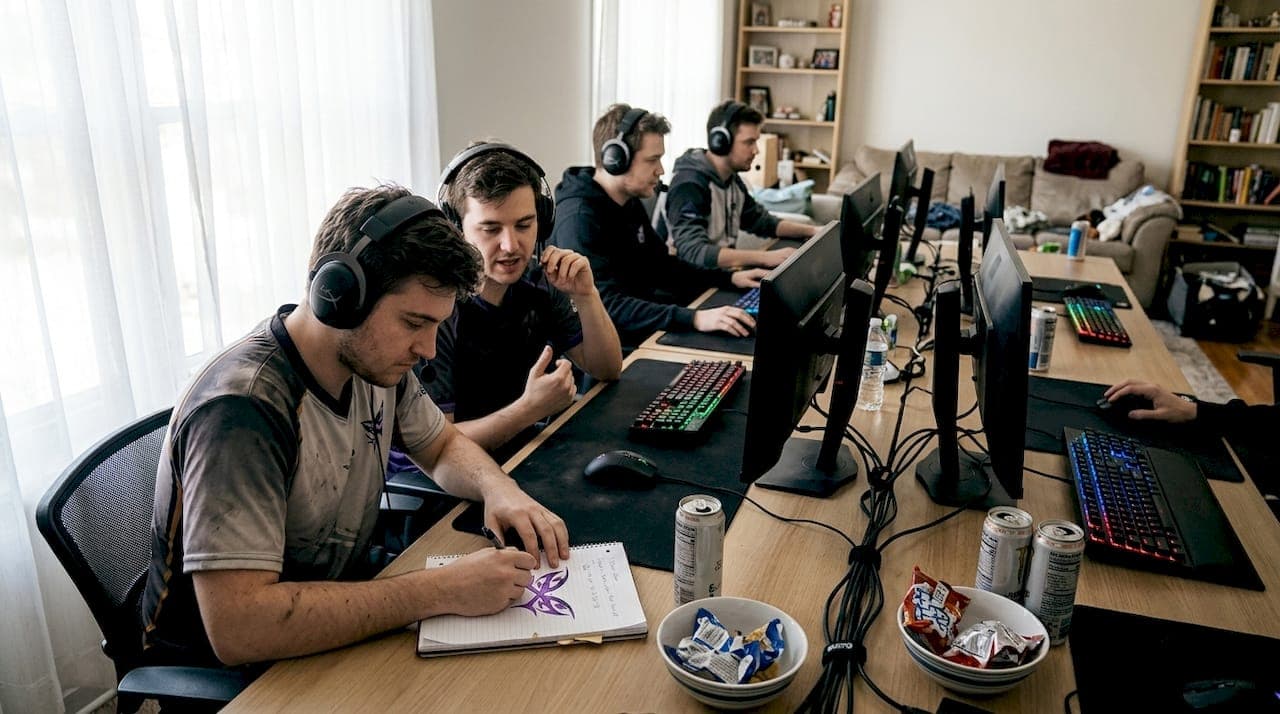
Elite teamwork is the single factor that separates championship rosters from talented squads that never quite click. Most competitive players and coaches already know that raw skill matters, but the teams that consistently win tournaments do something different with how they communicate, organize, and practice together. Research now backs what top coaches have long suspected: structure, precision, and deliberate collaboration drive results far more than individual mechanics alone. This article breaks down the criteria, strategies, and comparisons you need to build teamwork that holds up under real competitive pressure.
Table of Contents
- Core criteria for effective esports teamwork
- Top teamwork strategies used by pro esports teams
- Comparing teamwork approaches: Structured vs. free-flow
- Situational recommendations: Adapting teamwork for different games and events
- What most experts miss about esports teamwork
- Next steps: Level up your esports teamwork
- Frequently asked questions
Key Takeaways
| Point | Details |
|---|---|
| Structured communication wins | Pro teams succeed by prioritizing precise, frequent, and balanced team dialogue over chaotic or emotional chatter. |
| Strategy matches the game | Effective teamwork methods must be adapted for each esports title, with centralized leadership in MOBAs and flexible tactics in FPS. |
| Team familiarity boosts results | Working with familiar teammates correlates directly with higher win rates in competitive matches. |
| Deliberate practice matters | Focused, collective practice achieves better teamwork than endless solo grind and improves long-term performance. |
| Precision over volume | Clear, actionable statements and shared intent trump sheer communication volume for elite teams. |
Core criteria for effective esports teamwork
Before you redesign your team's communication or practice schedule, you need to know what high-functioning teamwork actually looks like. Not every team that talks a lot wins. Not every team with great players synergizes. The gap between good and elite usually comes down to a few measurable criteria.
Research confirms that expert teams communicate more frequently, more effectively, and with balanced distribution across all players. That means no single player dominates the voice channel, and every callout carries real tactical weight. This is the baseline you should measure your team against.
Here are the core attributes that define high-performing esports teams:
- Frequency: Consistent, timely callouts throughout the match, not just at critical moments
- Clarity: Short, factual statements that leave no room for misinterpretation under pressure
- Balanced roles: Every player contributes to communication, not just the IGL or shot-caller
- Strategic transitions: Callouts that move the team from one phase to the next, like rotating, trading, or resetting
- Minimal noise: Low volume of emotional or nontask statements that clog the channel during fights
The distinction between strategic transitions and emotional statements is especially important. A strategic transition sounds like "rotate B, I have flash." An emotional statement sounds like "why did you go there?" One moves the team forward. The other stalls it.
"Teams that prioritize structured, factual, and evenly distributed communication consistently outperform those relying on reactive or emotionally driven callouts, regardless of individual skill level."
If you want to build toward this standard, studying the esports training steps that elite organizations use gives you a practical starting point for embedding these criteria into daily practice.
Top teamwork strategies used by pro esports teams
With the criteria established, the next question is: what specific strategies do professional teams use to meet them? Here are the four most effective ones, ranked by impact.
-
Structured communication protocols: Pro teams define exactly what gets said, when, and by whom. This removes ambiguity and prevents voice channel chaos during high-stakes rounds. A competitive gaming workflow built around pre-defined callout formats makes this automatic over time.
-
Centralized shot-calling: One player owns the macro decisions. Others provide information, but the IGL synthesizes it and calls the play. This prevents decision paralysis and conflicting instructions mid-fight.
-
Role clarity and ownership: Every player knows their primary responsibility in any given scenario. Supports don't second-guess the carry's positioning. Fraggers don't override the lurker's setup. Clarity removes friction.
-
Active listening and feedback loops: After every round or match phase, teams run quick verbal recaps. What worked? What broke down? This habit turns each game into a learning session, not just a result.
Research shows that positive structured communication directly links to higher win rates in tournament play. The teams that win more aren't just better mechanically. They are more organized in how they share information.
In MOBA environments specifically, communication centralization peaks during collaborative plays like team fights and objective contests. That means your team's communication structure needs to be tightest exactly when the pressure is highest.
Building toward a structured esports team process takes repetition, but the payoff in match consistency is significant.
Pro Tip: More talking does not mean better communication. In a five-player team fight, one clear callout beats five overlapping ones every time. Train your team to compress information, not expand it.
Comparing teamwork approaches: Structured vs. free-flow
Two dominant philosophies shape how esports teams organize their teamwork. Understanding both helps you choose what fits your squad's current level and goals.
Structured teamwork means defined roles, pre-planned communication protocols, and deliberate practice routines. Every player knows their lane, their callout responsibilities, and the team's decision-making hierarchy. It takes longer to build but performs consistently under pressure.
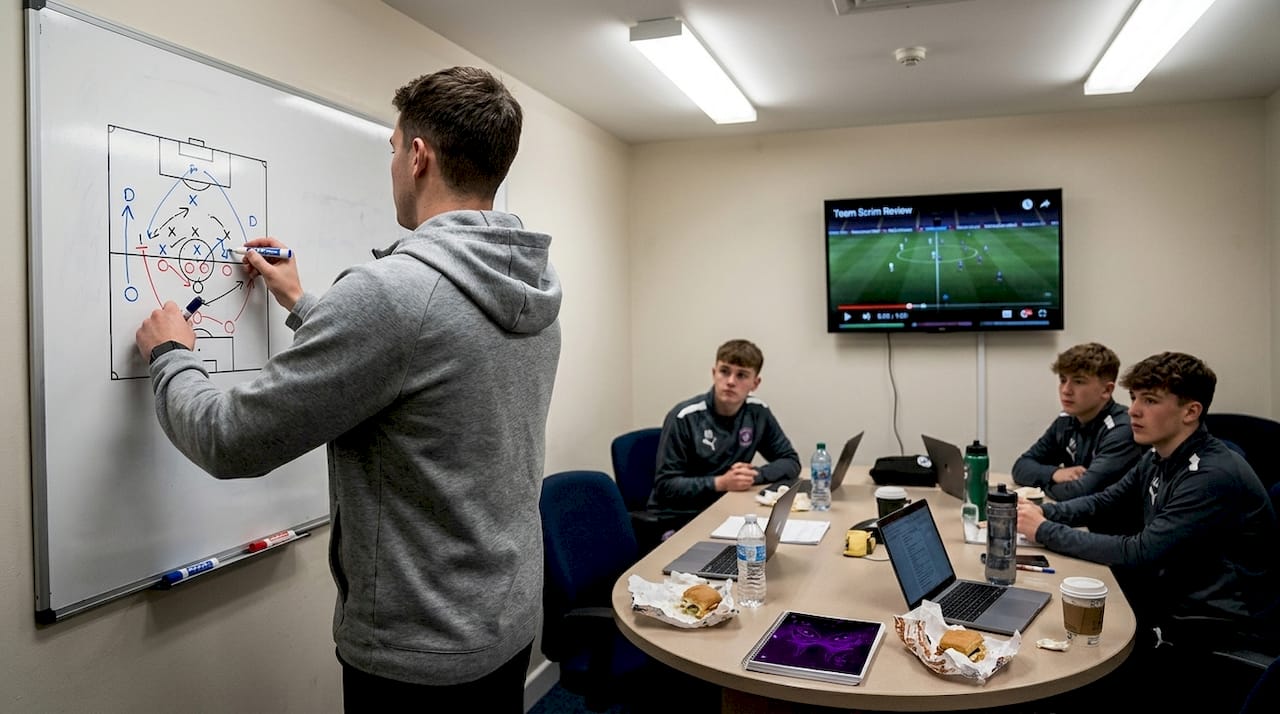
Free-flow teamwork relies on natural chemistry, improvisation, and reactive communication. Players call what they see, adapt on the fly, and lean on individual reads. It can produce brilliant moments but also collapses under tournament pressure when stakes are highest.
Here is how the two approaches compare across key performance dimensions:
| Attribute | Structured | Free-flow |
|---|---|---|
| Consistency under pressure | High | Low to moderate |
| Adaptability to new opponents | Moderate | High |
| Onboarding new players | Easier | Harder |
| Peak performance ceiling | Very high | High but inconsistent |
| Communication clarity | High | Variable |
| Suitable for | Pro and semi-pro teams | Casual and early-stage teams |
The data is clear: structured communication outperforms free-flow in professional environments. The reason is repeatability. A structured team can run the same winning play in game one and game five of a series. A free-flow team might execute it once brilliantly and never replicate it.
There is also a behavioral difference worth noting. Expert teams use strategic transitions while non-expert teams lean on emotional and nontask statements. This is not just a communication style preference. It is a measurable performance gap.
For coaches, this means the goal is not to eliminate personality or creativity. It is to build a structure that channels both into useful output. Exploring esports leadership insights gives you frameworks for how top organizations do exactly that.
Situational recommendations: Adapting teamwork for different games and events
Not every teamwork strategy works across every title. The right approach depends on your game genre, team familiarity, and event format. Here is a practical breakdown.
| Game genre | Key teamwork tactic | Communication style | Priority skill |
|---|---|---|---|
| FPS (e.g., CS2, Valorant) | Role-based callouts, utility coordination | Rapid, factual, minimal | Information compression |
| MOBA (e.g., League, Dota 2) | Centralized calls during objectives | Structured, hierarchical | Macro decision-making |
| Battle Royale (e.g., Apex, Warzone) | Dynamic roles, positional awareness | Adaptive, real-time | Situational flexibility |
| Fighting games (e.g., Street Fighter) | Individual coaching, mental prep | Pre-match focused | Composure and preparation |
For MOBA teams, communication centralizes most during collaborative moments like Baron or Dragon fights. That is when your IGL's callout structure needs to be sharpest. Practice those specific scenarios in scrimmages, not just open gameplay.
For teams with longer histories together, team familiarity improves winning probability in competitive matches. This is a strong argument for roster stability over constant shuffling.
Here are targeted recommendations based on your situation:
- New roster: Prioritize role clarity and communication drills before worrying about strategy depth
- Experienced roster in a slump: Audit your callout structure and identify where noise is creeping in
- Local events: Use them to test new communication protocols in low-stakes environments
- International competitions: Lock your structure down and reduce improvisation. Opponents will exploit inconsistency
- Online leagues: Focus on VOD review to catch communication breakdowns you miss in real time
Building a strong foundation also means investing in gaming community building that keeps your roster cohesive between events. Teams that stay connected off-server communicate better on it. You can also draw inspiration from esports event ideas to create practice scenarios that simulate real competition pressure.
What most experts miss about esports teamwork
Here is the uncomfortable truth: most teams overvalue talent and undervalue structure. The grind culture in esports celebrates the player who logs 12-hour sessions, not the team that spends an hour reviewing callout breakdowns together. That is backwards.
Collective intelligence and structured teamwork consistently outshine individual talent when it matters most. A mechanically average team with tight communication will beat a talented team with chaotic voice channels more often than most coaches want to admit.
The real missed opportunity is deliberate, collaborative practice. Most teams grind solo queue and call it preparation. But solo queue does not build team-specific habits, communication timing, or shared decision-making instincts. Those only develop through intentional team sessions with clear goals.
Investing in structured training benefits your whole roster, not just the weakest link. And focusing on competitive gaming skills as a collective, not just individually, is what actually moves the needle in tournament results. Precision in communication is a skill. Treat it like one.
Next steps: Level up your esports teamwork
You now have the criteria, strategies, comparisons, and situational frameworks to build teamwork that performs under real competitive pressure. The next move is applying them. Start by auditing your current communication structure against the criteria in this article. Identify where noise enters your voice channel and where strategic transitions break down. From there, pick one strategy to implement in your next scrim block.
For deeper resources, Xyra Esports offers structured guides, community tools, and competitive frameworks built specifically for teams that want to develop with intention. You can also work through the esports training checklist to map your team's current state against proven benchmarks and prioritize your next development steps.
Frequently asked questions
What is the most important teamwork strategy in esports?
Structured, frequent communication with balanced distribution across all players is the single most critical teamwork strategy. It directly correlates with higher win rates in competitive play.
How can esports teams adapt their teamwork for different game genres?
Teams should match their communication style to the game's demands. Communication adapts naturally to genre, so use centralized calls in MOBAs and dynamic, rapid callouts in FPS titles.
Does familiarity with teammates improve performance?
Yes. Team familiarity correlates with higher win probability in competitive matches, which is a strong case for keeping rosters stable rather than constantly rotating players.
Are emotional statements useful for pro teams?
No. Expert teams use actionable factual statements and strategic transitions, not emotional or nontask commentary. Emotional statements slow decision-making and create noise during critical moments.
What's the benefit of deliberate practice versus the grind?
Deliberate collaborative practice focused on team habits and communication structure produces better competitive results than solo grinding, because it builds the shared instincts that win matches.