

Esports teams exist in many forms, from grassroots volunteers to fully franchised professional organizations. Understanding these differences matters whether you're an aspiring player seeking the right competitive environment or an organizer building a team from scratch. Each team type operates under distinct competitive tiers, organizational models, and resource structures that directly impact player opportunities, training quality, and long-term success. This guide breaks down classification criteria, explores team types by competitive level, examines organizational structures, and compares league models so you can make informed decisions about your esports journey.
Table of Contents
- Key takeaways
- Classification criteria: understanding tiers and organizational models
- Types of esports teams by competitive tier
- Organizational types and team structures in esports
- Franchised vs open league models and their impact on esports teams
- Discover support for your esports team journey at Xyra Esports
- FAQ
Key Takeaways
| Point | Details |
|---|---|
| Classification framework | Esports teams are categorized by competitive tier and ownership model, which determines compensation, training resources, and opportunities. |
| Tier structure | Grassroots teams are volunteer based with players covering costs, Tier 2 semi pro offer stipends and structured practice, and Tier 1 professional sign contracts with salaries and full support staff. |
| Ownership models | Venture capital funded, traditional sports owned, player owned, national, and grassroots teams bring different funding levels, stability, and strategic priorities. |
| Team scope options | Some organizations run multiple titles sharing infrastructure while others focus on a single game building deep expertise and tailored resources. |
| Informed decisions | Understanding these structures helps players and organizers align expectations with available resources and opportunities. |
Classification criteria: understanding tiers and organizational models
Esports teams are classified by two primary dimensions: competitive tier and organizational ownership. These classifications determine everything from player compensation to training resources and competitive opportunities.
Competitive tiers establish the hierarchy of competition. Grassroots, Tier 2/Semi-pro, and Tier 1/Professional teams each operate with distinct characteristics. Grassroots teams function primarily as volunteer organizations with minimal financial backing. Players typically cover their own equipment costs and compete in local or online community tournaments. These teams serve as entry points for new competitive players building initial experience.
Tier 2 teams occupy the semi-professional space between amateur and elite competition. They compete in national or regional leagues and may offer stipends or partial compensation. These organizations maintain more structured practice schedules and often provide some equipment or travel support. Tier 2 teams function as critical talent pipelines, developing players who eventually move to professional rosters.
Tier 1 teams represent the pinnacle of competitive esports. Players sign formal contracts, receive guaranteed salaries, and compete in franchised or premier international leagues. These organizations employ full support staff including coaches, analysts, nutritionists, and mental performance specialists. The investment in infrastructure and player development at this level mirrors traditional professional sports.
Organizational ownership models add another classification layer. Venture capital-funded, traditional sports-owned, player-owned, national, and grassroots organizations each bring different resource levels and strategic priorities. Venture capital-backed teams like NRG Gaming pursue aggressive growth and multi-title expansion. Traditional sports franchises leverage existing fan bases and operational expertise. Player-owned teams prioritize autonomy but face greater financial volatility. National teams represent countries in international competition with government or federation support.
Team scope varies between multi-title organizations managing rosters across different games and single-game specialists focusing resources on one competitive title. Multi-title organizations benefit from shared infrastructure and brand recognition. Single-game teams develop deeper expertise in specific competitive ecosystems. Understanding these esports organization structures helps players and organizers align expectations with available resources.
Types of esports teams by competitive tier
Grassroots teams form the foundation of competitive esports ecosystems. These community-based organizations rely on volunteer leadership and player contributions. Most grassroots teams compete in open online tournaments, local LAN events, or community leagues. Players typically maintain full-time jobs or student status while competing evenings and weekends. Equipment, travel, and entry fees come from personal funds or small community sponsorships. Despite limited resources, grassroots teams provide essential competitive experience and community connections that launch many professional careers.
Tier 2 teams bridge amateur and professional competition with semi-professional structures. Semi-pro teams compete in national leagues and act as vital talent pipelines for Tier 1 organizations. Players at this level often receive monthly stipends ranging from a few hundred to several thousand dollars, though rarely enough for full financial independence. Organizations provide gaming equipment, cover tournament travel, and maintain structured practice schedules. Tier 2 teams scout talent from grassroots competition and high-ranked ladder players. For example, Valorant Tier 2 teams recruit players ranked Immortal 3 or higher who demonstrate competitive potential beyond individual skill.
Tier 1 professional teams operate as full-scale esports businesses. Professional teams feature contracted players, comprehensive support staff, and compete in franchised leagues with substantial salaries. Player contracts guarantee annual compensation ranging from tens of thousands to millions of dollars depending on game, region, and player value. Organizations employ dedicated coaches, analysts, performance psychologists, content creators, and business operations staff. Practice facilities include gaming houses or team headquarters with tournament-grade equipment. Teams compete in franchised leagues like League of Legends Championship Series or Call of Duty League, or premier circuits like Counter-Strike majors. The operational complexity and financial investment at Tier 1 require significant capital and business infrastructure. Players at this level treat competition as their primary profession with full-time commitment to structured team growth and performance optimization.
Organizational types and team structures in esports
Ownership models fundamentally shape team operations and strategic direction. Venture capital-funded organizations pursue aggressive expansion and multi-title strategies with investor capital. These teams prioritize brand building, content creation, and market share alongside competitive results. Traditional sports franchises bring established business operations and cross-promotional opportunities. Philadelphia 76ers acquiring Team Dignitas exemplifies this ownership model, combining NBA infrastructure with esports expertise. Player-owned teams offer autonomy and profit-sharing but face resource constraints and sustainability challenges compared to institutional backing.
Multi-title organizations manage rosters across different competitive games simultaneously. This approach diversifies risk, shares operational costs, and builds broader brand recognition. Teams like FaZe Clan and Team Liquid compete in Counter-Strike, League of Legends, Valorant, and multiple other titles. Single-game organizations concentrate resources on one competitive ecosystem, developing specialized expertise and deeper community connections within that game.
Team composition varies significantly by game genre. MOBA teams require five players with specialized roles: top laner, jungler, mid laner, AD carry, and support. Each role demands distinct champion pools and strategic responsibilities. FPS teams typically field five to six players with roles like in-game leader, entry fragger, AWPer or sniper, support player, and lurker. Battle royale teams range from solos to squads of three or four with flexible role assignments based on game phase and positioning.
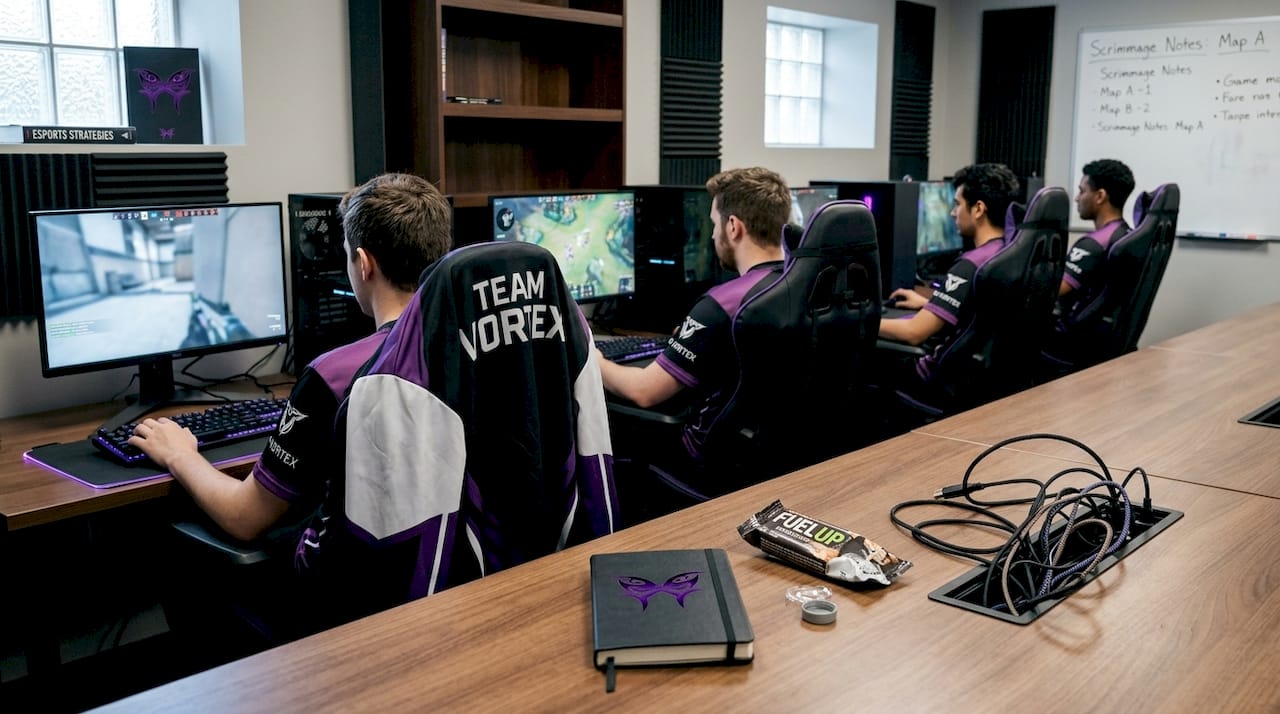
Professional team structures include defined player roles and dedicated coaching that significantly improve performance. Head coaches develop strategic approaches, manage practice schedules, and handle player development. Analysts break down opponent tendencies, review match footage, and prepare strategic reports. Performance coaches address mental resilience, communication, and team cohesion. Teams practice through scrimmages against other professional rosters, individual skill training, strategy review sessions, and video analysis. Research demonstrates team cohesion and communication impact win rates more than pure mechanical skill in team-based titles.
Pro Tip: Organizations investing in comprehensive coaching staff and structured practice regimens see measurably higher tournament performance and player retention. If you're building a team, prioritize training structure and support systems over simply recruiting the highest-ranked individual players.
Franchised vs open league models and their impact on esports teams
League structure determines team opportunities, financial stability, and competitive pathways. Two primary models dominate professional esports: franchised leagues with fixed team slots and open leagues with qualification-based participation.
Franchised leagues like Call of Duty League have fixed team slots with revenue sharing that offers financial stability but limits new entries. Teams purchase permanent league slots, sometimes costing millions of dollars. In exchange, they receive guaranteed participation, revenue sharing from league operations, and protection from relegation. This model provides predictable business environments that attract traditional sports investors and sponsors. However, franchising compresses opportunities for new organizations and Tier 2 teams seeking promotion to top-level competition.
Open leagues permit qualifiers and promotion with volatile team status and prize distributions concentrated among top performers. Teams earn spots through open qualifiers, regional competitions, or promotion from lower divisions. This creates pathways for grassroots and Tier 2 organizations to reach premier competition based purely on performance. Counter-Strike operates primarily through open circuits where any team can qualify for major tournaments. The volatility cuts both ways as teams can lose premier status through poor performance or fail to qualify for major events.
| League Model | Team Stability | Revenue Structure | New Team Opportunity | Financial Risk |
|---|---|---|---|---|
| Franchised | High (permanent slots) | Revenue sharing, guaranteed | Very limited (requires slot purchase) | Lower (predictable income) |
| Open | Variable (qualification based) | Prize money, sponsorships | High (open qualifiers) | Higher (performance dependent) |
Prize money distribution heavily favors top-placing teams in both models. Tournament winners often claim 30 to 40 percent of total prize pools. Teams placing outside top eight frequently receive minimal or zero prize money. This concentration creates financial pressure on lower-tier professional teams that struggle to cover operational costs through competition alone. Sponsorships, content creation, and merchandise sales become essential revenue streams beyond prize earnings.
Franchised leagues benefit established organizations with capital to purchase slots and sustain operations during poor competitive periods. Open leagues favor performance-focused teams willing to accept volatility in exchange for merit-based advancement opportunities. Your team's resources, risk tolerance, and competitive timeline should guide which competitive gaming environment aligns with your strategic goals.
Discover support for your esports team journey at Xyra Esports
Building or joining an esports team requires more than individual skill. You need structured training, organizational knowledge, and community support to navigate competitive tiers and team types effectively. Xyra Esports provides resources designed specifically for aspiring and professional players pursuing competitive success. Access comprehensive training guides covering mechanical skill development, strategic thinking, and team coordination. Explore organizational advice on team building, practice structure, and competitive preparation. Connect with a community focused on long-term growth, accountability, and professional development in competitive gaming. Whether you're starting at grassroots level or pushing toward professional competition, Xyra Esports offers the tools and support to advance your esports career.
FAQ
What distinguishes grassroots esports teams from professional ones?
Grassroots teams operate as volunteer-based organizations where players cover their own costs and compete in community tournaments for experience and local recognition. Professional teams employ contracted players receiving guaranteed salaries, provide comprehensive support staff including coaches and analysts, and compete in franchised or premier leagues with significant prize pools. The resource gap between these tiers affects training quality, competitive opportunities, and player development pathways.
How do franchised esports leagues affect player opportunities?
Franchised leagues create fewer total roster spots because team slots are fixed and permanent, limiting the number of organizations competing at the highest level. However, players on franchised teams benefit from greater financial stability through revenue sharing, guaranteed salaries, and protected league participation regardless of short-term performance. This trade-off means fewer players reach the top tier, but those who do enjoy more sustainable professional careers.
What is the role of support staff in professional esports teams?
Support staff including coaches, analysts, and performance specialists develop strategic approaches, analyze opponent tendencies, and improve team communication and cohesion. Coaches manage practice schedules, provide strategic direction, and handle player development. Analysts break down match footage and prepare opponent reports. Research shows teams with comprehensive support structures achieve measurably higher win rates because coordinated team play outweighs pure mechanical skill in competitive titles.
Can player-owned esports teams succeed long term?
Player-owned teams face significant sustainability challenges compared to venture capital-funded or traditional sports-owned organizations. Without institutional backing, player-owned teams struggle to secure consistent sponsorships, maintain operational infrastructure during poor competitive periods, and compete financially for top talent. While some player-owned teams exist and achieve competitive success, most eventually seek outside investment or face dissolution due to resource constraints and financial volatility inherent in performance-dependent revenue models.