
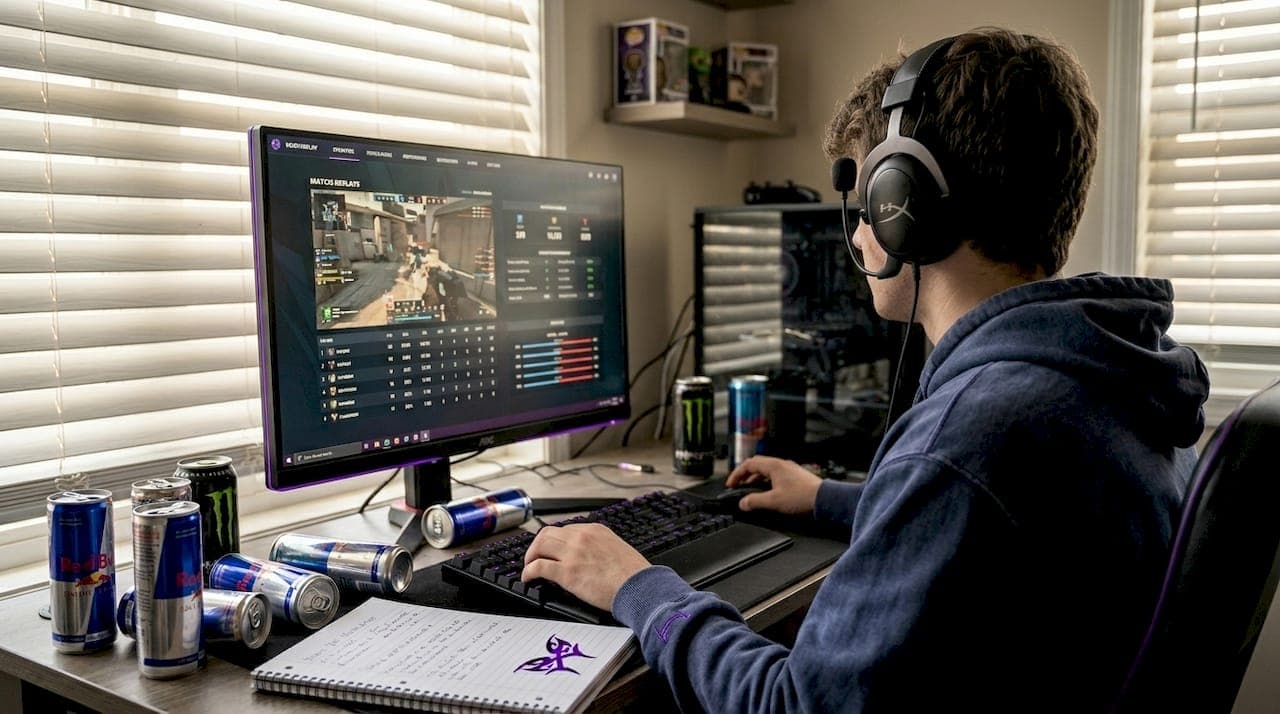
Many believe raw game statistics alone can fully explain player skill. A player with a 3.0 kill/death ratio seems objectively better than one with 1.5, right? Not quite. Esports performance analysis reveals the deeper complexity behind competitive play, combining data, replay review, and contextual metrics to evaluate gameplay accurately. This guide walks you through core concepts, key frameworks, and practical methods to understand and apply esports performance analysis. Whether you coach teams, analyze matches, or compete yourself, mastering these analytical tools will sharpen your strategic edge and elevate competitive outcomes.
Table of Contents
- Key takeaways
- What is esports performance analysis and why it matters
- Key methodologies and performance metrics in esports analysis
- Understanding the nuances, edge cases, and limitations of esports data
- Applying esports performance analysis: practical considerations for analysts and coaches
- Explore advanced esports insights and coaching support
- Frequently asked questions
Key Takeaways
| Point | Details |
|---|---|
| Data and replays | Esports performance analysis combines data analytics, replay review, and performance metrics to turn raw game data into actionable insights. |
| Four layer framework | An OSCAR style four layer approach evaluates mechanical skills, positioning, decision making, and mental state. |
| Contextualized metrics | Raw numbers like DPS and GPM need situational explanation to avoid coaching mistakes. |
| Start with key metrics | Begin analysis with one or two metrics relevant to roles rather than trying to track everything. |
What is esports performance analysis and why it matters
Esports performance analysis is the systematic use of data analytics, replay review, and performance metrics to evaluate player and team gameplay, identify strengths and weaknesses, and inform strategies. This discipline transforms raw match data into actionable insights that drive competitive improvement. Analysts use replay footage, live overlays, and team collaboration platforms to dissect every aspect of gameplay. The goal is not just to measure performance but to understand why certain outcomes occur and how to replicate success.
Core tools include replay analysis software that allows frame-by-frame review of critical moments, live data overlays that track real-time metrics during matches, and collaboration platforms where teams share findings and coordinate strategy adjustments. Common metrics tracked include damage per second (DPS), gold per minute (GPM), and heatmaps that visualize player positioning over time. These measurements provide a foundation for understanding mechanical execution, resource management, and spatial awareness.
The purpose of esports performance analysis extends beyond simple stat tracking. It identifies player strengths such as exceptional reaction times or superior map awareness, while exposing weaknesses like inconsistent decision-making under pressure. This information directly informs training priorities and strategic adjustments. For example, if analysis reveals a player consistently loses trades in early-game skirmishes, coaches can design drills targeting that specific scenario.
The real value lies in combining quantitative data with qualitative insights. Numbers tell you what happened, but replay review and expert interpretation explain why. A player might have low damage output not because of poor mechanics but because their role required zoning enemies away from objectives. Understanding this context prevents misguided coaching decisions and helps teams build on actual strengths while addressing genuine gaps.
- Replay analysis breaks down mechanical execution, positioning, and decision-making frame by frame
- Live overlays provide real-time performance metrics during active matches
- Heatmaps reveal positioning patterns and map control tendencies
- Team platforms enable collaborative strategy development based on shared data
Pro Tip: Start with one or two key metrics relevant to your role rather than trying to track everything at once. Deep understanding of specific data points beats surface-level awareness of dozens.
Building a competitive gaming environment requires this analytical foundation. Teams that systematically review performance data and adjust training accordingly outpace those relying solely on intuition or anecdotal feedback.
Key methodologies and performance metrics in esports analysis
Four-layer replay analysis and frameworks like OSCAR provide structured evaluation of mechanical skills, positioning, decision-making, and mental state. The four-layer approach examines mechanical execution first, measuring actions per minute (APM) and reaction times to assess raw technical ability. The second layer evaluates positioning, analyzing whether players occupy optimal map locations for their role and objectives. Decision-making forms the third layer, scrutinizing choices like ability usage timing, resource allocation, and target prioritization. The fourth layer addresses mental state, considering factors like tilt, confidence, and focus that affect performance but rarely appear in stat sheets.

The OSCAR framework offers another comprehensive methodology tailored to roles and games. It measures Objective completion, tracking how effectively players secure key map objectives like towers, dragons, or bomb sites. Skill expression evaluates mechanical outplays, creative ability combinations, and high-difficulty executions. Consistency examines performance stability across matches and situations. Adaptability assesses how well players adjust to opponent strategies or unexpected scenarios. Responsiveness measures reaction speed to threats, opportunities, and team communications.
Common metrics provide the numerical foundation for these frameworks. Kill/death/assist ratios (K/D/A) remain fundamental but gain meaning through context. A support player with a 1.0 K/D/A who enables three teammates to carry might contribute more than a solo laner with 3.0 who fails to translate kills into objectives. Gold per minute (GPM) tracks resource generation efficiency, revealing farming patterns and economic impact. Objective control metrics count secured dragons, barons, towers, or bomb plants depending on the game. Vision scores measure ward placement and denial, quantifying map information control.
| Metric Category | Example Metrics | What It Reveals |
|---|---|---|
| Combat Efficiency | K/D/A, damage per minute, kill participation | Individual and team fight contribution |
| Resource Management | GPM, CS per minute, economy rating | Farming efficiency and economic pressure |
| Map Control | Objective completion rate, vision score, territory heatmaps | Strategic positioning and information advantage |
| Role Performance | Role-specific KPIs like tank damage absorbed or support CC duration | Effectiveness within assigned team function |
Role-specific KPIs increase measurement precision. Tank players should track damage absorbed and crowd control duration more than raw damage output. Support players benefit from measuring assists, vision control, and peel success rate. Carry roles focus on damage per minute, gold differential, and objective conversion rates. Applying generic metrics across all roles creates misleading comparisons and misguided coaching priorities.
- Mechanical execution: APM, accuracy percentages, combo completion rates
- Positioning analysis: heatmap clustering, optimal zone occupation time
- Decision-making: ability usage efficiency, target selection accuracy
- Mental state indicators: performance variance, tilt recovery time
Pro Tip: Focus on layered data rather than single metrics to identify actionable insights. A player with declining K/D/A might actually be improving if their objective control and team fight positioning show upward trends.
Effective goal setting in esports relies on these precise, role-appropriate metrics to establish meaningful improvement targets and track progress systematically.
Understanding the nuances, edge cases, and limitations of esports data
Raw statistics can misrepresent player impact as they may ignore map control or other context. A player might have low damage numbers because they successfully zoned enemies away from objectives without needing to fight. Another might boast high kills but fail to convert advantages into map control or objective completions. The numbers look good in isolation but reveal strategic failures under scrutiny. This disconnect between raw stats and actual contribution creates coaching challenges when analysts rely too heavily on surface-level data.
The OSCAR framework and composite KPIs help mitigate brittleness in traditional metrics by combining multiple data points into holistic performance scores. Instead of judging a jungler solely on K/D/A, composite scoring might weigh objective secures, successful ganks, vision control, and counter-jungle pressure equally. This multi-dimensional approach captures contributions that single metrics miss, providing a more accurate picture of overall impact.
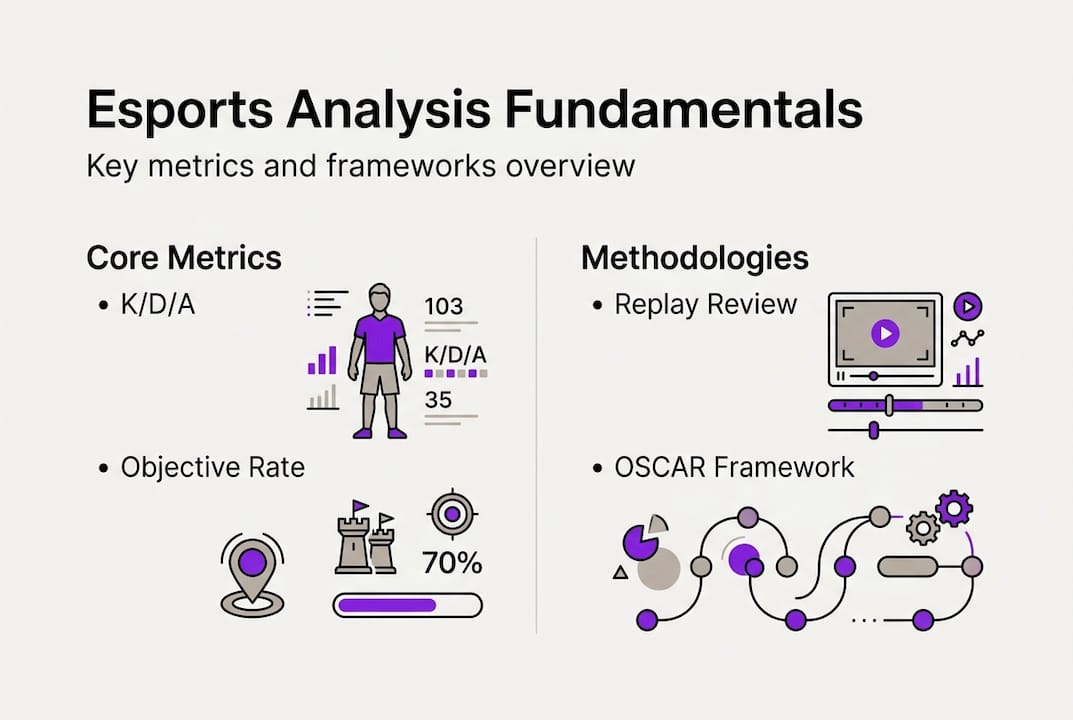
The debate between data and intuition remains active in esports analysis. Data accelerates feedback by quantifying performance patterns that might take weeks to notice through observation alone. Coaches can identify trends after three matches instead of thirty. However, data does not replace player and coach intuition. Experienced players recognize subtle opponent tells, predict unconventional strategies, and make split-second reads that no algorithm captures. The most effective analysis combines both, using data to validate hunches and intuition to contextualize numbers.
Longitudinal data and advanced models can predict match outcomes with surprising accuracy when properly calibrated. Studies tracking thousands of matches reveal that composite performance scores predict win probability more reliably than any single metric. Teams that maintain consistent objective control rates above certain thresholds win significantly more often regardless of individual K/D/A ratios. These patterns inform strategic priorities and help teams focus training on high-impact areas.
- Context matters: high damage against tanks padding stats differs from securing key eliminations
- Map pressure and zoning create value invisible in traditional combat metrics
- Composite scoring combines multiple dimensions for holistic evaluation
- Longitudinal tracking reveals performance trends single matches cannot show
"Understanding player performance requires looking beyond the scoreboard. The most impactful plays often involve creating space, applying pressure, or making the right call at the right time. These contributions shape wins but rarely appear in highlight reels or stat summaries."
Pro Tip: Avoid over-analyzing single matches. Look for trends across five to ten games to distinguish genuine patterns from statistical noise and one-off performances.
Professionalizing esports teams means adopting these nuanced analytical approaches rather than relying on simplistic stat comparisons that miss critical context.
Applying esports performance analysis: practical considerations for analysts and coaches
Using replay VODs for frame-by-frame review, APIs for data aggregation, and benchmarking against pros supports reliable analysis. A systematic workflow ensures consistent, actionable insights rather than scattered observations. Start by collecting replay footage and match data immediately after games while details remain fresh. Break down key moments using frame-by-frame analysis, identifying exact decision points, mechanical errors, or strategic missteps. Aggregate raw statistics via game APIs or third-party platforms that compile comprehensive match data. Finally, compare performance against established benchmarks from professional players or top-tier teams to contextualize results.
This step-by-step approach creates reproducible analysis:
- Collect replay footage and VODs immediately post-match for review sessions
- Break down critical moments with frame-by-frame analysis to identify exact errors or successes
- Aggregate raw stats via APIs, tracking metrics consistently across all matches
- Compare against benchmarks from professional play or historical team performance
- Synthesize findings into actionable coaching points and training priorities
External influences beyond raw gameplay significantly affect competitive outcomes. Nutrition impacts cognitive function, reaction times, and sustained focus during long tournaments. Equipment quality, including monitor refresh rates, mouse sensitivity, and keyboard responsiveness, creates measurable performance differences. Training environment factors like noise levels, lighting, and ergonomic setup influence practice effectiveness and injury prevention. Team dynamics, including communication clarity, trust levels, and conflict resolution, shape in-game coordination and strategic execution.
Data from specialized datasets provide physiological and affective benchmarks rarely considered in traditional analysis. These resources track metrics like heart rate variability during clutch moments, eye tracking patterns revealing attention allocation, and stress indicators correlating with performance drops. Understanding these biological factors helps coaches recognize when performance issues stem from mental fatigue, physical strain, or environmental stressors rather than skill deficits.
Common software tools streamline the analysis process. Replay platforms offer slow-motion review, annotation features, and clip sharing for team discussions. Live overlays display real-time stats during matches, helping coaches spot patterns as they develop. Strategy inconsistency detectors flag deviations from planned approaches, revealing discipline issues or necessary adaptations.
| Tool Category | Primary Use | Example Applications |
|---|---|---|
| Replay Platforms | Frame-by-frame VOD analysis | Identifying mechanical errors, decision-making breakdowns |
| Live Overlays | Real-time performance tracking | Monitoring resource generation, objective timers |
| API Aggregators | Comprehensive stat compilation | Building performance databases, tracking trends |
| Heatmap Generators | Visualizing positioning patterns | Analyzing map control, rotation efficiency |
| Collaboration Software | Team strategy coordination | Sharing findings, planning adjustments |
Training factors like nutrition and equipment also influence outcomes, making holistic performance management essential. A player struggling with consistency might need better sleep hygiene or ergonomic adjustments rather than additional mechanical drills. Recognizing these broader influences prevents wasted training time on misdiagnosed problems.
Understanding the difference between competitive gaming and casual play helps analysts apply appropriate analytical rigor and set realistic improvement expectations based on commitment level and competitive goals.
Explore advanced esports insights and coaching support
Xyra Esports offers expert coaching resources that align with performance analytics principles covered throughout this guide. Our structured approach combines data-driven insights with experienced mentorship to help players and teams reach their competitive potential. Whether you need guidance on implementing systematic replay review, developing role-specific training programs, or building a complete analytical framework for your team, our resources support every stage of competitive development.
Explore our articles on mastering competitive gaming environments to deepen your strategic understanding and discover how structured practice environments accelerate skill development. Our coaching staff brings practical experience applying these analytical methods across multiple esports titles, translating theory into actionable improvement plans.
Visit Xyra Esports to access coaching support, connect with our competitive community, and explore additional resources designed for analysts and coaches committed to elevating team performance through disciplined, data-informed approaches.
Frequently asked questions
What is esports performance analysis?
Esports performance analysis is the systematic evaluation of player and team gameplay using data analytics, replay review, and performance metrics. It combines quantitative measurements like K/D/A ratios with qualitative insights from replay footage to identify strengths, weaknesses, and improvement opportunities that inform training and strategy.
What are the most important metrics in esports analysis?
Key metrics include kill/death/assist ratios, gold per minute, objective control rates, and vision scores, but their importance varies by role and game. Composite frameworks like OSCAR provide deeper insight by combining multiple dimensions including mechanical skill, positioning, decision-making, and adaptability into holistic performance scores.
How do you balance data insights with player intuition?
Effective analysis uses data to accelerate feedback and validate hunches while respecting player and coach intuition for contextual interpretation. Data quantifies patterns and trends, but experienced players recognize subtle tells and make reads that algorithms miss. The strongest approach combines both, letting each strengthen the other.
What tools do analysts use for in-depth esports analysis?
Analysts rely on replay platforms for frame-by-frame VOD review, APIs for comprehensive stat aggregation, live overlays for real-time tracking, and heatmap generators for visualizing positioning patterns. Collaboration software enables teams to share findings and coordinate strategy adjustments based on analytical insights.
What factors beyond gameplay stats affect esports performance?
Nutrition, equipment quality, training environment, and team dynamics significantly influence competitive outcomes. Cognitive function depends on proper nutrition and sleep, while equipment like monitor refresh rates creates measurable advantages. Environmental factors including noise levels and ergonomics affect practice effectiveness and injury prevention.