
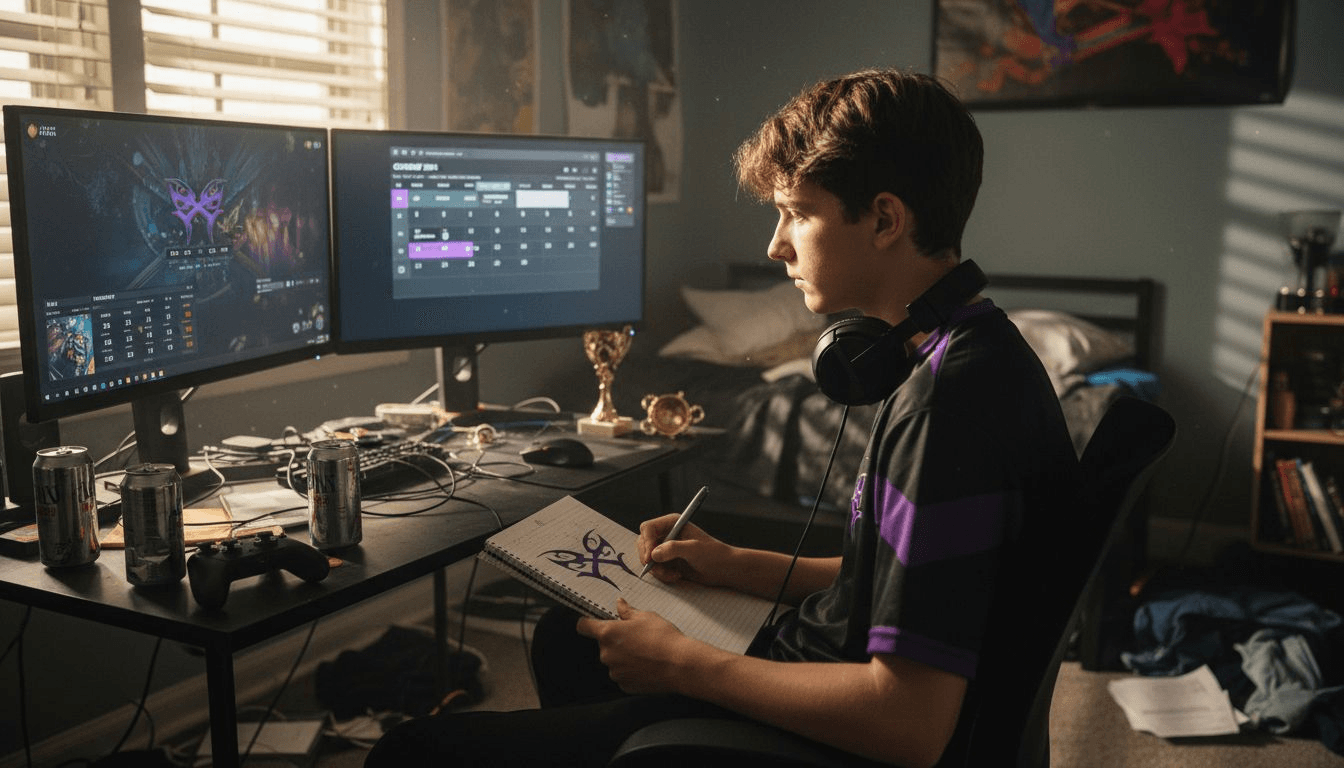
Most competitive gamers believe talent alone determines success, but 90% of successful esports players credit structured goal setting for their achievements. Goal setting extends far beyond winning tournaments. It transforms how players develop skills, manage stress, and collaborate within teams. This guide explores the psychological foundations, practical frameworks, and actionable strategies that make goal setting essential for competitive esports performance and teamwork.
Table of Contents
- Introduction To Goal Setting In Esports
- Psychological Foundations Of Goal Setting In Esports
- Impact Of Goal Setting On Player Performance
- Effective Goal Setting Frameworks For Esports
- Balancing Motivation And Pressure Through Goal Setting
- Common Misconceptions About Goal Setting In Esports
- Practical Steps To Implement Goal Setting For Competitive Esports Players
- Join Xyra Esports For Structured Goal-Setting And Pro Training
- Frequently Asked Questions
Key takeaways
| Point | Details |
|---|---|
| Direction and milestones | Goal setting provides clear objectives and measurable progress markers for esports players |
| Psychological benefits | Structured goals enhance motivation, focus, mental resilience, and reduce competitive anxiety |
| Effective frameworks | Distinguishing short-term practice targets from long-term career milestones optimizes player development |
| Adaptive approach | Balancing motivation with pressure through flexible goals prevents burnout and sustains performance |
| Common misconceptions | Understanding that goals encompass skill development beyond wins enables better player growth |
Introduction to goal setting in esports
Goal setting in esports means establishing clear, measurable objectives tailored to competitive performance and player development. Unlike casual gaming where enjoyment drives play, competitive gaming demands structured milestones and disciplined progress tracking. The professionalization of esports has elevated goal setting from optional to essential.
Goal-setting frameworks tailored to esports help players transition from casual to competitive mastery through focused skill refinement. These frameworks address mechanical skills like aim precision, strategic thinking, communication effectiveness, and mental preparation. Each element requires specific attention and measurable improvement targets.
Competitive esports organizations now integrate goal setting throughout player careers. Early-stage players focus on foundational mechanics and game knowledge. Mid-tier competitors refine specialization and role mastery. Professional players balance peak performance maintenance with innovation and adaptation. This progression relies on structured goals that evolve with player development.
Key distinctions between casual and competitive goal setting include:
- Casual gaming emphasizes entertainment and social connection without performance metrics
- Competitive esports requires quantifiable targets like rank advancement or statistical improvements
- Professional goals incorporate team objectives, content creation, and career sustainability
- Structured goals enable systematic skill building rather than random practice sessions
Psychological foundations of goal setting in esports
The psychology behind effective goal setting explains why structured objectives consistently improve esports performance. Mental resilience forms the foundation for handling competitive pressure, tournament stakes, and performance fluctuations. Players with clear goals develop stronger psychological frameworks for managing setbacks and maintaining focus during critical moments.
Flow state represents the optimal psychological zone where skills perfectly match challenge level. Well-defined goals trigger flow by creating clear targets that stretch abilities without overwhelming players. This state enhances reaction time, decision-making speed, and creative problem-solving during matches. Goals act as anchors that guide players into flow more reliably than unstructured practice.
Tailored goal-setting frameworks combining PERMA model enhance motivation, resilience, and success in competitive environments. The PERMA model addresses positive emotion, engagement, relationships, meaning, and accomplishment. Each component supports different aspects of player wellbeing and performance sustainability.
Structured goal setting improves time management and anxiety reduction for higher consistent performance. Clear objectives eliminate decision paralysis about practice priorities. Players spend less mental energy wondering what to improve and more energy executing deliberate practice. This efficiency reduces burnout risk and accelerates skill development.
Psychological mechanisms that make goals effective include:
- Breaking complex skills into achievable micro-targets reduces overwhelm
- Regular milestone completion triggers dopamine rewards that reinforce effort
- Specific targets direct attention toward high-impact practice activities
- Progress tracking provides concrete evidence of improvement during skill plateaus
"Goals transform abstract ambitions into concrete roadmaps. They convert the vague desire to improve into specific practice sessions with measurable outcomes, creating psychological momentum that sustains long-term development."
Impact of goal setting on player performance
Goal setting directly translates psychological benefits into measurable performance improvements across multiple dimensions. Targeted goals enable players to focus practice on refinement and achieve quantified improvements in motivation and achievement. Mechanical skills like aim accuracy improve faster when players set specific percentage targets rather than vague improvement intentions.
Strategic thinking develops through goals that address decision-making speed, map awareness, and tactical adaptability. Communication skills strengthen when players set objectives around callout clarity, team coordination timing, and constructive feedback delivery. These soft skills often determine competitive outcomes as much as mechanical prowess.
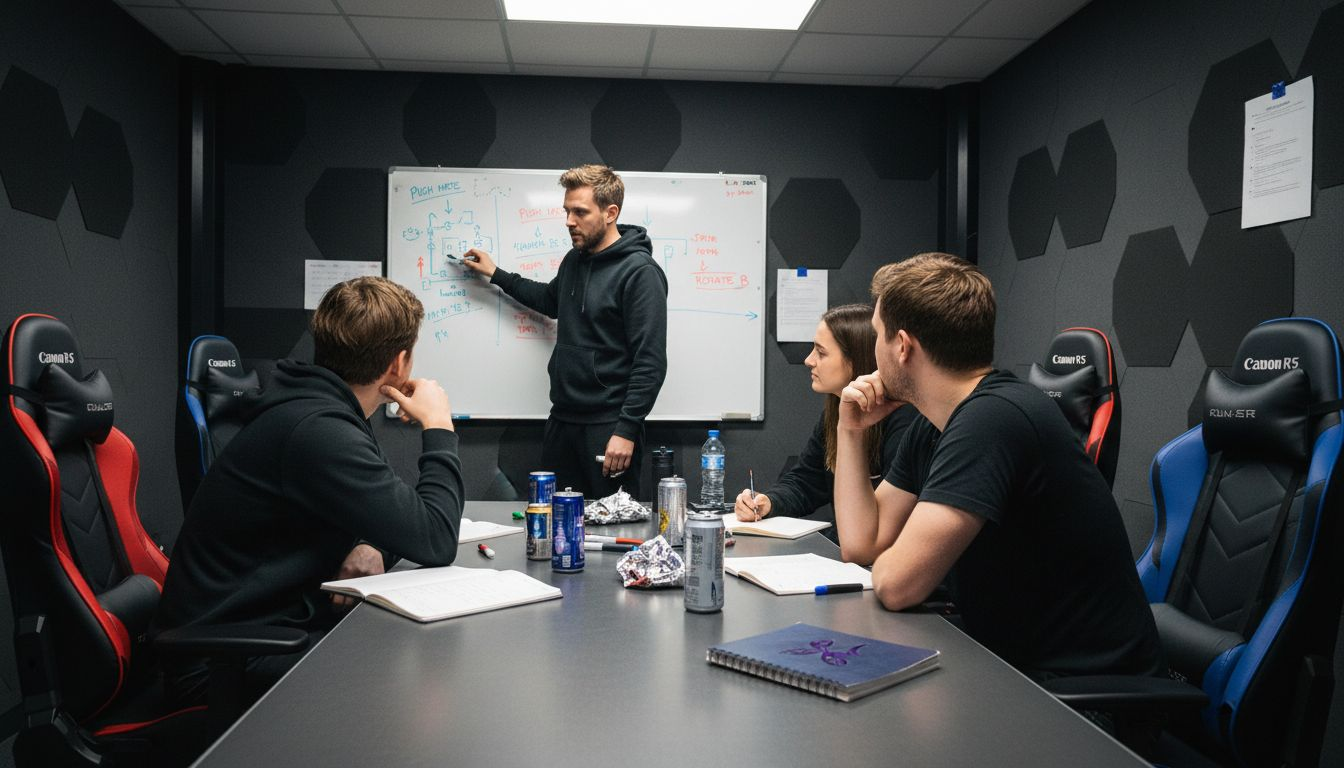
Consistent goal tracking creates powerful motivation loops. Each completed milestone reinforces the connection between effort and results. This feedback system helps players maintain discipline during grinding periods when progress feels slow. Achievement documentation also provides tangible proof of improvement during confidence dips.
Stress and anxiety management improve dramatically with structured goals. Performance anxiety often stems from unclear expectations and fear of undefined failure. Specific goals replace vague pressure with concrete targets. Players can assess readiness objectively rather than relying on subjective feelings of preparedness. This clarity reduces pre-match nervousness and enables better mental preparation.
Time management gains occur naturally as goals organize practice schedules. Players allocate time based on priority objectives rather than practicing randomly. This efficiency maximizes improvement per hour invested. Structured practice also creates better work-life balance by preventing endless, directionless grinding.
Pro Tip: Track both outcome goals like rank advancement and process goals like practice consistency. Process goals remain within your control regardless of match results, providing stable motivation during losing streaks.
Performance improvements manifest as:
- Faster skill acquisition through focused deliberate practice
- Higher consistency by reinforcing successful techniques systematically
- Better stress management through clear performance expectations
- Improved resource allocation toward high-impact training activities
Access comprehensive esports training strategies that integrate goal-setting principles throughout skill development.
Effective goal setting frameworks for esports
Structured frameworks organize goals into manageable systems that balance immediate improvement with long-term career development. Short-term vs long-term goals differentiation helps prioritize daily practice and track career progression. Professional players typically maintain three goal tiers operating simultaneously.
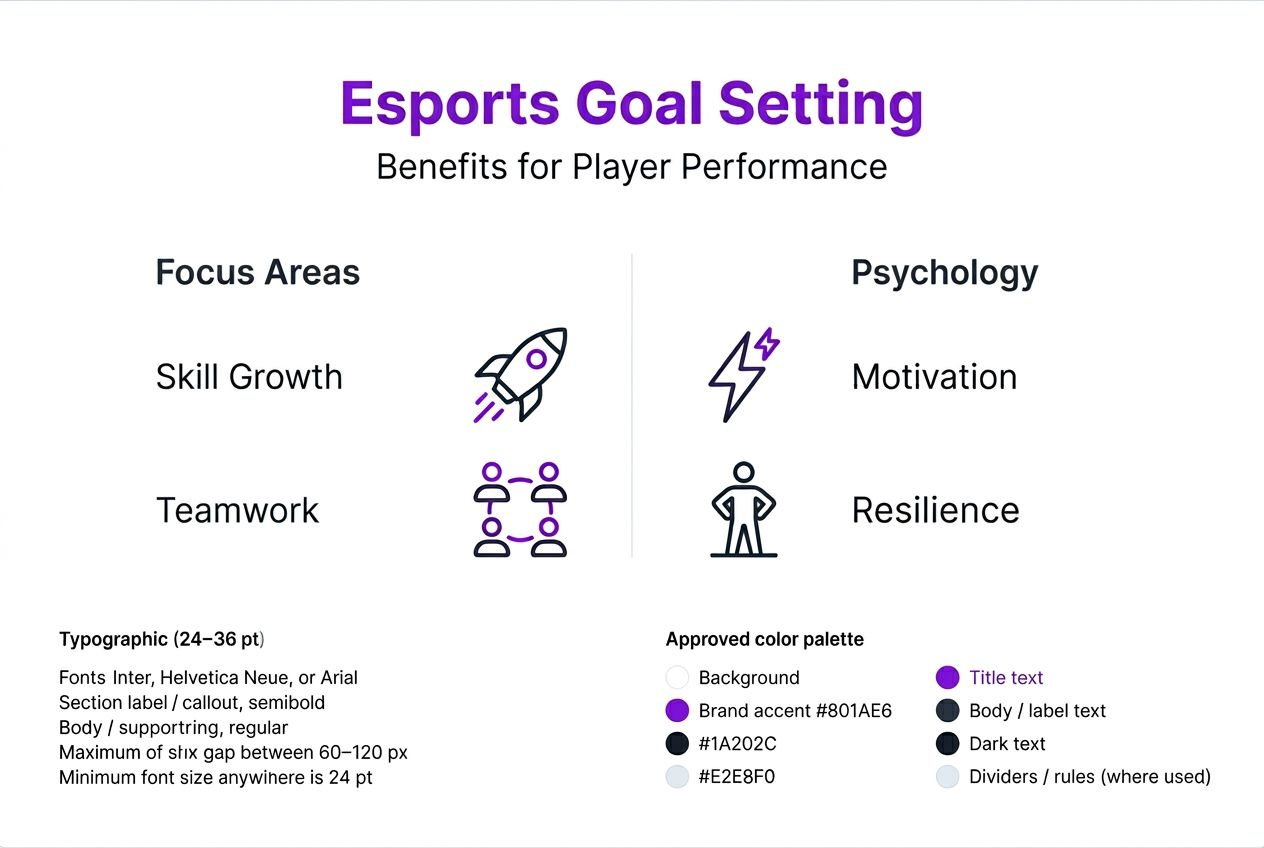
SMART criteria provide essential structure for esports goals. Specific goals identify exactly what skill or metric to improve. Measurable goals include quantifiable targets like ranking thresholds or statistical benchmarks. Achievable goals stretch abilities without creating impossible standards. Relevant goals align with player roles and team needs. Time-bound goals establish clear deadlines for accountability.
Framework implementation follows this progression:
- Define 1-2 major long-term objectives like reaching professional status or qualifying for specific tournaments
- Break each long-term goal into quarterly milestones that track progress
- Create monthly targets addressing skill gaps identified through performance analysis
- Establish weekly practice objectives that build toward monthly targets
- Set daily session goals focusing on specific mechanics or strategies
Adaptive frameworks adjust goal difficulty based on player development stage and psychological state. Beginner players need foundational goals with frequent early wins to build confidence. Intermediate players benefit from challenging targets that push skill ceilings. Advanced players require nuanced goals balancing maintenance, innovation, and specialization.
Regular review cycles keep goals aligned with evolving circumstances. Monthly assessments evaluate progress, identify obstacles, and adjust targets. Quarterly reviews realign intermediate goals with long-term vision. Annual planning sessions establish new career objectives as previous goals complete.
| Goal Type | Focus | Timeline | Example |
|---|---|---|---|
| Short-term | Skill mechanics | Daily to weekly | Improve headshot accuracy by 5% this week |
| Medium-term | Role mastery | Monthly to quarterly | Master three new agent strategies this month |
| Long-term | Career milestones | Yearly | Reach top 500 ranking by year end |
Pro Tip: Write goals using positive language focused on what to achieve rather than what to avoid. "Maintain calm communication under pressure" works better than "Don't tilt during matches."
Explore detailed esports training frameworks that implement these goal-setting principles systematically. Additional goal setting strategies offer complementary approaches for different competitive contexts.
Balancing motivation and pressure through goal setting
Effective goal setting maintains competitive drive while protecting mental health and preventing burnout. Esports coaching that balances positive reinforcement with competitive pressure through adaptive goal setting helps sustain motivation and psychological wellbeing. The key lies in progressive goal adjustments that keep targets challenging yet achievable.
Adaptive coaching customizes goal difficulty to individual player psychology. Some players thrive under aggressive targets that push boundaries. Others perform better with conservative goals that build confidence through consistent achievement. Effective coaches assess player mindset and adjust goal intensity accordingly.
Positive reinforcement strategies celebrate progress toward goals rather than fixating on shortfalls. Recognizing effort and improvement maintains motivation during skill plateaus. This approach contrasts with purely outcome-focused feedback that can demoralize players when results lag behind effort.
Burnout prevention requires monitoring goal load and intensity. Warning signs include declining practice enthusiasm, increased irritability, performance regression despite effort, and loss of enjoyment. When these appear, goal reduction or reframing becomes necessary. Temporary focus shifts toward maintenance goals or skill diversification can restore motivation.
Career longevity improves when goals incorporate rest, recovery, and skill variety. Players who rigidly pursue single objectives often experience motivation crashes after achievement or failure. Balanced goal portfolios maintain engagement across multiple dimensions.
Strategies for balancing motivation and pressure:
- Set stretch goals alongside guaranteed achievement targets for psychological safety
- Include process goals focused on controllable actions rather than only outcome goals
- Schedule regular goal-free practice sessions emphasizing enjoyment and experimentation
- Build recovery periods into goal timelines to prevent cumulative fatigue
"The best goals challenge you to grow while leaving room for setbacks. They create healthy tension between current ability and desired improvement without crushing confidence when progress stalls."
Learn more about positive psychology applications in esports that enhance goal-setting effectiveness through wellbeing integration.
Common misconceptions about goal setting in esports
Several widespread myths limit how players approach goal setting, reducing its effectiveness and sometimes causing harm. Understanding these misconceptions enables smarter goal development.
Misconception 1: Goal setting only matters for tournament wins and competitive rankings. This narrow view ignores that goal setting includes player development, consistency, and resilience beyond tournament results. Comprehensive goals address mechanical skills, mental preparation, communication abilities, and lifestyle factors affecting performance. Players who focus exclusively on ranking often neglect foundational improvements that enable sustained success.
Misconception 2: One goal-setting approach works for everyone. Reality shows goal setting must be individualized to player skill level and motivations rather than following universal templates. Personality differences, learning styles, competitive experience, and psychological needs require customized frameworks. Cookie-cutter approaches fail because they ignore individual contexts that determine goal effectiveness.
Misconception 3: Casual gaming goals transfer directly to competitive esports. Competitive gaming requires structured, measurable objectives distinct from entertainment-focused play. Casual goals emphasize fun, social connection, and relaxation. Competitive goals demand discipline, measurement, and systematic improvement. Confusing these contexts leads to either excessive pressure during leisure play or insufficient rigor during serious practice.
Common goal-setting errors to avoid:
- Setting too many simultaneous goals that fragment focus and dilute effort
- Creating vague objectives without specific metrics or deadlines
- Pursuing only long-term goals without intermediate milestones to maintain motivation
- Ignoring goal adjustment when circumstances change or progress stalls
- Neglecting celebration of achieved goals before immediately setting new ones
Practical steps to implement goal setting for competitive esports players
Transforming goal-setting theory into practice requires systematic implementation. Follow these steps to establish effective goals for competitive improvement.
-
Define long-term career aspirations first. Identify where you want to be in 1-3 years. Examples include reaching professional team status, qualifying for major tournaments, or achieving top percentile rankings. These serve as north stars guiding all shorter-term objectives.
-
Break long-term goals into quarterly and monthly milestones. Each milestone should represent measurable progress toward ultimate objectives. Convert abstract ambitions into concrete checkpoints with specific metrics. This breakdown makes intimidating long-term goals feel achievable.
-
Incorporate mental wellbeing metrics alongside performance targets. Track resilience indicators like recovery time after losses, ability to maintain focus during pressure, and enjoyment levels during practice. Psychological health enables sustainable high performance.
-
Apply SMART criteria to every goal level. Review each objective to ensure it meets all five standards. Vague goals like "get better at the game" become specific targets like "increase win rate by 8% over the next month." Specificity eliminates ambiguity about what success looks like.
-
Establish weekly review sessions to track progress and adjust plans. Schedule dedicated time for honest assessment of what worked, what didn't, and why. Use performance data, match recordings, and subjective feelings to inform adjustments. Regular reviews prevent goal drift and catch problems early.
| Goal Characteristic | Adaptive Approach | Static Approach |
|---|---|---|
| Adjustment frequency | Modified based on progress and circumstances | Fixed regardless of results |
| Challenge level | Calibrated to current ability and motivation | Same difficulty throughout |
| Success criteria | Flexible metrics responding to context | Rigid pass/fail standards |
Pro Tip: Create a goal hierarchy document that visually connects daily practice targets to long-term aspirations. This visibility maintains motivation by showing how small improvements compound into major achievements.
Implementation checklist:
- Write goals in a dedicated document or tracking system for regular reference
- Share goals with coaches, teammates, or accountability partners for support
- Schedule specific practice sessions explicitly designed to advance goal progress
- Document evidence of improvement through statistics, recordings, or performance logs
- Celebrate milestone completions before immediately setting new targets
Explore the complete esports training guide for detailed implementation of these goal-setting principles. Learn about team goal alignment strategies that synchronize individual objectives with collective team success.
Join Xyra Esports for structured goal-setting and pro training
Applying these goal-setting principles becomes easier within a structured competitive environment. Xyra Esports provides professional coaching that emphasizes systematic goal development tailored to individual player needs. Our training programs integrate motivational frameworks proven effective in competitive gaming contexts.
Explore recruitment opportunities designed to elevate players from intermediate to professional levels through structured development pathways. Each program combines goal-setting guidance with practical skill training, mental preparation, and team integration support.
Connect with Xyra Esports to access coaches experienced in building personalized goal frameworks that balance competitive ambition with sustainable player wellbeing. Our community supports players at every development stage through organized practice, performance feedback, and career advancement resources.
Frequently asked questions
Why is goal setting important for esports players?
Goal setting provides clear direction for skill development and creates measurable milestones that maintain motivation during long improvement journeys. It transforms vague desires to improve into specific practice targets with concrete success criteria. Structured goals also reduce anxiety by replacing uncertain expectations with defined objectives, enabling players to assess readiness objectively and manage competitive pressure more effectively.
What types of goals should esports players focus on?
Players should balance three goal categories for comprehensive development. Performance goals target measurable outcomes like ranking advancement or tournament placements. Process goals focus on controllable actions like practice consistency, warm-up routines, or communication habits. Skill development goals address specific abilities such as mechanical precision, strategic knowledge, or mental resilience. This balanced approach prevents overemphasis on results while building foundational capabilities that enable long-term success.
How often should players review and adjust their goals?
Weekly reviews assess immediate progress and adjust daily practice priorities based on what's working. Monthly evaluations examine whether intermediate milestones remain realistic given actual development pace, allowing recalibration before significant drift occurs. Quarterly sessions realign medium-term objectives with long-term career vision and account for major changes in team roles, game meta, or competitive landscape. This multi-layered review system keeps goals relevant without constant disruption.
Can goal setting reduce burnout in esports?
Yes, when implemented properly. Adaptive goals that adjust difficulty based on player state prevent the exhaustion caused by relentlessly pursuing unrealistic targets. Including rest periods, skill variety, and enjoyment metrics within goal frameworks protects mental health. Goals also reduce burnout by eliminating directionless grinding and creating efficient practice that maximizes improvement per hour invested. However, poorly designed goals with excessive pressure or rigid standards can increase burnout risk, making framework quality essential.
What role does team goal setting play in esports success?
Team goals synchronize individual development with collective objectives, ensuring personal improvement contributes to team success. Shared goals create accountability structures where teammates support each other's progress. They also clarify role expectations and reduce conflicts about strategy, playstyle, or priorities. Effective team goal setting balances individual growth needs with team requirements, preventing situations where personal objectives undermine collective performance. This alignment strengthens team cohesion and improves coordination during competition.
How is goal setting different in esports compared to traditional sports?
Esports goal setting incorporates digital performance metrics unavailable in traditional sports, enabling more precise tracking through game statistics and analytics. The rapid pace of meta changes in competitive gaming requires more frequent goal adjustment than most traditional sports. Esports goals often include content creation, streaming, and online brand building alongside pure competition, reflecting the industry's unique career structure. Mental endurance for extended screen time and reaction speed development also receive greater emphasis than in many physical sports, requiring specialized goal frameworks addressing these dimensions.