
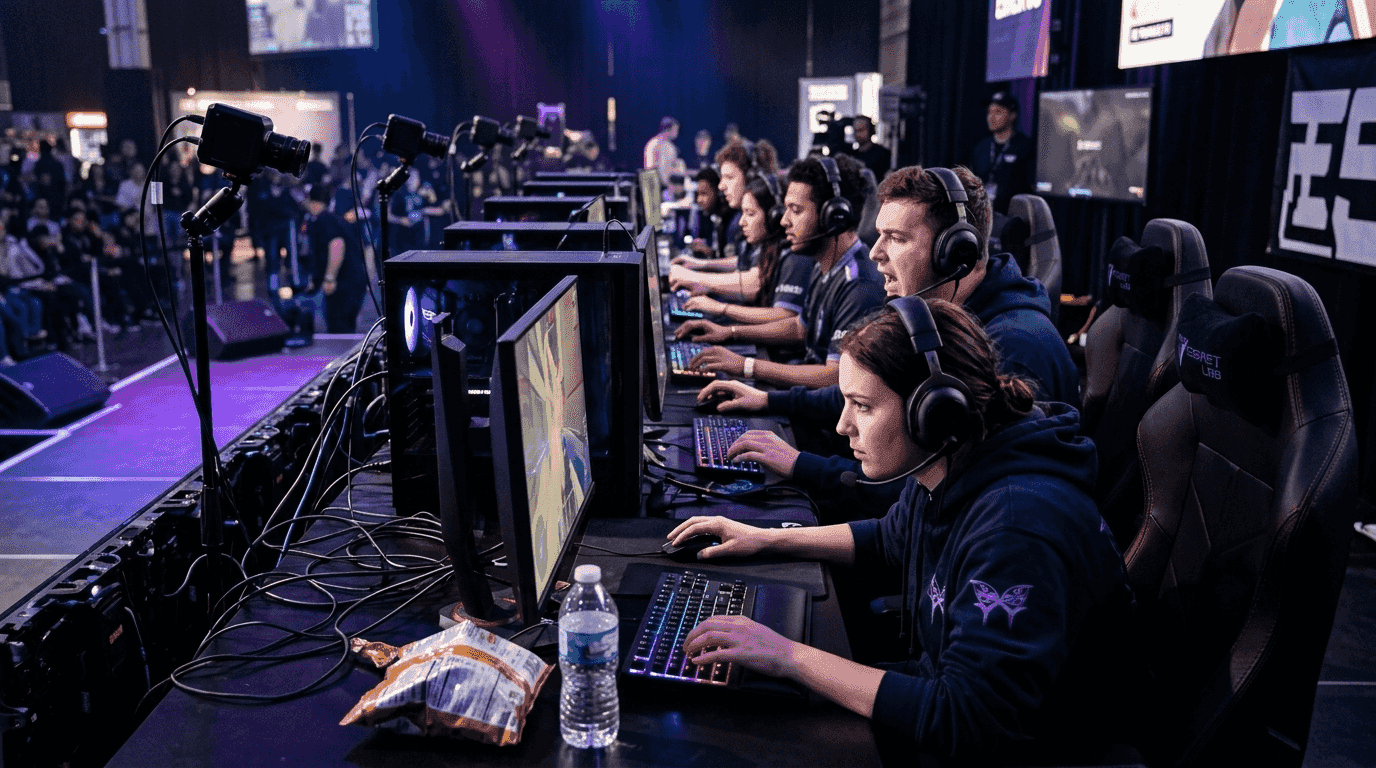
Think competitive gaming is just playing video games really well? That misconception keeps many talented players from reaching their potential. True competitive gaming combines cutting-edge technology, cognitive psychology, and team dynamics in ways that separate professionals from casual enthusiasts. This guide reveals what aspiring esports professionals need to understand about the mechanics, skills, and structures that define success in modern competitive gaming.
Table of Contents
- Understanding Competitive Gaming And Its Technology
- Athletic And Cognitive Skills Shaping Esports Performance
- Team Dynamics And Leadership Impact On Competitive Gaming Success
- Enhancing Esports Performance: Nutrition And Technology Advances
- Join Xyra Esports To Level Up Your Competitive Gaming Career
- Frequently Asked Questions
Key takeaways
| Point | Details |
|---|---|
| Technology foundation | Competitive gaming relies on human-computer interaction where digital systems mediate every player action and outcome. |
| Cognitive skills | Expert players show shorter visual fixation durations and more targeted attention patterns than novices. |
| Team dynamics | Strong leader-member relationships significantly enhance teamwork through psychological empowerment. |
| Performance enhancement | Nutritional supplements can reduce reaction time while deep learning identifies key performance indicators. |
| Professional development | Structured training environments combine technology analysis with mental and physical conditioning for sustained competitive success. |
Understanding competitive gaming and its technology
Competitive gaming represents far more than fast reflexes or game knowledge. Esports is fundamentally a competition mediated via human-computer interfaces, where every action flows through complex digital systems. Your mouse movement, keyboard input, and screen output create a continuous feedback loop that defines performance at the highest levels.
Human-computer interaction forms the core of esports excellence. When you execute a combo or position for an objective, hardware translates your physical movements into game actions through millisecond-precise communication. This technological mediation means your skills exist within a digital ecosystem that processes, interprets, and responds to your inputs in real time.
Several technology layers work simultaneously during competitive play:
- Input devices like mice, keyboards, and controllers convert physical movements into digital signals
- Game engines process these signals and generate visual, audio, and tactical feedback
- Network systems synchronize actions across players with minimal latency
- Display technology presents information at refresh rates that impact reaction capability
- Communication platforms enable voice coordination during matches
Mastering competitive gaming means understanding how each technological component affects your performance. A 144Hz monitor reveals information faster than 60Hz displays. Lower mouse latency improves aiming precision. Network stability prevents input loss during critical moments. These aren't just specifications; they're performance variables you must optimize.
"The relationship between player and system creates unique cognitive demands that distinguish esports from traditional sports."
Your success depends on how effectively you interface with these systems. Learning competitive gaming fundamentals means developing both mechanical skills and technological literacy. Consider participating in esports event ideas that expose you to different competitive formats and tech setups.
Athletic and cognitive skills shaping esports performance
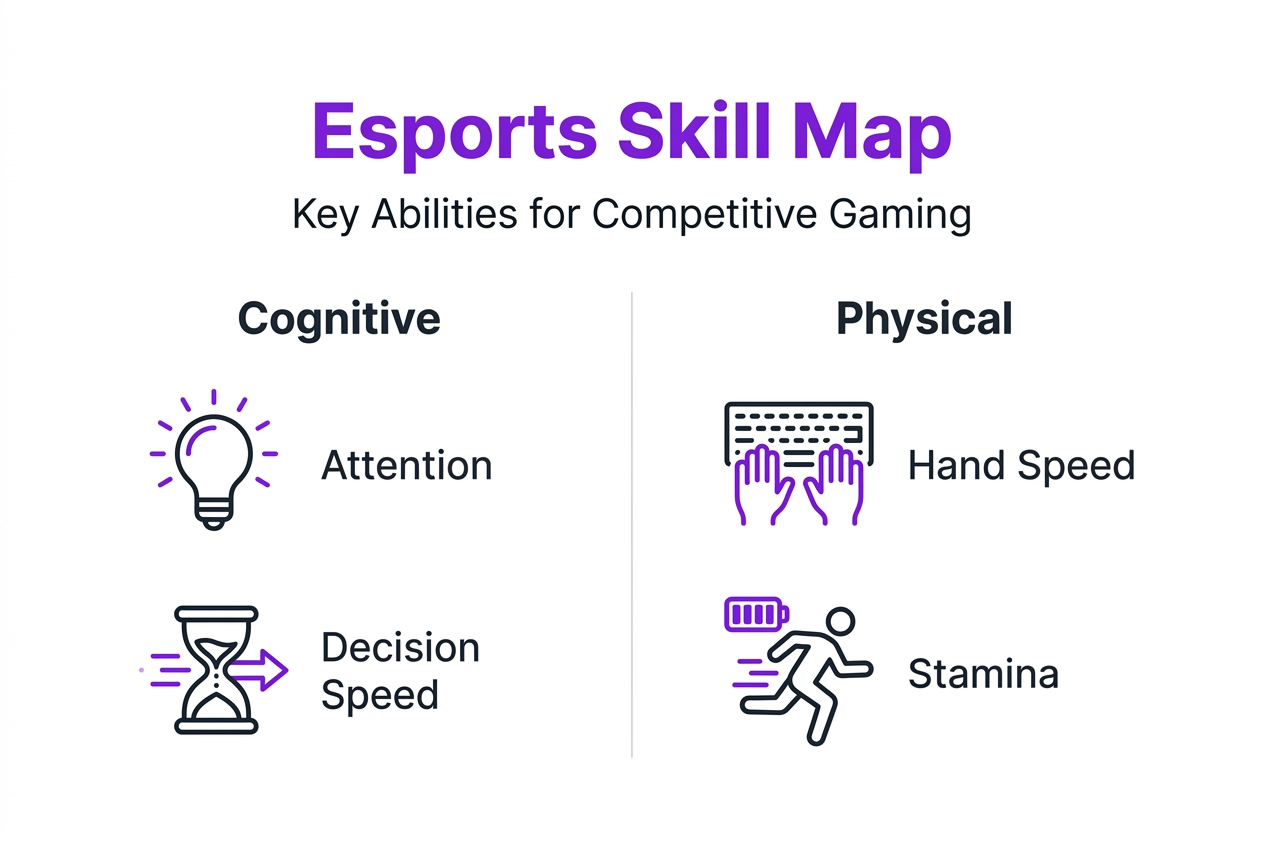
Physical prowess in esports looks different than traditional athletics, but the demands remain intense. Athletic performance encompasses physical movements and psychological skills that directly apply to competitive gaming. Your hand-eye coordination, reaction time, and sustained focus operate under pressure similar to conventional sports.
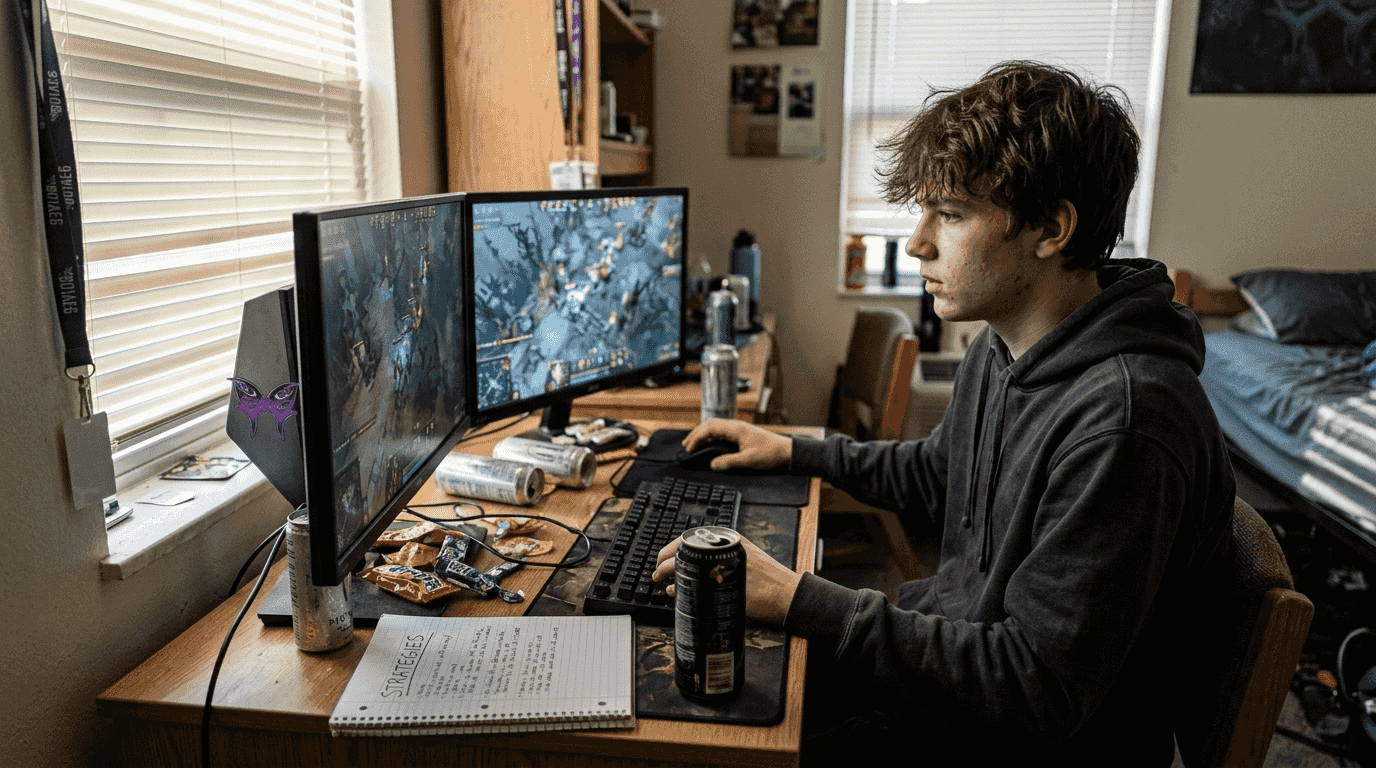
What separates experts from intermediates? Research reveals expert esports players demonstrate shorter average visual fixation duration and deploy more targeted visual strategies. While beginners scan randomly across the screen, professionals know exactly where to look and when. This efficient visual processing frees cognitive resources for decision-making and tactical execution.
| Skill Dimension | Esports Application | Traditional Sports Parallel |
|---|---|---|
| Visual attention | Screen area monitoring, minimap awareness | Field vision, peripheral awareness |
| Reaction speed | Frame-perfect inputs, dodge mechanics | Sprint starts, defensive reactions |
| Sustained focus | Multi-hour practice sessions, tournament stamina | Endurance events, playoff series |
| Pattern recognition | Enemy positioning prediction, meta adaptation | Play reading, opponent tendencies |
| Motor precision | Mouse control, ability combos | Ball handling, swing mechanics |
Your cognitive load during matches involves processing visual information, executing motor commands, communicating with teammates, and adapting strategies simultaneously. This multitasking requires training your brain to prioritize inputs and automate routine actions. When basic mechanics become second nature, you free mental bandwidth for higher-level tactics.
Pro Tip: Dedicate 20 minutes daily to visual attention drills where you track multiple moving objects while maintaining awareness of peripheral information. This trains the same scanning patterns that distinguish expert players in competitive matches.
Developing these skills requires systematic training approaches. Implement goal setting in esports to target specific cognitive and motor improvements. Follow a structured esports training guide that progressively builds both physical dexterity and mental processing capacity.
Team dynamics and leadership impact on competitive gaming success
Individual skill only takes you so far in competitive gaming. Team coordination determines outcomes when mechanical abilities reach parity at elite levels. Leader-member exchange significantly affects teamwork by establishing trust relationships that enable confident, coordinated play under pressure.
The quality of relationships between team leaders and members creates psychological empowerment that mediates performance. When you trust your shotcaller's decisions, you execute strategies faster and commit more fully to risky plays. This trust doesn't emerge accidentally; it develops through consistent communication, shared goals, and demonstrated competence over time.
Effective esports leaders exhibit these essential qualities:
- Clear communication that eliminates ambiguity during high-pressure situations
- Tactical knowledge that earns respect and confidence from teammates
- Emotional regulation that maintains team morale through losses and setbacks
- Adaptability to adjust strategies mid-match based on opponent behavior
- Accountability that models professional standards for the entire roster
Research quantifies this leadership impact. Studies examining competitive teams found substantial effect sizes when measuring how leader-member relationships influence collaborative performance. Strong leadership correlates with better objective control, fewer unforced errors, and more successful team fight execution.
"Teams with high-quality leader-member exchange showed significantly improved coordination metrics and win rates compared to teams with transactional leadership approaches."
Verbal communication and coordinated effort directly boost esports team performance by reducing information gaps and synchronizing actions. When your team calls enemy positions, ultimate abilities, and rotation timing clearly, everyone operates with complete situational awareness. This shared mental model enables the split-second decisions that win crucial team fights.
Building effective team dynamics requires intentional effort beyond just playing together. Establish communication protocols for different game states. Develop shotcalling hierarchies that clarify decision-making authority. Create post-match review processes that address mistakes constructively. These structural elements support the psychological empowerment that elevates team performance.
Maintaining professional conduct in esports strengthens these team relationships. Respect, punctuality, and constructive feedback create environments where trust flourishes and players feel empowered to perform at their peak.
Enhancing esports performance: nutrition and technology advances
Optimizing competitive performance extends beyond practice sessions into how you fuel your body and leverage analytical tools. Nutritional supplements may improve aiming performance by reducing reaction time and enhancing focus during extended gaming sessions. While practice remains paramount, strategic nutrition provides measurable performance edges.
Your brain consumes approximately 20% of your body's energy despite representing only 2% of body weight. During intense matches, cognitive demands spike even higher. Proper nutrition ensures consistent glucose delivery to maintain reaction speed and decision-making quality throughout tournaments.
| Supplement Category | Primary Effect | Performance Metric Impact |
|---|---|---|
| Caffeine | Alertness, reaction time | 3-8% faster visual processing |
| Omega-3 fatty acids | Cognitive function, focus | Improved sustained attention |
| B vitamins | Energy metabolism | Reduced mental fatigue |
| L-theanine | Calm focus, stress reduction | Better pressure performance |
Technology advances parallel nutritional optimization. Deep learning identifies key performance indicators in games like League of Legends by analyzing thousands of matches to determine which metrics most strongly predict victory. These analytical tools reveal exactly which aspects of your play need improvement.
Machine learning systems now track micro-metrics that human coaches might miss. Your average ability accuracy, positioning relative to objectives, ward placement efficiency, and farming patterns all contribute to performance models. By identifying which metrics you underperform in compared to higher-ranked players, you can target training toward your actual weaknesses rather than perceived ones.
Pro Tip: Combine analytical tools with a consistent nutrition schedule. Review your performance data to identify when during matches your metrics decline, then experiment with nutrient timing to maintain cognitive performance during those windows.
Practical implementation matters more than theoretical knowledge. Research vitamins for athletes to understand which supplements align with your specific performance goals. Learn how to fuel athletic performance naturally through whole food strategies that support sustained energy without dependence on stimulants.
Data-driven training requires consistent measurement and adjustment. Track your reaction time, accuracy, and decision-making speed across practice sessions. Correlate these metrics with nutritional intake, sleep quality, and training volume. This empirical approach eliminates guesswork and reveals which interventions actually move your performance indicators.
Join Xyra Esports to level up your competitive gaming career
Understanding competitive gaming theory only takes you so far. Real growth happens within structured environments that combine expert coaching, coordinated teams, and competitive opportunities. Xyra Esports provides aspiring professionals the infrastructure to transform potential into measurable results.
Our organization builds competitive teams across multiple esports titles while fostering the leadership, communication, and technical skills you've learned about in this guide. You'll train alongside committed players who share your competitive goals, receive coaching that identifies your specific improvement areas, and compete in organized events that test your progress under pressure.
Joining means accessing a community designed for serious skill development, not casual play. We emphasize accountability, structured practice, and long-term career development. Connect with Xyra Esports to discover how our teams, coaching staff, and competitive programs can accelerate your esports journey from aspiring amateur to proven professional.
Frequently asked questions
What is competitive gaming?
Competitive gaming involves organized play where individuals or teams compete in video games through structured tournaments and leagues. Unlike casual gaming, it requires mastery of human-computer interaction, cognitive skills like visual attention and reaction time, and coordinated teamwork. Players train systematically to improve mechanical execution, game knowledge, and strategic decision-making under pressure.
How does human-computer interaction affect esports performance?
Human-computer interaction mediates every aspect of competitive gaming by translating physical inputs into game actions through hardware and software systems. The quality of your peripherals, network stability, and display technology directly impacts reaction capability and mechanical precision. Understanding these technological relationships helps you optimize your setup for peak performance.
What leadership qualities improve esports team success?
Effective esports leaders build strong member relationships through clear communication, tactical expertise, and emotional intelligence. They create psychological empowerment by fostering trust and confidence within the roster. Quality leader-member exchange significantly improves coordination, reduces errors, and enhances team fight execution during critical moments.
Can nutrition really impact esports performance?
Yes, strategic nutrition provides measurable performance benefits in competitive gaming. Certain supplements reduce reaction time and enhance sustained focus during extended matches. Proper nutrient timing maintains cognitive function and prevents the mental fatigue that degrades decision-making quality during tournaments.
How do expert players differ from intermediate players?
Expert players demonstrate shorter visual fixation durations and deploy more efficient scanning patterns that maximize information processing. They've automated basic mechanics through extensive training, freeing cognitive resources for strategic thinking. This allows simultaneous execution of complex actions while maintaining full situational awareness across the game environment.
What role does technology play in training competitive gamers?
Advanced analytics using deep learning identify key performance indicators that predict success in competitive matches. These tools reveal specific weaknesses in your play by comparing your metrics against higher-ranked players. Technology-driven training focuses improvement efforts on the aspects of performance that most strongly correlate with winning.
Recommended
- Competitive gaming vs casual play: mastering esports 2026
- Step by step esports training guide for competitive success
- Why goal setting in esports boosts player performance
- Why professional conduct in esports matters for your career
- Table Hockey in Europe: Your Guide to the Thriving Scene – Table Hockey Global
- Structure d’un tournoi TCG : Clés pour organiser et réussir - JM Cards