
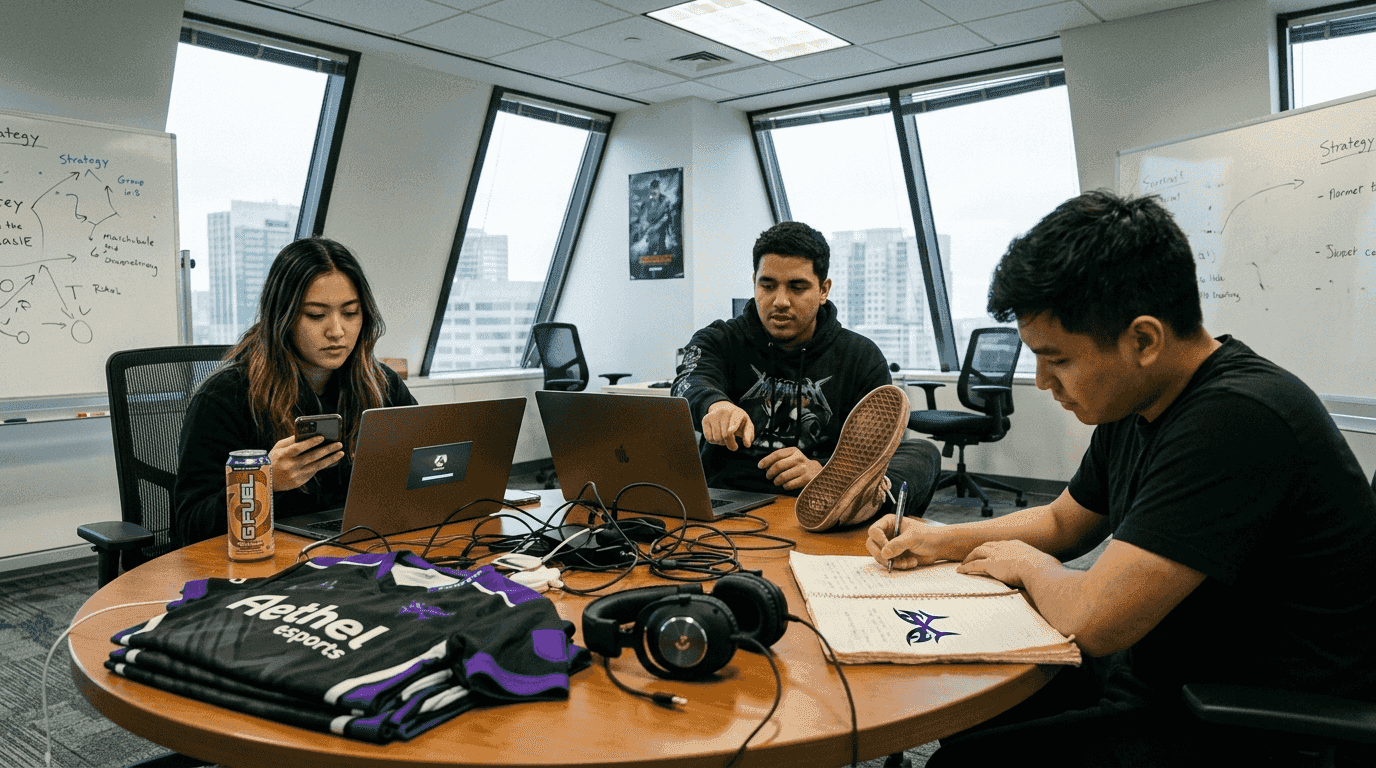
Many aspiring competitive gamers assume esports organizations are just groups of players competing for prize money. This oversimplified view misses the complex structure of teams, diverse roles beyond players, and multiple revenue streams that sustain professional esports. Understanding what an esports organization truly is and how it operates is essential for anyone looking to join a team, advance their career, or simply navigate the competitive gaming landscape. This guide breaks down team structures, financial models, and practical steps to help you succeed in the esports world.
Table of Contents
- Understanding Esports Organizations: Structure And Roles
- How Esports Organizations Make Money In 2026
- How To Join An Esports Organization: Steps And Strategies For Players
- Join Xyra Esports: Your Path To Competitive Gaming Success
- Frequently Asked Questions
Key takeaways
| Point | Details |
|---|---|
| Organizations include diverse roles | Teams consist of players, coaches, analysts, managers, and content creators working together. |
| Revenue comes from multiple streams | Sponsorships and media content provide stable income, while prize money is volatile. |
| Recruitment is digital and data driven | Performance metrics, online presence, and social media behavior determine scouting decisions. |
| Consistent practice is essential | Daily training of 3 to 5 hours helps players stand out and improve measurably. |
| Networking accelerates opportunities | Many team placements happen through recommendations and community connections. |
Understanding esports organizations: structure and roles
Esports organizations function as structured businesses with clearly defined roles that extend far beyond the players you see competing on stage. Joining an esports team requires understanding the team structure, which includes players, coaches and analysts, managers, and content creators. Each role contributes uniquely to the team's competitive success and financial sustainability.
Players are the core competitors who represent the organization in tournaments and leagues. They dedicate hours daily to mastering game mechanics, strategies, and teamwork. Coaches and analysts study opponents, develop strategies, and provide feedback to improve player performance through replay analysis and tactical planning. Managers handle logistics, scheduling, sponsorship negotiations, and ensure smooth operations so players can focus on competition. Content creators build the organization's brand by streaming, producing videos, and engaging with fans across social media platforms.
The communication hierarchy in esports teams directly influences performance and coordination. Top down communication flows from coaches and managers to players for strategic direction. Lateral communication happens between teammates during matches and practice sessions. Bottom up feedback allows players to share insights with coaches and management. Teams that encourage open dialogue and trust perform better than those with rigid, one way communication structures.
Understanding this organizational framework helps you identify where your skills and interests fit best. If you excel at in game performance, the player role suits you. If you enjoy analyzing data and strategy, coaching or analyst positions might be your path. Recognizing these distinctions early allows you to develop relevant skills and pursue goal setting in esports that aligns with your career objectives.
Here are the main roles within esports teams:
- Players: Compete in tournaments, practice daily, represent the brand
- Coaches: Develop strategies, analyze gameplay, provide performance feedback
- Analysts: Study opponent tactics, track meta shifts, prepare data reports
- Managers: Handle logistics, negotiate contracts, coordinate schedules
- Content Creators: Stream gameplay, produce videos, engage community
How esports organizations make money in 2026
Understanding how esports teams generate revenue gives you realistic expectations about career sustainability and organizational priorities. Esports teams generate revenue through multiple streams, with sponsorships and media content being the most stable and significant sources. Unlike traditional sports that rely heavily on ticket sales, esports organizations operate in a digital ecosystem where brand partnerships and content creation drive financial success.
The primary revenue sources include:
- Sponsorships: Brands pay teams to display logos, promote products, and access engaged audiences
- Media Content: Streaming, YouTube videos, and social media generate ad revenue and subscriptions
- Tournament Prizes: Winnings from competitions, though highly variable and unpredictable
- Streaming Revenue: Direct donations, subscriptions, and platform partnerships from individual streams
- Affiliate Marketing: Commissions from promoting gaming gear, peripherals, and services
Prize money is volatile and should be treated as a bonus, not a primary source of income for esports teams. Only top tier teams consistently win enough to rely on tournament earnings. Most organizations build financial stability through predictable monthly sponsorship deals and continuous content output that attracts advertisers and subscribers.

| Revenue Source | Stability | Pros | Cons |
|---|---|---|---|
| Sponsorships | High | Predictable monthly income, scales with audience | Requires strong brand and reach |
| Media Content | High | Consistent ad revenue, builds fanbase | Demands regular output and engagement |
| Prize Money | Low | Large payouts possible, prestige boost | Unpredictable, only top teams win regularly |
| Streaming | Medium | Direct fan support, personal brand growth | Income varies, platform dependent |
| Affiliate Marketing | Medium | Passive income potential, easy integration | Requires audience trust and traffic |
Smaller organizations starting out often focus on building predictable income before chasing major sponsorships. They bundle content creation with affiliate marketing, promote gaming peripherals their players genuinely use, and host esports event ideas to grow their community. This foundation allows teams to demonstrate value to potential sponsors through engagement metrics and audience demographics.
Pro Tip: Create a media sheet showcasing your team's social media reach, engagement rates, and audience demographics. This professional document makes sponsor outreach far more effective and demonstrates you understand the business side of esports.
Understanding these financial realities helps you make informed decisions about joining teams, negotiating contracts, and building your personal brand. Organizations with diversified revenue streams offer more stability and growth opportunities than those relying solely on tournament performance.
How to join an esports organization: steps and strategies for players
Breaking into competitive esports requires more than raw talent. You need strategic skill development, a strong digital presence, and networking skills to get noticed by recruiters. Esports recruitment heavily relies on digital platforms, with performance metrics and online behavior being key indicators of talent. Teams scout players through data, not just word of mouth.
Start by focusing on one game to build clear, demonstrable expertise. Spreading yourself across multiple titles dilutes your progress and makes it harder to reach the competitive threshold needed for team consideration. Consistent practice of at least three to five hours a day is key to standing out. This isn't casual play but deliberate practice reviewing replays, analyzing mistakes, and implementing improvements.
Building a strong online presence is non negotiable in 2026. Stream your gameplay on Twitch or YouTube to showcase skills and personality. Maintain active social media profiles where you engage positively with the community. Teams evaluate not just your mechanical skills but also your marketability and how you represent their brand. Toxic behavior or controversial posts can eliminate you from consideration regardless of skill level.
Gain tournament experience starting with community and regional events before targeting major competitions. Participate in online ladders and ranked modes to build measurable statistics. Recruiters look at kill death ratios, win rates, clutch play percentages, and consistency across matches. These quantifiable metrics matter more than subjective impressions when teams make roster decisions.
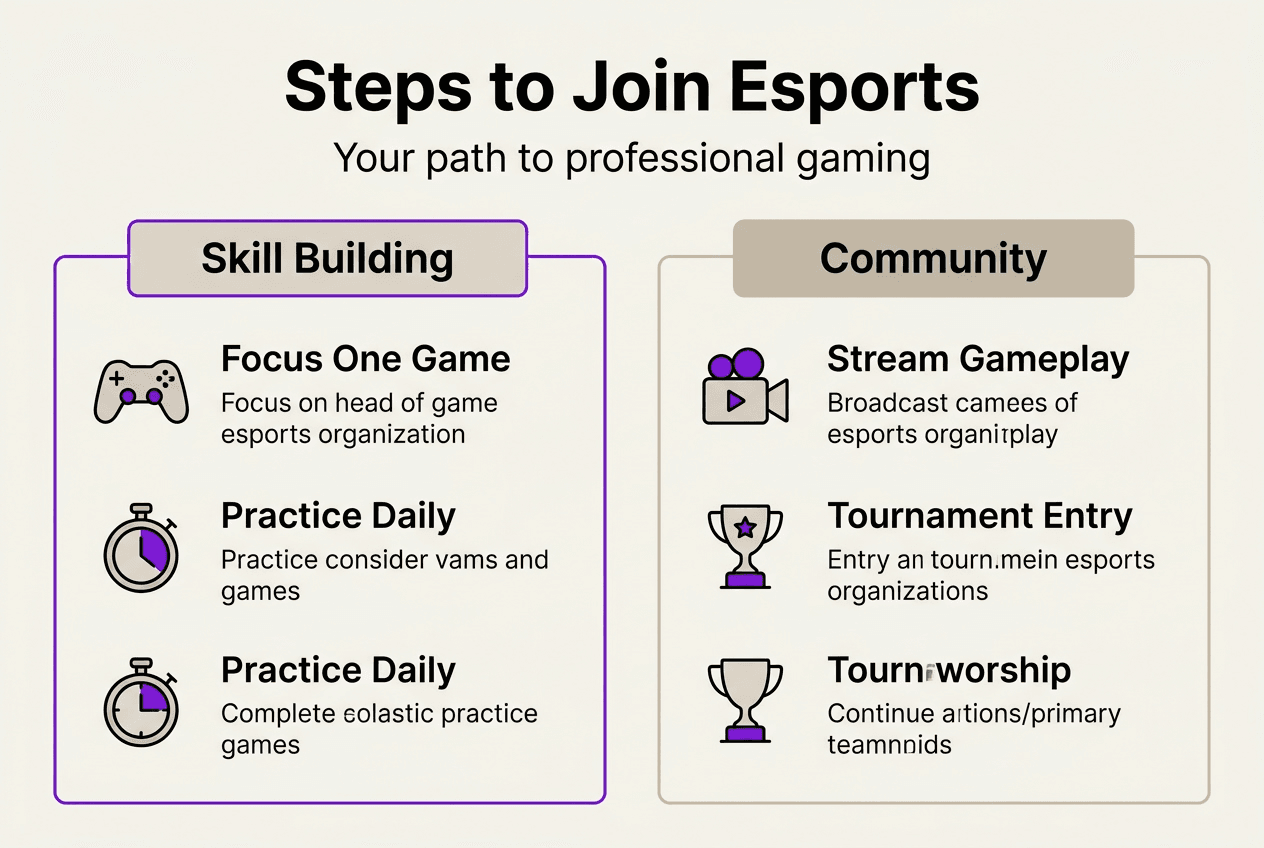
Networking is vital in esports, as many opportunities come through recommendations. Join Discord servers for your game's competitive community. Play with higher ranked players to learn and build connections. Attend local and online events where you can meet coaches, managers, and other players. Your reputation within the community often determines whether someone recommends you when a roster spot opens.
Follow this step by step path to join an esports organization:
- Master one game through 3 to 5 hours of daily deliberate practice
- Build ranked ladder presence and track performance metrics consistently
- Start streaming regularly to showcase gameplay and personality
- Enter community tournaments to gain competitive experience
- Create professional social media profiles highlighting achievements
- Network in Discord servers and with higher ranked players
- Apply to amateur and semi professional teams to gain experience
- Continue improving and documenting progress with statistics
Consider following a structured esports training guide to accelerate your development. Understanding what is competitive gaming at a deeper level helps you approach practice with the right mindset and methods.
Pro Tip: Maintain professionalism in all online interactions. Teams research your digital footprint extensively, and a single toxic incident can disqualify you from consideration. Treat every match, stream, and social media post as a public audition.
The path to joining an esports organization demands patience, consistency, and strategic self promotion. Focus on measurable improvement, build genuine relationships within the community, and document your progress to stand out when opportunities arise.
Join Xyra Esports: your path to competitive gaming success
If you're ready to take your competitive gaming seriously, Xyra Esports provides the structure, coaching, and community support you need to advance. Our organization focuses on developing skilled players through organized training, team placement opportunities, and access to experienced coaches who understand what it takes to compete at higher levels. We emphasize accountability, consistent improvement, and building strong team dynamics that translate into better performance.
Xyra Esports hosts regular community events, scrimmages, and networking opportunities where you can connect with like minded players and staff. Whether you're looking to join your first competitive team or advance to more serious competition, our platform offers resources and guidance tailored to your current skill level. Visit Xyra Esports to explore team opportunities, training programs, and how our structured approach can help you achieve your competitive gaming goals.
Frequently asked questions
How do esports organizations differ from traditional sports teams?
Esports organizations operate with digital centric recruitment and data driven talent evaluation, unlike traditional sports that rely heavily on physical tryouts and subjective scouting. Revenue models differ significantly, with esports teams depending on sponsorships and media content rather than ticket sales and merchandise. Team structures include roles like content creators and data analysts that don't exist in traditional sports. Esports careers tend to be shorter on average due to the intense demands on reaction time and the need for daily practice to maintain competitive edge.
What skills and habits are most important to join an esports team?
Discipline in consistent practice, ideally 3 to 5 hours daily, forms the foundation of competitive readiness. Strong communication and teamwork skills within the team environment are essential since coordination often determines match outcomes. Building a professional online presence and engaging positively with the community demonstrates marketability to potential teams. The ability to analyze gameplay through replays and engage in continuous improvement separates good players from great ones. Networking and attending events to build relationships and reputation accelerates your chances of getting noticed by recruiters.
How do esports teams scout and recruit new players?
Recruitment heavily relies on digital performance metrics like kill death ratios, win rates, and clutch play statistics that teams track across platforms. Social media presence and streaming activity showcase a player's marketability and personality, which matter for brand representation. Participation in online tournaments and high ladder rankings builds visibility and demonstrates competitive capability under pressure. Teams use data driven scouting methods over traditional subjective evaluations, analyzing quantifiable performance across multiple matches. Building a strong reputation and maintaining positive community engagement accelerates recruitment chances since many opportunities come through recommendations.
Can you join an esports organization without being a professional player?
Absolutely. Esports organizations need coaches, analysts, managers, content creators, and support staff who contribute to team success without competing directly. If you have skills in video production, social media management, data analysis, or event coordination, these roles offer entry points into competitive gaming. Many organizations value business and marketing expertise to handle sponsorships and brand partnerships. Starting in a support role often provides insight into team operations and can lead to other opportunities within the organization.
What are the biggest mistakes aspiring esports players make?
Many players focus solely on mechanical skill while neglecting communication and teamwork development. Others spread themselves across multiple games instead of mastering one title deeply enough to compete professionally. Neglecting to build an online presence and document achievements makes it harder for teams to discover and evaluate you. Poor online behavior and toxic interactions eliminate candidates regardless of skill level. Finally, expecting immediate results without consistent daily practice and patience leads to burnout and missed opportunities for gradual improvement.