
Professional esports recruitment operates differently than traditional sports scouting. Instead of physical tryouts at training facilities, teams analyze digital performance data, streaming metrics, and online community engagement. Recruiters track leaderboard rankings, tournament results, and communication patterns to identify talent. This data-driven approach means your online presence matters as much as your in-game skills. Understanding how esports recruitment works helps aspiring players position themselves effectively and helps managers build stronger rosters. This guide breaks down the recruitment process, key metrics teams evaluate, common pitfalls to avoid, and actionable strategies to get noticed in 2026.
Table of Contents
- Understanding Esports Recruitment: Definition And Core Process
- Key Performance Metrics And Digital Tools In Esports Recruitment
- Challenges And Nuances In Esports Recruitment
- How To Get Noticed And Succeed In Esports Recruitment
- Explore Professional Esports Opportunities With Xyra Esports
- Frequently Asked Questions
Key takeaways
| Point | Details |
|---|---|
| Data drives decisions | Esports recruitment relies on performance analytics, leaderboard rankings, and digital behavior rather than traditional scouting methods. |
| Multi-stage evaluation | Teams use screening, tryouts, and interviews to assess both mechanical skills and communication abilities. |
| Team fit matters | Individual talent means little without chemistry, adaptability, and alignment with organizational culture. |
| Online presence counts | Social media engagement, streaming activity, and community reputation influence recruitment opportunities. |
| Technology transforms scouting | AI and machine learning automate player evaluation, improving accuracy and reducing time spent on manual analysis. |
Understanding esports recruitment: definition and core process
Esports recruitment involves identifying, evaluating, and acquiring players focusing on skill, teamwork, and adaptability. Unlike traditional sports where scouts attend physical events, esports recruiters monitor digital platforms, analyze match replays, and track statistical performance across multiple data sources. The goal extends beyond finding mechanically gifted players to building cohesive rosters that communicate effectively under pressure.
The typical recruitment process unfolds in distinct stages. Initial screening filters candidates based on rank, tournament history, and basic performance metrics. Teams then conduct deeper performance evaluations, reviewing gameplay footage to assess decision-making, positioning, and mechanical execution. Interviews follow to gauge communication style, personality fit, and commitment level. Finally, tryouts place candidates in scrimmages with existing team members to test real-time synergy.
This multi-stage approach balances objective data with subjective assessment. Raw statistics reveal mechanical proficiency and consistency, but they miss crucial elements like shot-calling ability, emotional resilience, and coachability. A player might dominate public matches yet struggle in structured team environments. Conversely, someone with modest individual stats might elevate team performance through superior communication and strategic awareness.
The timeline varies significantly. Some organizations fill roster spots within weeks through rapid tryout cycles. Others invest months in comprehensive evaluation, especially for leadership positions or high-stakes lineups. Understanding competitive gaming dynamics helps contextualize why teams prioritize thorough vetting over quick decisions.
Key elements recruiters examine include:
- Consistency across multiple matches and tournaments rather than isolated highlight performances
- Adaptability to different team compositions, strategies, and meta shifts
- Communication clarity during high-pressure situations and ability to process feedback
- Professionalism in public interactions, streaming behavior, and social media presence
- Growth trajectory showing continuous improvement rather than stagnant performance
Key performance metrics and digital tools in esports recruitment
Teams analyze player rankings, tournament participation, social media, and streaming performance, including game-specific metrics like kill/death ratios and win rates. The specific metrics vary dramatically by title. Counter-Strike recruiters prioritize aim precision, utility usage, and clutch round success rates. League of Legends scouts examine vision control, objective priority, and late-game decision-making. Valorant evaluators balance mechanical aim with agent-specific utility deployment and site execution coordination.
Leaderboard positioning provides the first filter. Top 500 players in competitive modes demonstrate baseline mechanical competency and game knowledge. However, rank alone proves insufficient. A player might reach high ranks through individual prowess while lacking the cooperative skills necessary for team play. Tournament performance offers better insight into competitive readiness, revealing how players handle structured formats, vetoes, and elimination pressure.
Digital platforms enable continuous monitoring. Recruiters track:
- Official competitive ladders and seasonal rankings across multiple accounts
- Third-party tournament results from platforms like FACEIT, ESEA, or Challengermode
- Streaming channels for communication style, attitude, and game knowledge demonstration
- Social media for community engagement, professionalism, and personal branding
- Discord activity within competitive communities and scrim networks
The following table shows common metrics by game genre:
| Game Type | Primary Metrics | Secondary Factors | | --- | --- | | First-Person Shooters | Headshot percentage, K/D ratio, clutch success rate | Utility damage, entry frag rate, trade efficiency | | MOBAs | CS per minute, kill participation, vision score | Objective control, death positioning, champion pool | | Battle Royales | Placement consistency, damage per match, survival time | Rotation timing, third-party awareness, loadout optimization | | Fighting Games | Tournament placement, matchup knowledge, frame data execution | Adaptation speed, mental game, character diversity |
AI-powered scouting systems automate player evaluation, increasing accuracy and reducing scouting time. Machine learning algorithms analyze thousands of matches simultaneously, identifying patterns human scouts might miss. These systems track micro-decisions like crosshair placement, reaction times, and positional adjustments that correlate with high-level play. Computer vision technology processes gameplay footage to generate heat maps, movement patterns, and engagement statistics automatically.
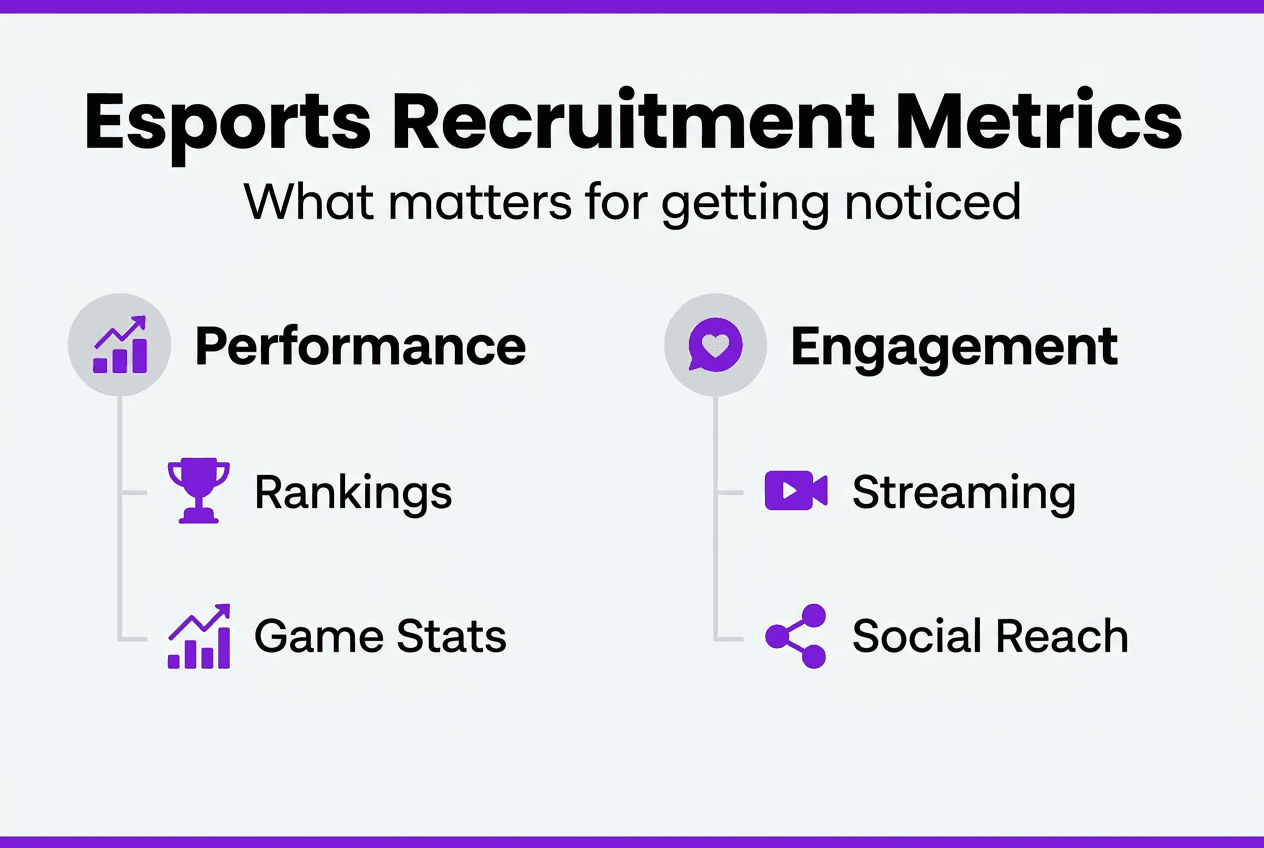
Advanced analytics platforms like Mobalytics, Blitz, and GRID provide recruiters with comprehensive player profiles. These digital scouting tools aggregate data from multiple sources, presenting performance trends, peer comparisons, and improvement trajectories. Some organizations develop proprietary analytics systems tailored to their specific evaluation criteria and team philosophy.

Pro Tip: Maintain consistent performance across multiple platforms and game modes. Recruiters value versatility and adaptability over one-dimensional excellence in a single queue type.
Streaming serves dual purposes. It showcases gameplay while revealing personality, communication style, and community engagement. A player with strong streaming presence demonstrates marketability beyond competitive performance, adding value for organizations seeking content creators alongside competitors. However, streaming success doesn't guarantee competitive readiness. Some excellent streamers lack the structured discipline required for team environments.
Challenges and nuances in esports recruitment
Over-reliance on individual skill neglects team fit, background checks, and player well-being. The biggest recruitment mistake involves prioritizing mechanical ability while ignoring interpersonal dynamics. A mechanically gifted player with poor communication habits or toxic tendencies damages team morale and performance. Chemistry matters more in esports than many traditional sports because teammates spend extensive time together in voice communication, making personality conflicts particularly disruptive.
Background verification remains inconsistent across esports. Some organizations thoroughly investigate past team experiences, asking former teammates and coaches about work ethic, coachability, and attitude. Others skip this step, leading to costly roster mistakes. Red flags include frequent team changes without clear progression, public disputes with former organizations, or patterns of blaming teammates for losses.
Teams with strong cohesion and mental health support perform better and reduce player burnout by 20%. Esports demands intense practice schedules, often exceeding 60 hours weekly during competitive seasons. Without proper support systems, players experience burnout, anxiety, and performance decline. Progressive organizations invest in sports psychologists, structured practice schedules, and work-life balance initiatives. These investments pay dividends through improved player retention and consistent performance.
Common recruitment pitfalls include:
- Overvaluing recent performance spikes while ignoring long-term consistency patterns
- Neglecting role-specific requirements in favor of generalized skill assessments
- Failing to assess cultural fit and organizational value alignment
- Ignoring communication quality during high-pressure situations
- Rushing decisions due to roster deadlines rather than thorough evaluation
Game-specific knowledge proves essential. A League of Legends recruiter must understand current meta shifts, champion balance changes, and strategic evolution. Evaluating a jungler requires different criteria than assessing a support player. Similarly, Counter-Strike recruitment demands understanding of different roles within the game, from entry fraggers to in-game leaders, each requiring distinct skill sets and evaluation approaches.
"The difference between a good team and a great team isn't individual talent. It's how well those individuals communicate, adapt to each other's playstyles, and maintain composure when strategies fall apart. We've seen rosters with less mechanical skill outperform star-studded lineups purely through superior teamwork and mental resilience."
Organizational culture significantly impacts recruitment success. Teams with clear development pathways, professional coaching staff, and supportive environments attract better talent. Conversely, organizations with poor reputations for player treatment, payment disputes, or unstable management struggle to recruit quality players regardless of offered salaries. Aspiring players should research organizational reputation through community forums, former player testimonials, and professional conduct standards before committing.
The esports community maintains informal networks where information about organizations spreads quickly. A single negative experience can damage an organization's recruiting prospects for years. Smart recruiters recognize this dynamic and prioritize building positive relationships with players, even those not selected, knowing that reputation management directly affects future talent acquisition.
How to get noticed and succeed in esports recruitment
Proactive outreach with professional emails detailing rank, tournament experience, and gameplay highlights improves chances. Waiting for scouts to discover you rarely works. The most successful recruitment stories involve players actively positioning themselves in front of decision-makers through strategic networking and professional presentation.
Follow these steps to maximize recruitment opportunities:
- Achieve and maintain top-tier competitive rankings consistently across multiple seasons, not just single peak performances.
- Participate in online tournaments and leagues regularly, building a documented competitive history that demonstrates tournament experience.
- Create highlight reels showcasing diverse skills including mechanical execution, strategic decision-making, and clutch performances under pressure.
- Build professional social media presence focusing on game analysis, strategy discussion, and positive community engagement rather than controversy.
- Network within competitive communities by joining Discord servers, participating in scrims, and connecting with players at your skill level.
- Research organizations thoroughly before reaching out, understanding their competitive level, organizational culture, and current roster needs.
- Craft personalized outreach messages highlighting specific reasons you'd fit their team rather than sending generic mass applications.
- Maintain consistent streaming schedule if possible, demonstrating reliability while showcasing personality and communication skills to potential recruiters.
Your communication matters enormously. When contacting organizations, include:
- Current competitive rank with peak rank achieved
- Tournament results with placement details and team names
- Links to match footage, highlight reels, or statistical profiles
- Availability for tryouts including time zone and schedule flexibility
- Brief explanation of your playstyle, preferred roles, and what you bring to team environments
Pro Tip: Quality over quantity applies to outreach. Five well-researched, personalized messages to organizations matching your skill level outperform fifty generic applications to every team you find.
Develop a growth mindset. Recruiters value players who actively seek improvement over those satisfied with current performance levels. Demonstrate this through:
- Regularly reviewing your own gameplay footage to identify mistakes
- Seeking coaching or mentorship from higher-ranked players
- Studying professional matches to understand strategic evolution
- Adapting to meta changes quickly rather than clinging to outdated strategies
- Accepting feedback constructively during tryouts and scrimmages
Participate in open tryouts whenever available. Many organizations host public tryout events, especially at tier two and three competitive levels. These opportunities provide direct evaluation chances while demonstrating commitment and confidence in your abilities. Even unsuccessful tryouts offer valuable experience and potential networking connections.
Consider boosting esports engagement through community involvement. Hosting educational content, participating in community tournaments, or contributing to strategy discussions increases visibility within competitive circles. This organic networking often leads to recruitment opportunities through player recommendations and community reputation.
Invest in structured esports training rather than relying solely on ranked grinding. Focused practice targeting specific weaknesses produces faster improvement than unfocused volume. Recruiters notice players with clear development trajectories showing measurable skill progression over time.
Explore professional esports opportunities with Xyra Esports
Navigating esports recruitment requires more than individual skill. You need strategic positioning, professional presentation, and community connections to stand out in an increasingly competitive landscape. Xyra Esports provides structured development pathways for aspiring competitive players, combining coaching resources with recruitment guidance and industry networking opportunities.
Our organization emphasizes long-term player development over short-term results. We offer mentorship from experienced competitors, access to competitive scrims and tournaments, and direct connections to the broader esports ecosystem. Whether you're seeking your first team opportunity or looking to advance to higher competitive tiers, Xyra Esports creates an environment focused on measurable improvement and professional growth. Join a community that understands recruitment dynamics and actively supports member advancement through structured training, performance feedback, and industry connections.
Frequently asked questions
What is esports recruitment?
Esports recruitment is the process organizations use to identify, evaluate, and acquire competitive gaming talent for their rosters. Unlike traditional sports scouting, it relies heavily on digital performance data, online presence analysis, and remote evaluation methods. Teams assess players through ranked performance, tournament results, gameplay footage review, and structured tryouts that test both individual skill and team chemistry.
How do esports teams find new players?
Teams monitor competitive leaderboards, tournament platforms, streaming channels, and community networks to identify potential recruits. Many organizations use analytics platforms that aggregate player statistics and performance trends automatically. Recruiters also rely on player recommendations from existing roster members, coaches, and community contacts. Some teams host open tryouts while others scout exclusively through invitation based on demonstrated performance.
What skills do esports recruiters look for?
Recruiters prioritize mechanical proficiency, game knowledge, and consistent performance across multiple matches. However, they equally value communication ability, adaptability to different strategies, and emotional resilience under pressure. Team fit matters significantly, so recruiters assess personality compatibility, coachability, and alignment with organizational culture. Professional conduct, positive community reputation, and growth mindset also influence recruitment decisions heavily.
How long does esports recruitment take?
The timeline varies from weeks to months depending on organizational needs and position importance. Initial screening happens quickly, often within days of application or identification. However, comprehensive evaluation including multiple tryout sessions, team scrimmages, and interviews can extend several weeks. Leadership positions or high-stakes roster spots typically involve longer evaluation periods. Some organizations maintain ongoing talent pipelines, continuously evaluating potential recruits over extended periods.
Can I get recruited without tournament experience?
While tournament experience strengthens applications significantly, exceptional ranked performance and strong online presence can attract attention. Many organizations recruit from high-level ranked play, especially for academy or developmental rosters. However, tournament experience demonstrates competitive readiness, pressure management, and structured format familiarity that ranked play cannot replicate. Focus on building tournament history through online leagues and community events to strengthen recruitment prospects.
What mistakes should I avoid during recruitment?
Avoid toxic behavior in public matches, negative social media presence, or unprofessional communication with organizations. Don't exaggerate statistics or tournament results, as recruiters verify claims thoroughly. Resist sending generic mass applications instead of personalized outreach. Never badmouth former teams or teammates publicly, as this raises red flags about attitude and professionalism. Finally, don't neglect the importance of team fit by focusing exclusively on individual performance metrics.