
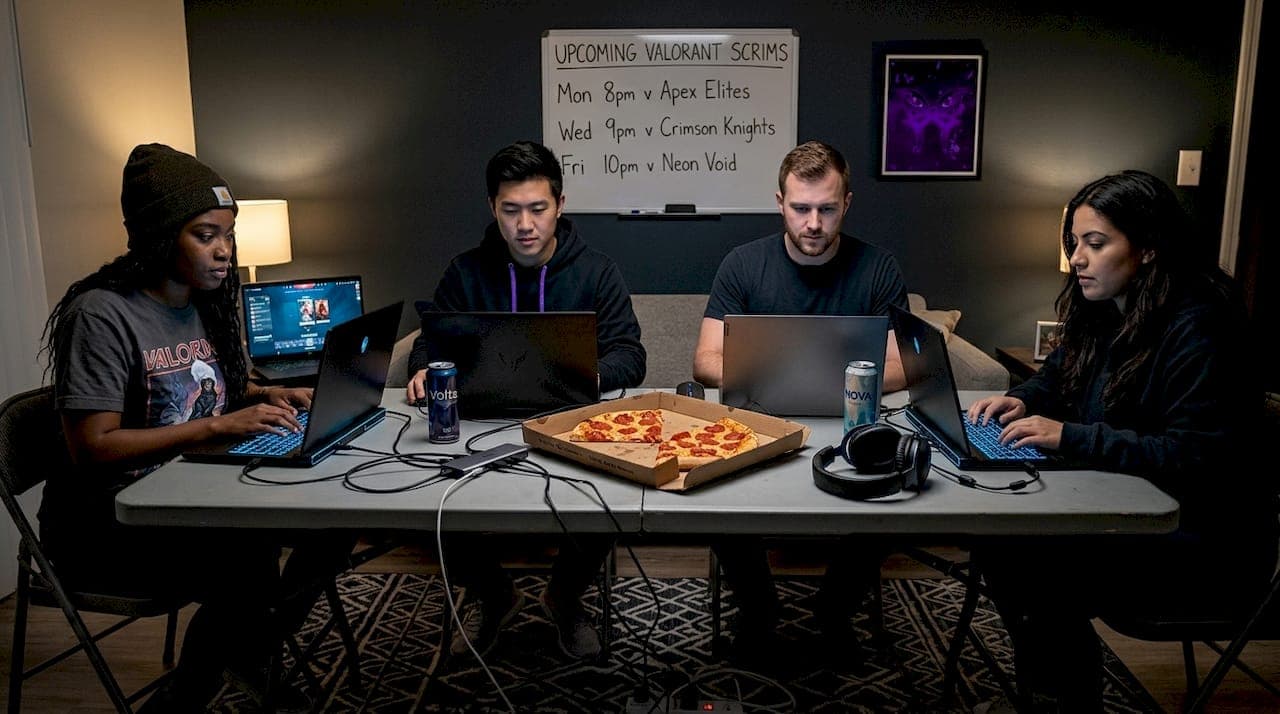
Building a thriving gaming community in esports is tough. Many aspiring leaders face member churn, disengagement, and fragmentation despite their passion. Without clear strategies, even the most dedicated organizers burn out. This guide walks you through proven, actionable steps to create and sustain a competitive gaming community in 2026. You'll learn how to define your niche, choose platforms strategically, boost engagement through tournaments and gamification, maintain a positive culture, and measure success with data. Whether you're launching your first community or scaling an existing one, these insights will help you build a loyal, active player base that thrives in the competitive esports ecosystem.
Table of Contents
- Define your niche and core purpose for growth acceleration
- Select and leverage platforms for engagement and interaction
- Implement structured engagement: tournaments, gamification, and events
- Foster positive culture with moderation and anti-toxicity measures
- Measure success and sustain growth with KPIs and community feedback
- Build your esports community with support from Xyra Esports
- Frequently asked questions
Key takeaways
| Point | Details |
|---|---|
| Narrow your niche | Focused communities like "Southeast Asia Valorant Competitive Hub" grow faster than generic gaming groups. |
| Use platforms strategically | Discord for real-time interaction, Reddit for discussions, Twitch for streaming matches. |
| Boost engagement | Tournaments, leaderboards, and regular events increase retention and keep members active. |
| Enforce strong moderation | Clear guidelines and trained moderators reduce toxicity and prevent member loss. |
| Measure success | Track retention, engagement, and satisfaction to refine strategies and sustain growth. |
Define your niche and core purpose for growth acceleration
Choosing a specific niche is the fastest way to build momentum in esports. Narrow niches like "Southeast Asia Valorant Competitive Hub" grow faster than broad "Gaming Community" labels. Why? Specificity attracts dedicated members who share a common interest, making it easier to create relevant content and foster meaningful connections. A focused community also positions you as an expert in that space, which builds trust and credibility.
Successful esports communities often center on a single game title, region, or playstyle. For example, a community dedicated to competitive Apex Legends ranked play will attract players seeking team strategies, scrimmage partners, and tournament opportunities. This clarity helps you tailor events, coaching sessions, and discussions to what members actually need. Broad communities struggle because they try to serve everyone and end up resonating with no one.
Defining your core purpose is equally critical. Ask yourself: What problem does my community solve? Are you helping players improve their skills, find teammates, or compete in organized tournaments? Your purpose should be specific and actionable. Write it down and share it openly. This becomes your North Star for every decision, from platform choice to event planning. Members who understand and align with your purpose are more likely to stay engaged long term.
Here's how to define your niche and purpose effectively:
- Identify your own passion and expertise within esports
- Research existing communities to find gaps or underserved audiences
- Choose a specific game, region, or competitive level to focus on
- Craft a one sentence purpose statement that explains your community's value
- Test your niche by sharing it with potential members and gathering feedback
Pro Tip: Start with a niche you're personally invested in. Your enthusiasm will be contagious and help you push through early challenges. As your community grows, you can expand gradually, but never lose that core focus. For more on structuring your competitive gaming organization, explore our esports organization guide.
With a clear niche and purpose established, the next step is choosing the right platforms to engage your targeted community effectively.
Select and leverage platforms for engagement and interaction
Platform choice can make or break your community. Select platforms strategically: Discord for real-time esports interaction, Reddit for discussions, Twitch for streaming. Each platform serves a unique role in your community ecosystem. Discord excels at immediate communication, voice chat during matches, and organizing teams. Reddit fosters deeper discussions, strategy sharing, and long form content. Twitch builds visibility through live streams, match broadcasts, and creator partnerships.
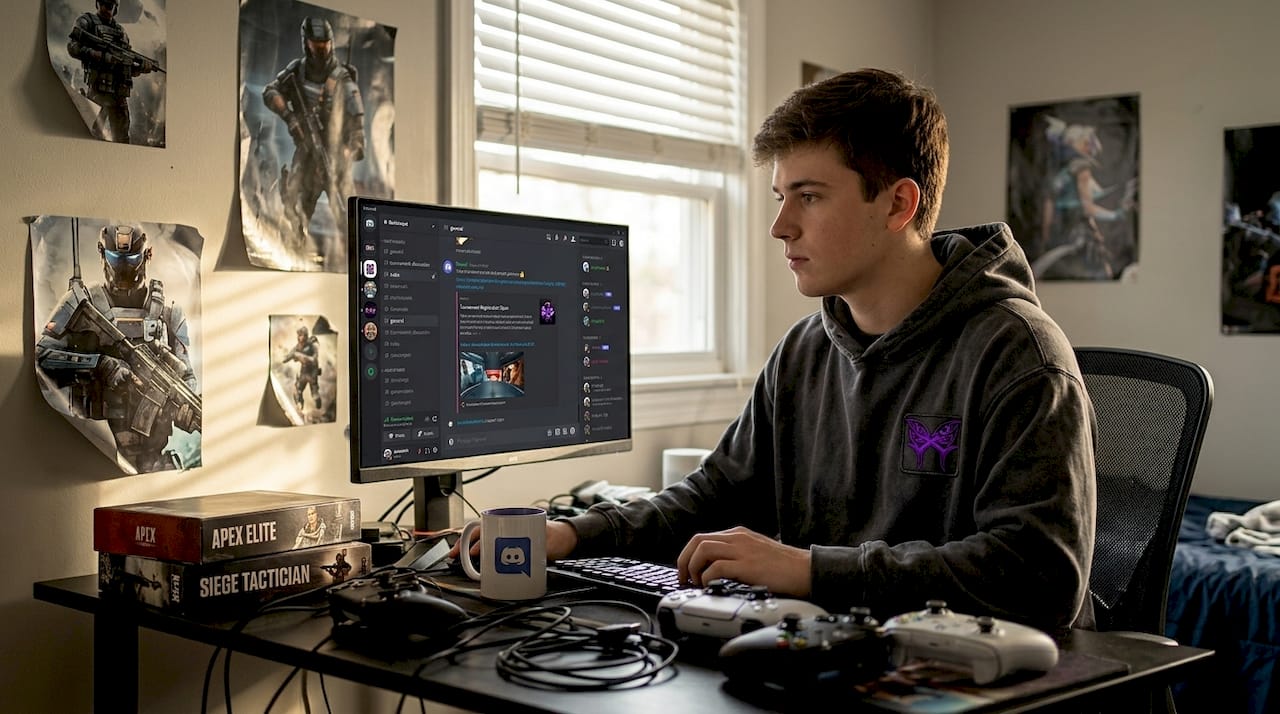
Tailoring your approach to each platform maximizes engagement. On Discord, create channels for specific games, skill levels, and topics like team recruitment or coaching. Use roles and permissions to organize members and highlight active contributors. On Reddit, post regular discussion threads, AMAs with top players, and tournament recaps. Engage with comments to build rapport. On Twitch, stream community matches, host watch parties for major tournaments, and interact with viewers in real time. Consistency matters: pick a streaming schedule and stick to it.
Building synergy across platforms expands your reach. Announce Discord events on Reddit and Twitch. Share Twitch highlights in Discord channels. Cross promote to funnel members from one platform to another. This creates multiple touchpoints and keeps your community top of mind. However, avoid spreading yourself too thin. Start with one or two platforms, master them, then expand.
Managing interaction smoothly requires clear guidelines and automation. Set community rules that apply across all platforms. Use bots on Discord to automate moderation, welcome new members, and manage roles. On Reddit, appoint moderators who understand your community culture. On Twitch, enable chat moderation tools and assign trusted members as moderators. Consistency in tone and enforcement builds trust and safety.
Here's a quick platform strategy checklist:
- Choose Discord as your primary hub for real-time interaction and team coordination
- Use Reddit to share strategies, host discussions, and build long term content
- Leverage Twitch for visibility, streaming matches, and engaging with a broader audience
- Cross promote content to drive traffic between platforms
- Automate moderation and use bots to streamline management
Pro Tip: Don't launch on every platform at once. Start with Discord to build your core community, then add Reddit or Twitch once you have consistent activity. Quality beats quantity. For ideas on engaging your community through events, check out our esports community events guide.
Once platforms are chosen, the focus shifts to structured community engagement to boost member retention and activity.
Implement structured engagement: tournaments, gamification, and events
Engagement is the lifeblood of any esports community. Implement structured engagement: tournaments, gamification (leaderboards, rewards), regular events to boost retention. Tournaments create excitement, foster competition, and give members a reason to stay active. Whether you run weekly scrimmages or monthly championships, consistent competitive opportunities keep players invested. Start small with single elimination brackets, then scale up as participation grows.
Gamification taps into players' competitive nature. Leaderboards, achievement badges, and reward systems motivate members to participate more frequently. For example, award points for tournament wins, event attendance, or helping new members. Create tiers like Bronze, Silver, Gold, and Platinum to recognize top contributors. Publicly celebrate achievements in announcements or dedicated channels. This recognition drives engagement and builds a culture of excellence.
Regular events beyond tournaments also matter. Host coaching sessions, strategy workshops, or casual game nights. These events cater to different member interests and skill levels. A beginner friendly workshop can attract new players, while advanced strategy sessions appeal to competitive veterans. Variety keeps your community dynamic and inclusive.
Here's how to structure engagement effectively:
- Schedule tournaments on a predictable cadence (weekly, biweekly, or monthly)
- Create leaderboards that track wins, participation, and community contributions
- Offer tangible rewards like in game currency, merch, or recognition roles
- Host diverse events: coaching sessions, AMAs, watch parties, and casual meetups
- Promote events across all platforms with clear instructions and sign up links
- Gather feedback after each event to improve future iterations
Pro Tip: Use free tournament software like Challonge or Battlefy to manage brackets and track results. Automate as much as possible so you can focus on engaging with participants. For more creative event ideas, explore our esports event ideas guide.
Here's a comparison of engagement methods and their impact:
| Method | Impact on Retention | Effort Required | Best For |
|---|---|---|---|
| Tournaments | High | Medium | Competitive players |
| Leaderboards | Medium | Low | All skill levels |
| Coaching sessions | High | High | Skill development |
| Casual events | Medium | Low | Community bonding |
Building engagement is critical, yet sustaining it requires addressing community health, especially managing toxicity.
Foster positive culture with moderation and anti-toxicity measures
Toxicity kills communities faster than anything else. Toxicity causes 45% of players to leave communities, making strong moderation non-negotiable. Unprepared leadership and weak enforcement create environments where harassment, trolling, and negativity thrive. Members who feel unsafe or disrespected will leave, and rebuilding trust is nearly impossible. Prevention is always easier than damage control.
Best practices for moderation start with clear, publicly visible community guidelines. Define acceptable behavior, consequences for violations, and how to report issues. Make these rules easy to find on Discord, Reddit, and any other platforms you use. Consistency in enforcement is key. Apply rules fairly regardless of a member's status or contribution. Favoritism breeds resentment and undermines your authority.
Training and empowering moderators is equally important. Choose moderators who share your community values and have strong conflict resolution skills. Provide them with tools like moderation bots, reporting systems, and clear escalation procedures. Hold regular check-ins to discuss challenges and refine policies. Moderators are your first line of defense, so invest in their development.
Creating a safe, inclusive space fosters long term loyalty. Encourage positive interactions by highlighting helpful members, celebrating sportsmanship, and modeling respectful behavior yourself. Address issues privately when possible to avoid public drama. When conflicts arise, mediate quickly and transparently. Members who see you take action will feel more secure and engaged.
Here's how to build a positive community culture:
- Establish clear, enforceable community guidelines and share them prominently
- Recruit and train moderators who align with your values and can handle conflicts
- Use moderation bots to automate rule enforcement and reduce manual workload
- Address toxicity immediately and consistently, regardless of who's involved
- Promote positive behavior through recognition, rewards, and public praise
- Create private channels for conflict resolution to avoid public escalation
"A welcoming, respectful community culture is the foundation of long term growth. Members stay when they feel valued and safe."
Pro Tip: Set up anonymous reporting systems so members can flag issues without fear of retaliation. This encourages accountability and helps you catch problems early. For leadership strategies that support positive culture, see our esports leadership strategies guide.
After establishing a positive culture, verifying progress through metrics allows long term community sustainability and success.
Measure success and sustain growth with KPIs and community feedback
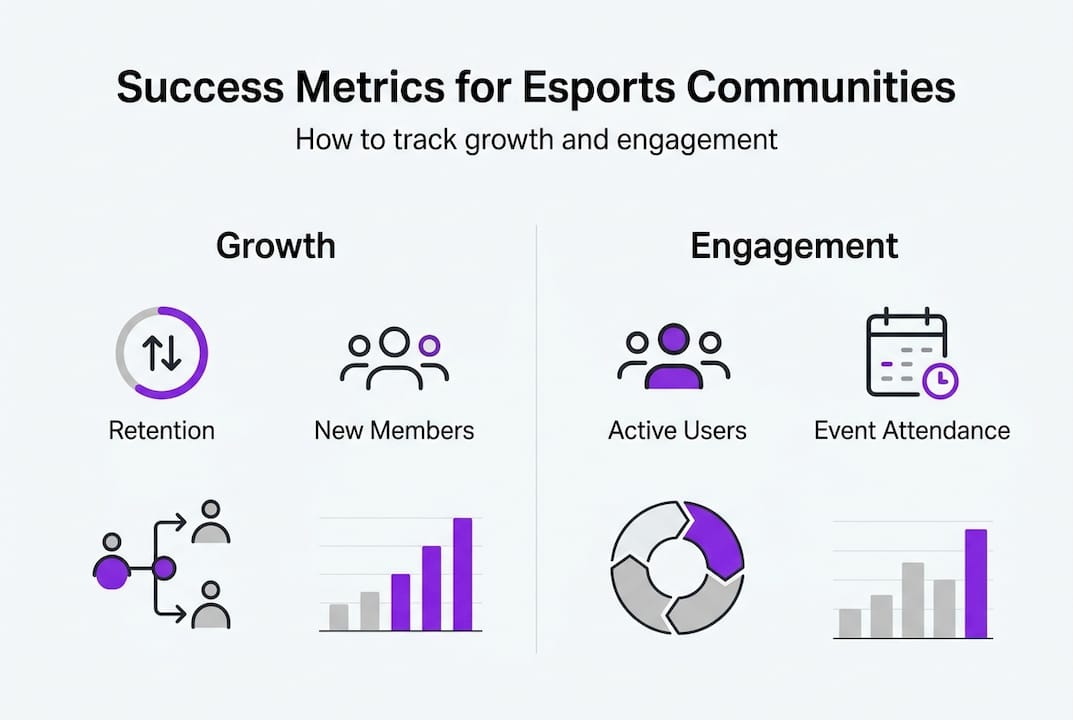
Tracking key performance indicators (KPIs) is essential for understanding your community's health. Focus on retention (how many members stay active month over month), engagement (participation in events, discussions, and tournaments), and satisfaction (feedback scores and sentiment). These metrics reveal what's working and where you need to improve. Community focus led to 27% higher revenue, 76% satisfaction; 50% increase in new sign-ups via feedback, proving that data-driven strategies pay off.
Collecting feedback effectively requires multiple channels. Use surveys after events, polls in Discord, and open discussion threads on Reddit. Ask specific questions: What did you enjoy? What could be better? What events do you want next? Anonymous surveys often yield more honest responses. Act on feedback quickly and communicate changes publicly. Members who see their input implemented feel valued and stay engaged.
Monetization can support sustainability, but handle it carefully. Buy-in tournaments with prize pools funded by entry fees create competitive excitement without feeling exploitative. Sponsorships from gaming brands can offset costs while adding legitimacy. Offer optional premium memberships with perks like exclusive channels or early event access. Avoid aggressive monetization that alienates members. Transparency is critical: explain how funds are used and ensure value exceeds cost.
Building sustainable, data-driven strategies means continuously refining your approach. Review metrics monthly, test new engagement tactics, and iterate based on results. Celebrate wins publicly to maintain momentum. Address challenges openly and involve your community in problem solving. This collaborative approach builds ownership and loyalty.
Here's a comparison of key metrics and how to track them:
| Metric | What It Measures | How to Track |
|---|---|---|
| Retention | Members staying active month over month | Discord analytics, member activity logs |
| Engagement | Participation in events and discussions | Event sign-ups, message counts, poll responses |
| Satisfaction | Member happiness and sentiment | Surveys, feedback forms, sentiment analysis |
| Growth | New member registrations | Platform analytics, referral tracking |
For more on professionalizing your esports teams and community, explore our professionalize esports teams guide. To deepen player development, check out our esports training guide.
Having covered core growth strategies and sustainability, we now present how our platform can support you on this journey.
Build your esports community with support from Xyra Esports
Building a competitive gaming community takes strategy, consistency, and the right support. Xyra Esports offers resources, expert guidance, and a network of like minded leaders to help you succeed. Whether you're launching your first community or scaling an existing one, our platform provides the tools and insights you need to grow sustainably. From tournament organization to leadership development, we focus on creating structured environments where players and communities thrive. Join a network that values accountability, long term growth, and competitive excellence. Explore how Xyra Esports can support your esports journey today.
From strategy and metrics to practical support, explore answers to common questions about building gaming communities in esports.
Frequently asked questions
How do I choose the right niche for my gaming community?
Choose a niche that matches your passion and expertise. Narrow focus, like a specific game title or region, attracts dedicated members faster than broad labels. Research existing communities to find gaps or underserved audiences, then test your niche by sharing it with potential members.
What platforms work best for esports community engagement?
Use Discord for real-time interaction, voice chat, and team coordination. Leverage Twitch for streaming matches, building visibility, and engaging with a broader audience. Engage members on Reddit through discussions, strategy sharing, and long form content. Start with one or two platforms, master them, then expand.
How can I reduce toxicity in my gaming community?
Establish clear community guidelines and enforce them consistently. Train moderators to manage conflicts, mediate disputes, and encourage positive behavior. Use moderation bots to automate rule enforcement and reduce manual workload. Promote a respectful culture by recognizing helpful members and addressing issues immediately.
What key metrics should I track to gauge my community's health?
Track retention to see how many members stay active month over month. Monitor engagement through event participation, message counts, and poll responses. Use surveys to measure player satisfaction and sentiment. Review metrics monthly to refine strategies and sustain growth.