

Many aspiring esports leaders believe success comes from recruiting the most skilled players. The reality is far more complex. Effective esports leadership requires strategic vision, structured team identity, and sustainable organizational practices that go beyond individual talent. Whether you're building your first competitive roster or transitioning from player to coach, understanding proven leadership frameworks separates thriving teams from those that collapse under pressure. This guide reveals actionable strategies to help you create cohesive, high-performing esports teams that succeed long term.
Table of Contents
- Foundations of esports leadership: crafting your team's identity and goals
- Choosing the right game and competition tier for team success
- Defining playstyle and values for strong team chemistry
- Sustainable esports leadership: lessons from grassroots to pro leagues
- Innovating with data: driving sponsorship and growth through analytics
- Explore advanced esports leadership resources with Xyra Esports
- Frequently asked questions
Key takeaways
| Point | Details |
|---|---|
| Identity before recruitment | Defining team purpose, values, and playstyle creates the foundation for selecting compatible players and building chemistry. |
| Game selection matters | Choosing the right title and competitive tier based on team skills and goals directly impacts training effectiveness and retention. |
| Values drive performance | Clear behavioral expectations and unified playstyle improve in-game coordination and team resilience during setbacks. |
| Sustainable models win | Community-focused grassroots approaches outperform top-down corporate structures that ignore organic growth and player development. |
| Data fuels growth | Analytics-driven strategies increase sponsorship value, optimize training focus, and provide measurable performance improvements. |
Foundations of esports leadership: crafting your team's identity and goals
Defining your team's identity before recruiting players is the most critical decision you'll make as an esports leader. Teams with clear goals and defined playstyles are more likely to succeed because they attract compatible talent and create unified training objectives. Without this foundation, you'll struggle with mismatched personalities, conflicting playstyles, and constant roster turnover.
Your team identity encompasses three core elements: competitive purpose, behavioral values, and tactical approach. Competitive purpose answers why your team exists. Are you building a championship contender, developing amateur talent, or creating a community-focused squad? This clarity shapes every subsequent decision. Behavioral values define how players interact, handle losses, and represent your organization. Tactical approach determines whether you prioritize aggressive plays, methodical strategy, or adaptive flexibility.
Leadership's primary role in this phase is articulating these elements clearly and consistently. You need to communicate your vision through written documents, team meetings, and daily interactions. Players must understand what success looks like beyond winning matches. When everyone shares the same definition of excellence, chemistry develops naturally because teammates recognize they're working toward identical objectives.
Consider how different playstyles impact team dynamics. An aggressive, fast-paced approach requires players who thrive under pressure and make split-second decisions. A methodical, strategic style needs patient, analytical minds who excel at long-term planning. Mixing these personalities without clear direction creates friction. Your leadership responsibility is matching playstyle to player temperament during esports recruitment.
The biggest pitfall aspiring leaders face is rushing into recruitment before establishing strategic clarity. You might sign talented players who don't fit your vision, leading to conflicts that undermine performance. Take time upfront to document your team's identity. Write down your values, preferred playstyle, and competitive goals. Share these with potential recruits so they self-select based on alignment.
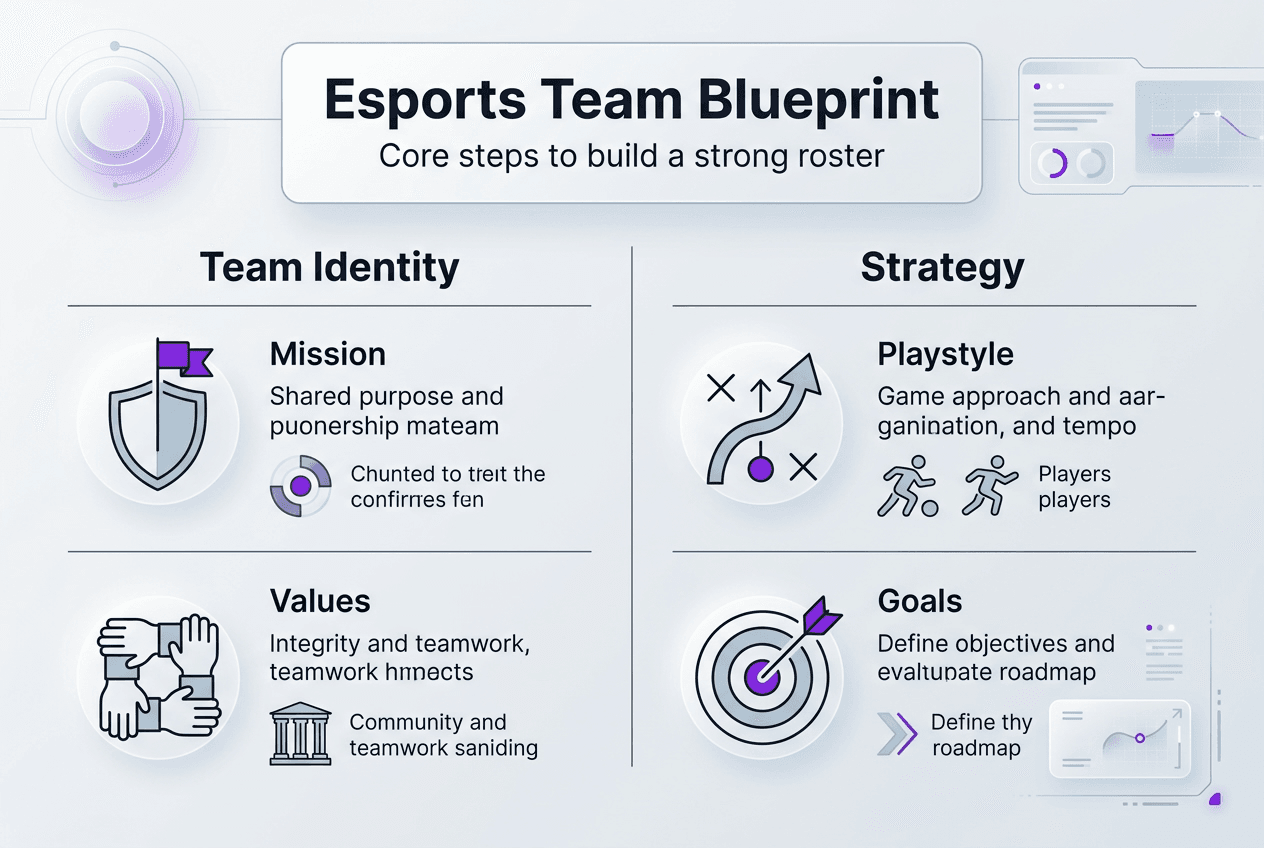
Pro Tip: Create a one-page team charter outlining your mission, values, and playstyle expectations. Review it with every new recruit and reference it during team conflicts to maintain consistency.
Choosing the right game and competition tier for team success
Game selection fundamentally shapes your leadership approach because different games require different strategies, time investments, and even personality types. A MOBA like League of Legends demands strategic depth and team coordination over extended matches. A fast-paced shooter like Valorant rewards mechanical skill and quick reflexes. Your choice must align with your team's existing strengths and your capacity to provide appropriate coaching.
Several factors should influence your game choice decision:
- Strategy complexity and learning curve for new players
- Active player base size and competitive scene health
- Time commitment required for practice and tournaments
- Meta stability and frequency of balance changes
- Available coaching resources and analytical tools
- Regional competition strength and tournament accessibility
Competitive tier selection is equally important. Placing inexperienced players in advanced leagues creates frustration and burnout. Starting too low wastes talent and motivation. Match your team's current skill level to appropriate competition while planning a realistic growth trajectory. Amateur leagues offer valuable experience without overwhelming pressure. Semi-professional tiers provide stepping stones toward elite competition.
Leadership navigates evolving game metas by staying informed about patch notes, professional strategies, and emerging tactics. You don't need to be the best player, but you must understand how changes affect your team's playstyle. When major updates shift the competitive landscape, adapt your training focus quickly. Teams that resist meta changes fall behind rapidly.
Game selection directly impacts recruitment and training tactics. If you choose a mechanically demanding shooter, recruit players with strong aim and reflexes. Your training emphasizes individual skill development. For strategy-heavy games, prioritize players with game sense and communication skills. Training focuses on coordination and macro strategy. Misaligning game choice with player strengths wastes everyone's time.
Consider your own leadership capabilities when selecting games. Can you analyze replays effectively? Do you understand the competitive meta deeply enough to guide strategy? If not, choose games where you can learn alongside your team or recruit assistant coaches with specialized knowledge. Your credibility as a leader depends on providing valuable guidance, which requires game-specific expertise.

The competitive gaming landscape changes constantly. Stay flexible and willing to pivot if your initial game choice proves unsustainable. Some titles lose competitive support or player interest. Others emerge as new opportunities. Successful leaders monitor industry trends and make strategic adjustments before problems become crises.
Defining playstyle and values for strong team chemistry
Playstyle definition transforms individual talent into coordinated team performance. A team's approach can be aggressive and fast-paced or slow and methodical, and this choice must reflect your players' natural tendencies while supporting your competitive goals. Forcing players into uncomfortable styles creates tension and reduces effectiveness.
Common esports playstyles include:
- Aggressive early-game focused strategies that pressure opponents immediately
- Defensive late-game scaling approaches that prioritize resource accumulation
- Adaptive mid-game flexibility that responds to opponent weaknesses
- Objective-focused macro play emphasizing map control over kills
- Individual playmaking styles relying on star player performances
Establishing shared values guides behavior during high-pressure moments. Values like respect, accountability, and continuous improvement shape how players communicate after losses, handle criticism, and support struggling teammates. Without explicit values, teams develop toxic patterns that destroy morale and performance.
Leaders establish playstyle through several concrete steps. First, analyze your roster's natural strengths and preferences through scrimmages and practice. Second, identify patterns in successful performances to understand what works. Third, formalize your approach in strategy documents that outline specific tactical preferences. Fourth, reinforce playstyle consistently during practice and review sessions.
Aligned playstyle dramatically improves in-game decision making. When everyone understands the team's preferred approach, players make compatible choices instinctively. An aggressive team knows teammates will follow up on engagements. A methodical team trusts others won't take unnecessary risks. This implicit coordination separates good teams from great ones.
Morale benefits significantly from clear playstyle alignment. Players feel confident their teammates will support their decisions. Losses become learning opportunities rather than blame sessions because everyone understands the shared strategy. Victories feel earned through coordinated effort rather than individual heroics.
Common leadership mistakes include neglecting to document values explicitly or failing to enforce them consistently. You might assume players share your values without verification. Or you state values once during onboarding but never reference them again. Effective leaders revisit values regularly, use them to guide decisions, and hold everyone accountable to the same standards.
Pro Tip: Record your team's best performances and analyze what made them successful. Identify recurring patterns in communication, positioning, and decision making to formalize your winning playstyle.
Integrating esports training with defined playstyle creates focused practice sessions. Instead of generic skill drills, design exercises that reinforce your team's specific approach. Aggressive teams practice coordinated engagements. Defensive teams work on vision control and resource management. This targeted training accelerates improvement in areas that matter most for your strategy.
Sustainable esports leadership: lessons from grassroots to pro leagues
Grassroots esports organizations demonstrate that community-first approach, clear role distribution, and adaptable frameworks are essential for long-term success. FRG Esports LTD exemplifies this model through structured leadership that balances competitive ambition with sustainable growth. Their framework prioritizes player development, transparent communication, and organic community building over rapid expansion.
FRG's strengths include clearly defined organizational roles that prevent confusion and overlap. Each leader understands their responsibilities and authority boundaries. This clarity enables quick decision making and reduces internal conflicts. Their community-first approach builds loyal fan bases that sustain the organization through competitive ups and downs. By focusing on long-term relationships rather than short-term wins, they create stable foundations for growth.
Weaknesses in grassroots models often involve resource limitations and scaling challenges. Smaller organizations struggle to match corporate-backed teams' salaries and facilities. Growth requires careful financial management to avoid overextension. Leaders must balance ambition with realistic resource constraints, sometimes making difficult decisions about which opportunities to pursue.
Contrast this with professional league failures like the Overwatch League. The OWL's top-down corporate structure undermined organic growth leading to failure. By prioritizing franchise fees and corporate partnerships over player development and community engagement, the league created unsustainable financial pressures. Teams couldn't build authentic fan bases because the structure isolated them from grassroots communities.
| Aspect | Grassroots Leadership | Top-Down League Model |
|---|---|---|
| Growth approach | Organic community building | Corporate franchise system |
| Financial model | Sustainable budgets, gradual scaling | High entry fees, immediate profitability pressure |
| Player development | Long-term talent cultivation | Short-term performance focus |
| Community connection | Direct fan engagement | Isolated corporate structure |
| Decision making | Flexible, adaptive | Rigid, centralized |
| Success metric | Community loyalty, steady growth | Immediate returns, viewership numbers |
"The lesson from OWL's collapse is clear: esports organizations cannot manufacture success through corporate investment alone. Authentic community connection and sustainable growth models outlast flashy launches that ignore foundational principles."
Sustainable leadership builds community and brand longevity by treating fans as partners rather than consumers. You create spaces for community interaction, celebrate fan contributions, and involve supporters in team decisions when appropriate. This investment pays dividends during difficult periods when loyal communities provide stability.
Critical lessons for aspiring leaders include avoiding the temptation to grow too quickly. Expansion should follow proven success at your current level. Don't accept partnerships or sponsorships that compromise your values or burden you with unrealistic obligations. Financial sustainability matters more than impressive announcements. Build slowly, reinvest profits wisely, and prioritize long-term viability over short-term gains.
Professionalize your esports team gradually as resources and capabilities grow. Rushing professionalization without proper infrastructure creates problems. Ensure you have stable funding, experienced staff, and proven systems before making commitments that require consistent financial support.
Innovating with data: driving sponsorship and growth through analytics
Data analytics transforms esports leadership from intuition-based to evidence-driven decision making. Modern leaders measure sponsorship outcomes, fan engagement, and performance metrics to optimize every aspect of their organization. GIANTX experienced a 41% growth in followers and +269% surge in media value securing 17 new sponsorship deals by implementing comprehensive analytics frameworks.
Sponsorship value measurement has evolved beyond simple logo placements. Analytics track impression counts, engagement rates, audience demographics, and conversion metrics. You can show potential sponsors exactly how many people saw their brand, how long they engaged, and what actions they took. This data-driven approach justifies higher sponsorship rates and attracts quality partners.
Key data types and analytics tools useful for esports leaders:
- Social media metrics tracking follower growth, engagement rates, and content performance
- Stream analytics measuring viewership, watch time, and audience retention
- Performance statistics documenting win rates, individual player metrics, and improvement trends
- Sponsorship exposure data quantifying brand visibility and impression values
- Community sentiment analysis identifying fan preferences and concerns
| Metric Category | Specific Measurements | Leadership Application |
|---|---|---|
| Performance | Win rate, KDA, objective control | Identify training priorities and player strengths |
| Engagement | Stream viewers, social interactions, content shares | Optimize content strategy and posting schedules |
| Sponsorship | Brand impressions, exposure time, audience reach | Demonstrate value to current and potential sponsors |
| Community | Follower growth, sentiment scores, retention rates | Assess community health and satisfaction |
Implementing data-driven strategies begins with identifying which metrics matter most for your goals. Don't track everything, focus on measurements that inform specific decisions. If you're seeking sponsorships, prioritize exposure and engagement metrics. For performance improvement, emphasize game statistics and training outcomes.
GIANTX's success demonstrates how analytics attract sponsorships by providing concrete ROI evidence. Brands invest confidently when they see measurable results. Your ability to present compelling data differentiates you from competitors who rely on vague promises. Build dashboards that visualize key metrics clearly for sponsor presentations.
Balancing innovation with authentic community connection requires using data to enhance relationships, not replace them. Analytics inform your understanding of what fans value, but personal interactions build loyalty. Use data to identify popular content types, then create authentic material that reflects your team's personality. Numbers guide strategy, but genuine passion drives execution.
Pro Tip: Start with free analytics tools like Google Analytics, social media insights, and game-specific stat trackers. Master these basics before investing in premium platforms. Many powerful insights come from simple data analyzed consistently.
Integrating analytics with esports event planning helps you design experiences that resonate with your community. Track which event formats generate highest engagement and attendance. Use this information to refine future events, maximizing impact while optimizing resource allocation.
Goal setting in esports becomes more effective when supported by data. Instead of vague objectives like "improve performance," set specific targets based on current metrics. Increase win rate by 15%, reduce average deaths by 20%, or grow social media engagement by 40%. Data provides accountability and tracks progress objectively.
Explore advanced esports leadership resources with Xyra Esports
Building successful esports teams requires continuous learning and community support. Xyra Esports offers comprehensive leadership training programs designed specifically for aspiring coaches and team managers. Our workshops cover everything from recruitment strategies to conflict resolution, providing practical frameworks you can implement immediately. Access our extensive library of expert articles covering advanced topics like performance psychology, strategic planning, and organizational development. Join a vibrant community of esports leaders who share insights, collaborate on challenges, and celebrate successes together. Whether you're just starting your leadership journey or looking to refine existing skills, Xyra Esports resources provide the structured support you need to build sustainable, high-performing teams.
Frequently asked questions
What key qualities define an effective esports leader?
Effective esports leaders combine strong communication skills with strategic vision and genuine empathy for their players. They articulate clear expectations, adapt strategies based on changing circumstances, and create environments where diverse personalities unite toward common goals. Technical game knowledge matters, but the ability to inspire, guide, and support your team through challenges defines leadership success.
How can aspiring coaches foster a winning team culture?
Foster winning culture by encouraging open communication where players feel safe sharing concerns and ideas. Set clear behavioral expectations from day one and model the integrity and discipline you expect from others. Recognize individual and team achievements regularly, celebrating progress beyond just match victories. Consistency in your actions and decisions builds trust that forms the foundation of strong team culture.
What are the biggest leadership mistakes to avoid in esports?
Avoid unclear goals that leave players confused about priorities and success criteria. Poor communication creates misunderstandings that escalate into conflicts. Ignoring team chemistry by focusing solely on individual skill leads to coordination problems during matches. Overemphasizing short-term wins at the expense of long-term development burns out players and creates unsustainable pressure. Each mistake undermines the foundation you're trying to build.
How does data analytics improve esports team performance?
Analytics identify specific strengths and weaknesses in both individual and team performance, revealing patterns invisible during live play. This information guides training focus toward areas with highest improvement potential. Measurable outcomes increase sponsorship appeal by demonstrating concrete value to potential partners. Data transforms subjective impressions into objective insights that drive strategic decisions and accelerate development.